
A commercial kitchen gas line is an engineered life-safety system, not just threaded black iron pipe. When planning a commercial kitchen gas line installation, the margin between an on-time grand opening and an indefinite delay often comes down to fractions of an inch in manifold diameter and precise pressure-drop calculations. You already know the stress of facing a failed TSSA inspection, and nobody wants to discover during a packed dinner rush that an undersized branch line is starving the cookline.
Coordinating fuel lines with kitchen fire suppression systems, mechanical exhaust hoods, and automatic shut-off valves requires absolute clarity before work begins. You need the confidence that your mechanical infrastructure will perform reliably under maximum demand while meeting every provincial regulation. In this guide, you’ll master the sizing calculations, equipment interlocks, and Ontario inspection standards needed for a safe, code-compliant setup. Here is your complete pre-construction to commissioning checklist for a seamless build.
Key Takeaways
- Calculate cumulative BTU loads and peak diversity factors accurately to eliminate the risk of appliance gas starvation during high-volume dinner rushes.
- Align rough-in piping with current Ontario TSSA mandates and CSA B149.1 standards to avoid costly inspection delays before your scheduled opening date.
- Select the ideal balance between rigid Schedule 40 black iron and corrugated stainless steel tubing (CSST) for a durable, code-compliant commercial kitchen gas line installation.
- Execute a structured commissioning process, including inert nitrogen pressure testing, before introducing natural gas to the equipment manifold.
- Coordinate automatic gas shut-off valves with exhaust hoods and fire suppression systems to safeguard kitchen staff and protect physical assets.
Pre-Installation Planning: Commercial Kitchen Gas Line Sizing and BTU Loads
Precision engineering sits at the core of a reliable kitchen build. A successful commercial kitchen gas line installation requires calculating accurate fuel delivery across every foot of pipe before cutting a single thread. In high-output food service environments, guessing pipe sizes leads to flame lift, delayed recovery times, or sudden appliance dropouts when dinner orders peak. Proper pre-installation planning ensures your line routing, distribution manifolds, and incoming pressure work together harmoniously under continuous operational stress.
Calculating Cumulative BTU Demands for Cookline Equipment
Determining your facility’s total natural gas demand requires a thorough nameplate audit of every cooking appliance planned for the cookline. Record the maximum input ratings for all equipment:
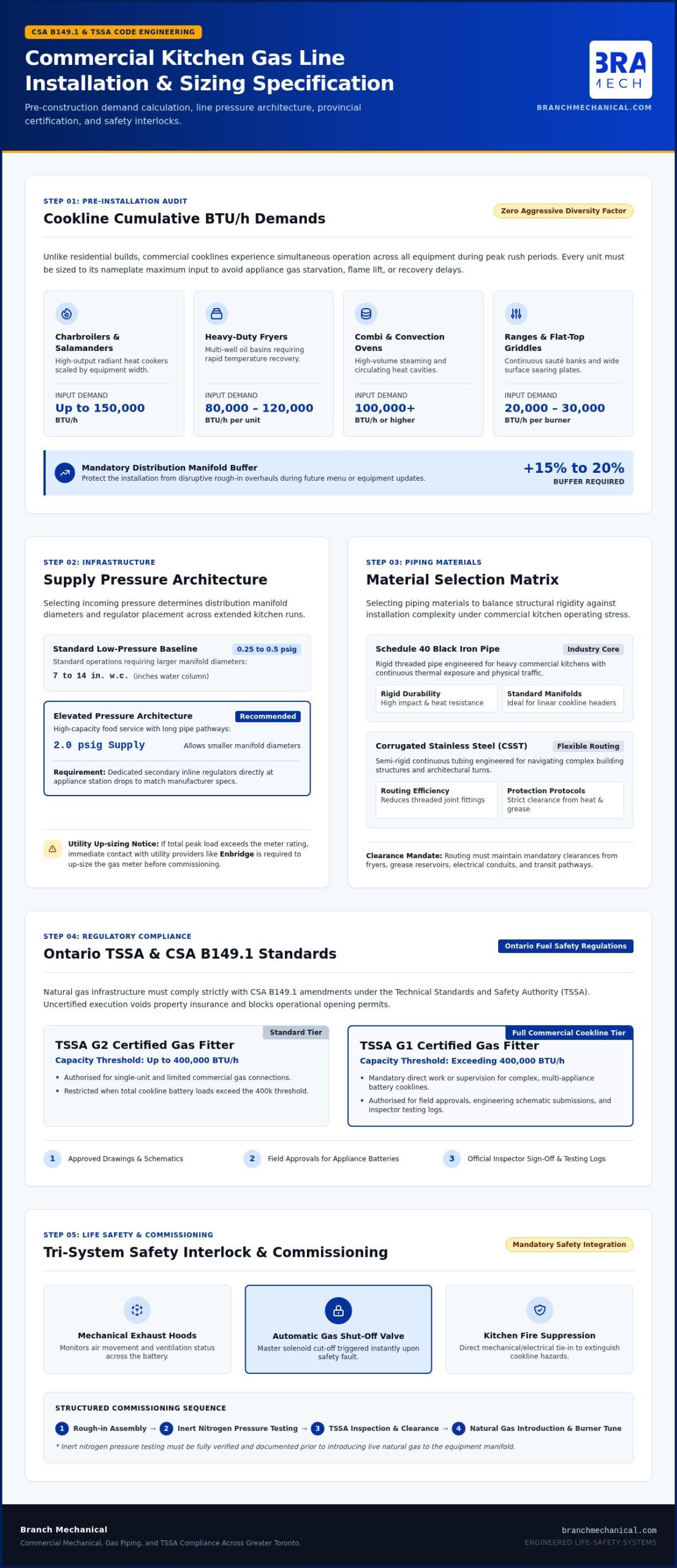
- Heavy-duty commercial fryers (often 80,000 to 120,000 BTU/h per unit)
- Open-burner ranges and flat-top griddles (typically 20,000 to 30,000 BTU/h per burner)
- Charbroilers and salamanders (up to 150,000 BTU/h depending on width)
- Commercial combi ovens and convection units (100,000 BTU/h or higher)
Unlike residential calculations, commercial applications cannot rely on aggressive diversity factors. During peak lunch or dinner rushes, nearly every burner, fryer bank, and oven operates simultaneously. Sum these figures to establish your true cumulative peak British Thermal Units per hour (BTU/h). Always size main distribution manifolds with a 15% to 20% buffer to accommodate future menu changes or added appliances without requiring a disruptive rough-in overhaul.
Evaluating Utility Meter Capacity and Supply Pressure
Verify whether your incoming gas service can actually support this cumulative load. Standard commercial installations traditionally operate on a low-pressure baseline of 7 to 14 inches water column (in. w.c.), or roughly 0.25 to 0.5 pounds per square inch gauge (psig). High-capacity kitchens, however, often demand an elevated 2-psig supply system to run smaller manifold diameters across longer distances without excessive pressure drops. Consult established piping and plumbing fitting standards to ensure all transitions adhere to appropriate pressure ratings.
Operating on elevated pressure means positioning dedicated secondary inline regulators directly at appliance station drops to knock line pressure back down to equipment manufacturer specifications. Review the utility meter nameplate early. If your total kitchen load exceeds the meter’s rated capacity, contact your utility provider like Enbridge immediately to initiate meter up-sizing. Gas line routing from the meter to the equipment manifold must follow clear, protected pathways, avoiding electrical conduits and physical transit corridors where mechanical impacts could compromise piping integrity.
Ontario Gas Safety Compliance: TSSA Regulations and CSA B149.1 Standards
Provincial compliance is not optional when engineering kitchen fuel systems. In Ontario, natural gas infrastructure must strictly conform to CSA B149.1 (the Natural Gas and Propane Installation Code) alongside amendments governed by the Technical Standards and Safety Authority (TSSA). Executing a commercial kitchen gas line installation without certified trades or code-approved drawings can void property insurance and immediately halt operations prior to opening day. Maintaining mandatory clearances from heat zones, fryer grease reservoirs, and ignition sources keeps your facility safely protected.
TSSA Mandates and Commercial Gas Fitter Certification
Ontario law requires all commercial fuel work to be executed by certified professionals. A technician holding a TSSA G2 certification can service and install systems up to 400,000 BTU/h, but complex cooklines exceeding this capacity require direct work or supervision by a fully certified G1 gas technician. For multi-appliance battery connections, field approvals and schematic submissions are standard procedure. Working with a reputable commercial plumbing contractor Etobicoke teams rely on ensures these engineering submittals, testing logs, and inspector sign-offs occur without administrative delays.
Exhaust Hood Interlocks and Automatic Gas Shut-Off Systems
Modern commercial kitchens operate as dynamic safety environments where cooking equipment and exhaust systems function as a unit. Under provincial regulations, the main fuel supply must mechanically isolate under unsafe conditions:
- Solenoid interlocks: An automatic gas shut-off valve must wire directly to the exhaust hood controls, preventing fuel flow unless the exhaust fan operates actively.
- Suppression system linkage: Activation of the chemical fire suppression system must trigger an instant, mechanical fuel shutdown.
- Manual emergency isolation: A dedicated reset station and push-button shut-off must sit adjacent to primary kitchen egress doors for quick staff intervention.
Ventilation and Combustion Air Requirements
Heavy commercial cooking consumes massive amounts of oxygen while generating hazardous combustion byproducts. Commercial kitchen exhaust canopies remove thousands of cubic feet of air per minute, which quickly creates intense negative pressure within the building envelope if unaddressed. This vacuum can backdraft water heater flues and starve open-flame cooking equipment, resulting in soot accumulation and incomplete fuel combustion.
To preserve clean air circulation and balanced room pressure, mechanical make-up air units must replenish tempered air at precise volumetric rates. Coordinating distribution piping drops with your commercial hvac installation team ensures mechanical air balance aligns perfectly with peak burner operation. If your team is managing a retrofit or new build, partnering with Branch Mechanical delivers end-to-end alignment between fuel infrastructure, ventilation balance, and TSSA code compliance across the Greater Toronto Area.
Commercial Gas Piping Materials: Schedule 40 Black Iron vs. CSST
Every commercial kitchen environment subjects piping to intense heat cycles, mechanical vibration, and airborne grease. Choosing suitable piping materials for your commercial kitchen gas line installation determines whether your fuel distribution manifold remains stable over decades of heavy service. While residential builds often prioritize rapid, flexible routing, back-of-house culinary lines demand materials that withstand punishing physical contact from heavy cookware, rolling prep carts, and aggressive sanitation procedures.
Comparing Black Iron Pipe and CSST in Food Service Facilities
Schedule 40 black iron steel pipe remains the undisputed standard for exposed commercial kitchen distribution lines. Its thick, rigid walls resist impact punctures from carts and mobile equipment while holding true alignment across extended cookline runs. Corrugated stainless steel tubing (CSST) provides significant advantages when routing through complex building chases, ceiling plenums, or wall cavities where threading rigid pipe is impractical. However, CSST requires strict adherence to Ontario bonding standards and certified striker plates to prevent puncture risks from exterior fasteners, making rigid black iron the superior choice along exposed kitchen drop zones.
Sizing Distribution Headers to Prevent Pressure Drops
Undersized pipe diameters create intense internal friction losses, starving equipment during heavy meal service. Contractors size headers using the longest-run sizing methodology outlined in CSA B149.1, accounting for every elbow, tee, and fitting:
- Friction allowance: Calculate cumulative equivalent length for all fittings to prevent localized pressure loss along high-draw fryer drops.
- Graduated headers: Taper pipe diameters gradually as branches peel off to individual equipment, sustaining stable operational pressure across the entire line.
- Sediment protection: Fit every vertical appliance drop with a dedicated dirt pocket (drip leg) to capture debris, pipe scale, and moisture before fuel reaches sensitive internal control valves.
Commercial Appliance Flexible Connectors and Restraining Devices
Modern kitchen cooklines rely on mobile, caster-mounted equipment to facilitate daily cleaning behind the line. These units require ANSI Z21.69-certified flexible gas connectors, constructed from corrugated stainless steel encased in heavy stainless braid with an antimicrobial PVC outer coating. Each hookup must feature an automatic quick-disconnect valve that instantly shuts off gas flow whenever staff uncouples the hose for sanitation or maintenance.
Rigid safety cables are just as critical as the fuel line itself. Install a high-tensile steel restraining cable alongside each flexible connector, anchoring it directly into building wall framing and the appliance chassis. Code mandates that this restraint cable be noticeably shorter than the gas hose. When back-of-house staff pull heavy ranges or fryers away from the wall to sweep and degrease, the steel cable absorbs all mechanical tension, protecting the commercial kitchen gas line installation from accidental rupture or dangerous stress leaks.
Step-by-Step Commercial Kitchen Gas Line Installation and Commissioning
Rigorous execution during the build phase determines the long-term reliability and safety of your fuel network. A professional commercial kitchen gas line installation follows a structured, multi-phase commissioning sequence, eliminating hazards before culinary staff strike their first flame. Skipping procedural steps or rushing test intervals invites pinhole leaks and costly operational downtime.
Phase 1: Rough-In Piping, Manifold Mounting, and Secure Anchoring
Distribution manifolds require rigid mechanical support to withstand physical kitchen activity. Technicians secure heavy headers using structural channel strut and cushioned clamps anchored directly into building masonry or steel framing. Every vertical appliance drop receives a dedicated quarter-turn isolation ball valve and an accessible sediment trap positioned upstream of the flexible connection. Fitters assemble threaded connections using CSA-approved anaerobic pipe sealants or heavy-duty gas PTFE tape, ensuring joints resist vibration from busy cooklines.
Phase 2: High-Pressure Nitrogen Leak Testing and Inspection
Never introduce utility gas into an unverified system. Technicians isolate downstream equipment regulators and appliance shut-offs before pressurizing the completed piping network with inert, dry nitrogen. The system must hold code-mandated test pressures on calibrated gauges without dropping over designated hold intervals. Certified fitters brush each joint with certified bubble solutions and verify integrity with electronic sniffers, securing written approval from municipal or TSSA inspectors before gas meters are unlocked.
Phase 3: Final Hookup, Purging, and Appliance Burner Calibration
Once regulatory inspectors clear the pressure test, technicians safely purge atmospheric air from the piping through controlled, outdoor venting lines. Technicians then record static fuel pressures at the main header before initiating full dynamic load testing:
- Fire all cookline appliances to maximum firing rate at the exact same moment.
- Monitor manifold delivery pressure using sensitive digital manometers to verify zero pressure sag.
- Inspect individual burner orifices to ensure clean fuel delivery across the line.
- Calibrate primary air shutters on ranges and charbroilers to eliminate lazy yellow carbonizing flames in favour of sharp, efficient blue cones.
Planning a kitchen renovation or tenant fit-out requires seasoned mechanical coordination. To ensure your rough-in meets strict provincial deadlines, schedule a commercial mechanical consultation with Branch Mechanical for comprehensive gas installation and commissioning support.
Post-Installation Maintenance and GTA Commercial Mechanical Support
Safe operation continues long after the commissioning crew leaves. The demanding environment of a commercial kitchen subjects pipe hangers, valves, and connectors to constant thermal cycling, caustic degreasers, and physical vibration. Protecting your investment requires an ongoing maintenance program that treats the commercial kitchen gas line installation as an active, integrated mechanical system rather than a static fixture.
Preventative Maintenance Checklist for Kitchen Gas Infrastructure
Routine facility audits prevent minor wear from turning into hazardous leaks or unscheduled service disruptions. Mechanical teams focus on key stress points during quarterly reviews:
- Hose integrity audits: Inspect ANSI-rated flexible hoses for outer stainless braid fraying, deep kinks, or thermal hardening caused by proximity to fryer vats.
- Restraint cable verification: Confirm that appliance restraining cables remain anchored tightly and sit shorter than the flexible hoses to absorb accidental pulling tension.
- Solenoid valve cycling: Trip-test the automatic gas shut-off valve alongside scheduled fire suppression system checks to ensure instantaneous fuel isolation.
- Quick-disconnect seals: Test internal O-rings within quick-disconnect couplings for elasticity and grease buildup that could impede positive mechanical shut-off.
Kitchen fuel lines do not exist in isolation. Connecting regular line inspections with your dedicated commercial water heater installation and boiler maintenance protects the high-volume sanitization and dishwashing capabilities your culinary operations rely on daily.
Selecting a Trusted Mechanical Contractor in Mississauga and Etobicoke
Subtle operational shifts warrant immediate professional attention. A faint sulphur scent, lazy flame characteristics, or unexpected burner whistling can signal regulator diaphragm fatigue or manifold debris. Postponing diagnostics risks kitchen-wide shutdowns or failed spot inspections by local authorities. Food service managers need access to multi-trade contractors capable of assessing gas line delivery, makeup air balance, and commercial kitchen ventilation in a single visit.
Established in 2012, Branch Mechanical provides licensed gas fitting and comprehensive commercial mechanical contracting across Mississauga, Etobicoke, and the Greater Toronto Area. When sudden pressure irregularities or equipment faults disrupt dinner service, their certified technicians deliver dependable 24/7 emergency mechanical services to restore safe operations quickly. To safeguard facility uptime and keep your kitchen operating at peak performance, schedule a proactive consultation with Branch Mechanical today.
Build a Safe, High-Performance Kitchen Infrastructure
Executing a successful commercial kitchen gas line installation requires harmonizing pipe sizing, dynamic pressure calculations, and strict provincial safety standards. When you accurately account for cumulative peak BTU loads, integrate fail-safe exhaust hood interlocks, and secure rugged Schedule 40 piping, you eliminate opening-day inspection delays and prevent mid-service pressure drops. True operational reliability comes from treating your fuel line as an engineered life-safety system built to withstand heavy culinary demands.
Navigating TSSA mandates and complex equipment rough-ins is straightforward with the right mechanical contractor by your side. Established in 2012, Branch Mechanical brings integrated expertise across gas fitting, kitchen ventilation, and heating infrastructure to facilities throughout Mississauga, Etobicoke, and the Greater Toronto Area. Whether you are expanding an existing cookline or outfitting a new hospitality venue, consult Branch Mechanical for certified commercial kitchen gas line installation in the GTA. Take the guesswork out of mechanical compliance and build a kitchen prepared to perform safely from day one.
Frequently Asked Questions
How much natural gas pressure does a standard commercial kitchen line require in Ontario?
Most commercial cooking appliances in Ontario operate on 7 to 14 inches water column, which equals roughly 0.25 to 0.5 psig at the appliance manifold. However, main commercial distribution manifolds frequently run on elevated 2-psig utility service to deliver sufficient fuel volume across extended pipe runs. In these elevated systems, certified fitters install dedicated secondary regulators at each equipment drop to reduce pressure to manufacturer specifications.
Can I use corrugated stainless steel tubing (CSST) for an entire commercial kitchen cookline?
No, CSST cannot serve as exposed cookline piping where it risks mechanical damage from moving equipment, rolling carts, or heavy cookware. While CSST works well inside enclosed wall cavities and ceiling chases, exposed kitchen distribution drops require rigid Schedule 40 black iron pipe. Connecting caster-mounted appliances requires ANSI-certified braided stainless flexible hoses with protective restraining cables rather than exposed CSST.
What happens if a commercial kitchen gas line is undersized for newly installed equipment?
Undersized piping starves cooking equipment during peak rush periods when multiple burners, fryers, and ovens fire simultaneously. This deficit triggers significant manifold pressure drops, delayed temperature recovery, and nuisance pilot outages. During a compromised commercial kitchen gas line installation, starved burners produce lazy yellow flames and dangerous carbon monoxide, compromising kitchen air quality and violating Ontario safety codes.
Is an automatic gas shut-off valve mandatory for commercial kitchen exhaust hoods?
Yes, Ontario safety regulations mandate an automatic gas solenoid valve interlocked directly with commercial kitchen exhaust systems. The valve cuts natural gas flow to cookline equipment whenever the exhaust fan stops moving air or make-up air systems fail. Furthermore, the solenoid wires directly to the kitchen chemical fire suppression system, instantly isolating the gas supply upon discharge to starve open flames.
How long does a commercial kitchen gas line pressure test take during municipal inspection?
Test durations depend on overall piping volume and operating pressure governed by CSA B149.1 standards. Commercial kitchen rough-ins typically require an inert nitrogen pressure test held anywhere from 15 minutes to several hours without gauge fluctuation. Technical Standards and Safety Authority (TSSA) or municipal inspectors across Mississauga and the GTA must verify this calibrated hold before approving utility meter activation.
Can any licensed plumber perform commercial kitchen gas line installation in Mississauga?
No, standard plumbing licenses do not authorize a tradesperson to install or modify gas infrastructure in Ontario. Executing a commercial kitchen gas line installation requires a TSSA-certified gas technician holding an active G2 or G1 credential, depending on cumulative equipment input ratings. Facility managers in Mississauga and Etobicoke should always partner with specialized mechanical contractors possessing explicit commercial gas licensing and municipal compliance experience.
What is the purpose of a restraining cable on commercial gas cooking equipment?
A restraining cable prevents mobile, caster-mounted equipment from straining or snapping flexible gas hoses during cleaning and maintenance. Anchored securely into the building structure and appliance chassis, this high-tensile steel cable is intentionally measured shorter than the flexible gas connector. It absorbs mechanical pulling tension when kitchen staff move heavy units, eliminating accidental hose rupture and sudden gas leaks.