
A gas line can serve more than a home furnace. Professional gas fitting and piping services can connect compatible appliances such as ranges, water heaters, fireplaces and barbecues. Commercial systems may use gas for kitchen equipment, boilers and process heating. The right setup depends on the equipment and the gas supply it requires.
It’s reasonable to want a clear picture before planning new gas piping. A line may be needed when you add an appliance, change how a space is heated, or support the demands of a commercial kitchen or processing facility.
This article explains when a gas line may be useful, which residential appliances and commercial systems can connect, and what affects project design. It also covers the role of professional installation, so you can understand the practical considerations before moving ahead.
Key Takeaways
- Learn which warning signs may point to a gas-line issue and how pressure testing and leak detection help assess the piping.
- Understand why appliance compatibility and the planned connection matter when adding or changing gas equipment.
- See how commercial gas needs differ when a kitchen or processing operation relies on several high-demand systems.
- Find out how mechanical contracting, heating-system installation and preventative maintenance can support commercial and multi-residential buildings.
Why Install A Gas Line?
A new gas line can supply an appliance that an existing connection cannot reach. Installation may support a furnace, fireplace, range or commercial kitchen equipment. Repair can address damaged piping or a suspected leak. Homeowners may also arrange an inspection if an appliance operates poorly or a pilot light won’t stay lit.
Watch for warning signs. A rotten-egg smell, hissing near a gas line, unusually high gas bills or poorly operating appliances can indicate a problem. If you suspect an indoor leak, leave the building, avoid operating electrical switches and leave the door open as you exit. Treat a suspected leak as an emergency, not a repair project.
Pressure testing helps assess a gas line after installation or repair. A qualified professional isolates the section, uses a pressure-measuring instrument and checks whether the reading remains stable. Leak detection can then focus on joints, fittings and other connection points using an appropriate method. Testing procedures and acceptance criteria depend on the system and applicable requirements. Homeowners shouldn’t try to pressurize or repair gas piping.
Homeowners are advised to have gas lines inspected annually. During an inspection, a professional can examine accessible piping, connections and appliance operation, then identify maintenance or repair needs. Keep records of inspection findings and completed work, especially after adding a fireplace or changing an appliance. Permit and inspection requirements may apply to new lines or appliance additions, depending on location.
Gas fitters’ qualifications and licensing requirements vary by province and territory. Confirm that a person’s credential applies to the work and location, and verify it with the relevant provincial licensing or safety authority.
Professional gas fitting and piping services in Canada can include gas line installation, pressure testing, leak detection, repair, inspection and appliance hookups. To find a fitter near you, search by municipality and gas-fitting credential, then verify the credential with the relevant authority.
Before work begins, request proof of insurance, credential details and references for comparable jobs. Review the scope, including the gas line, appliance connection, pressure test and any permit or inspection steps. For commercial work, a past project involving similar equipment can help assess relevant experience.
Gas appliance hookups
A suitable hookup depends on the appliance, fuel type, location and gas-system capacity. A professional plans the connection around the equipment’s requirements and the available piping route.
Natural Gas Appliance Connections
A natural gas appliance connects to a supply line through compatible piping, fittings and an appliance connection. A licensed gas fitter assesses the appliance specifications, connection point and gas supply before installation. For a fireplace, the connection must suit the unit’s location and intended use. Keep the appliance model information available so the fitter can plan an appropriate connection.
Line Installation and Extensions
For a new natural gas or propane line, the process starts by identifying the appliance and its location. The fitter plans a route from the supply, considering access, existing piping and equipment requirements. An extension may require changes to the existing gas system. After installation, the professional tests the work and connects the appliance. Permit and inspection requirements depend on the project location.
Custom gas distribution can serve multiple appliances. A home might need connections for a range and fireplace, while a commercial space may need several equipment hookups. The layout should account for each appliance’s position and operating needs, not just the shortest route from the supply. Careful planning can also make future servicing more straightforward.
Natural gas and propane appliances aren’t automatically interchangeable. Confirm that an appliance is designed for the intended fuel and follow its manufacturer’s instructions. For example, check the documentation before planning a BBQ conversion or changing its fuel connection. A connection alone doesn’t make an appliance suitable for another fuel.
For a hookup, gather the appliance’s make and model, fuel type and preferred location. A licensed gas fitter can use those details to plan the piping and connection. For commercial equipment, describe the full appliance group so the gas distribution plan reflects the setup. If a commercial project needs coordinated mechanical work, commercial gas fitting support can be a practical next step.
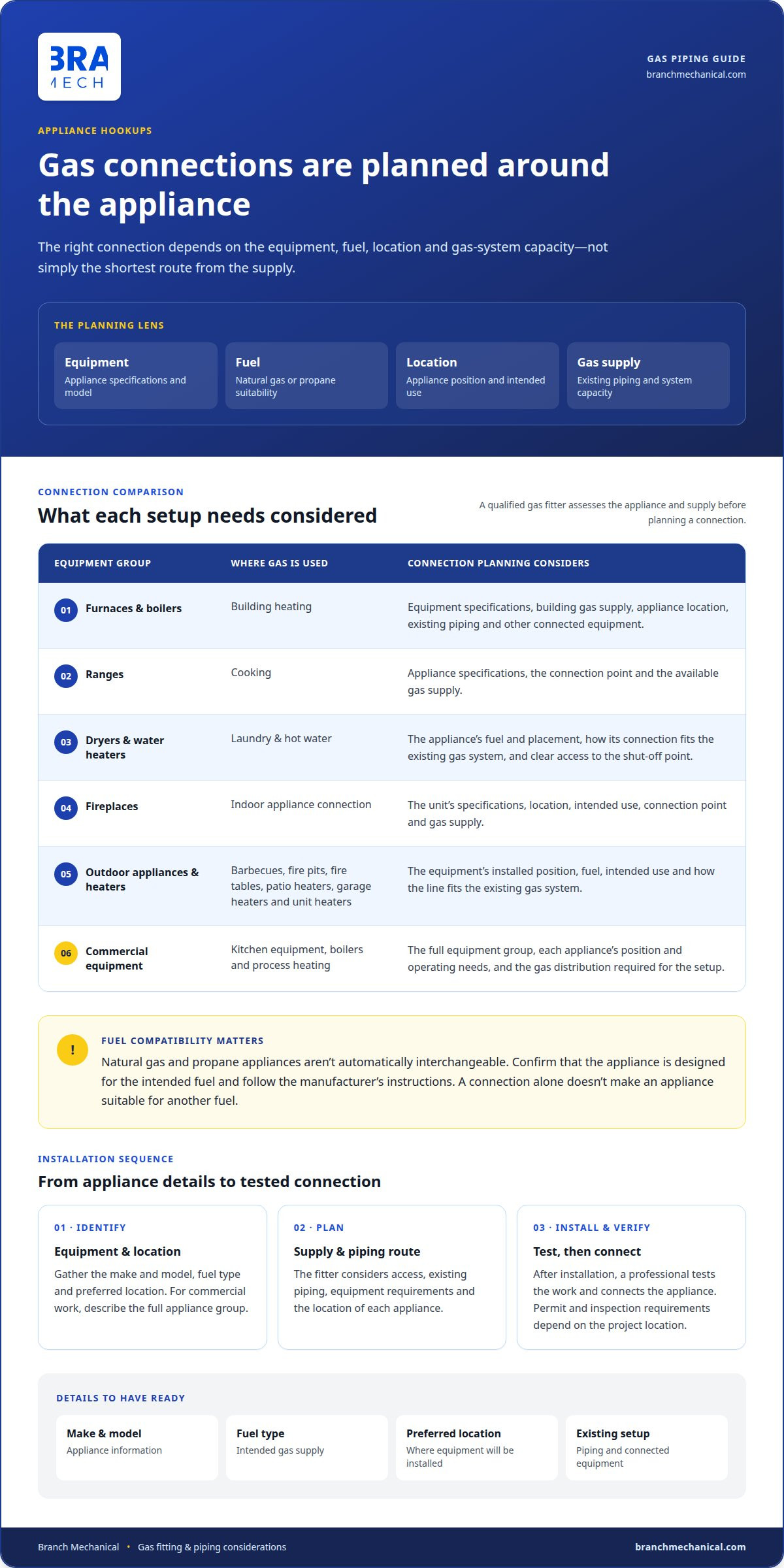
Gas lines for furnaces, fireplaces, ranges, dryers, and water heaters
Gas lines serve residential heating, cooking and hot-water equipment, as well as outdoor appliances. The connection should suit the appliance, fuel and installation location.
Furnace and Boiler Connections
A furnace or boiler connection must match the equipment’s specifications and the building’s gas supply. Technicians consider the appliance location, existing piping and other connected equipment when planning the line. For a replacement, keep the model information and installation documents available. These details help a licensed gas fitter assess the connection and plan work around the heating system.
Heating and Hot Water Connections
Dryers and water heaters need connections suited to their fuel and placement. Patio heaters, garage heaters and unit heaters also require a line routed to the equipment’s location. A professional considers how the appliance will be used and how its connection fits the existing gas system. Follow the manufacturer’s instructions and keep access to the shut-off point clear.
Ranges and fireplaces are common indoor examples, while barbecues, fire pits and fire tables extend gas service outdoors. Natural gas BBQs and patio heaters need lines planned for their installed positions, not just temporary placement. In Calgary, many BBQs can be converted from propane to natural gas if the manufacturer approves the conversion. That approval is a key step before planning a different fuel connection.
Before arranging installation, gather each appliance’s make, model, fuel type and location. Check the label and manufacturer’s instructions for connection requirements, including whether the equipment is designed for natural gas or propane. Documentation for a certified appliance can help the fitter identify the correct setup. Don’t assume that a line serving one heater can support additional equipment.
List every appliance planned for the property, including a furnace, range, dryer and outdoor fire table. Sharing the full list helps the professional plan the gas line and connections as one system. For commercial boilers and heating systems, equipment demands and building layout also shape the installation plan. Properly planned connections allow appliances to operate within their intended setup.
High-capacity gas systems for commercial kitchens and processing plants
A commercial kitchen may connect gas ranges, ovens, fryers and boilers to a shared distribution system. Processing plants may also need gas connections for production equipment and building heating. Planning must account for the full set of appliances, their locations and operating needs, rather than treating each hookup as a separate task.
Residential work usually serves a smaller group of appliances in one home. Commercial and industrial systems must coordinate more equipment, longer piping routes and ongoing operational needs. Gas fitters plan distribution around the equipment and building, and coordinate connecting work with plumbing, ventilation and other mechanical systems.
Start with an equipment list. Record each appliance’s make, model, fuel type and location, including kitchen ovens, water heaters and process equipment. The installation plan can then account for how gas lines reach each connection and how the equipment will operate together. Changes to the list can affect routing and the wider gas system, so include planned additions early.
Access matters in working facilities. A commercial kitchen needs equipment connections that fit its layout and allow staff to use appliances as intended. In a processing plant, the route must account for production areas and nearby building systems. Mapping these spaces before installation helps gas fitters coordinate work and identify where plumbing or ventilation interfaces need attention.
After installation or modification, gas piping and connections need appropriate testing before appliances return to use. Keep records of the equipment served and the completed work. If you suspect a gas leak, treat it as an emergency: leave the area and avoid operating electrical switches.
For a commercial project, prepare an equipment list and building layout before planning the piping. Discuss commercial gas piping requirements as part of coordinating the facility’s mechanical systems.
Branch Mechanical: Commercial & Multi-Residential Mechanical Contracting
Branch Mechanical supports commercial and multi-residential buildings with coordinated mechanical work alongside gas-system planning. Turn to the team for commercial HVAC installation and service, commercial boilers and heating systems, or preventative maintenance contracts. These services can help when a facility is planning equipment changes, addressing heating-system needs or organizing maintenance across its building systems.
For a commercial kitchen or facility project, share the equipment list, building layout and intended work. This context helps clarify how heating and mechanical requirements fit together. Branch Mechanical works in commercial and multi-residential settings, making the team a practical next step for building owners and operators planning this type of project.
Contact Branch Mechanical to discuss your building’s mechanical needs.
Plan the next step with confidence
A gas project is easier to scope when you bring the right details together. Note the appliances involved, their locations, and whether the work concerns a new connection, an extension or an existing system. For a commercial facility, include how the equipment supports daily operations and any planned changes to the space. This provides a practical starting point and helps connect piping decisions with broader building needs.
Professional gas fitting and piping services can form part of a wider mechanical plan for commercial and multi-residential properties. Branch Mechanical offers mechanical contracting, commercial HVAC installation and service, and preventative maintenance contracts. If your project also involves heating equipment or ongoing building maintenance, consider how those needs fit alongside the gas work.
When you’re ready to discuss your building’s requirements, contact Branch Mechanical. A clear project outline can help you take the next step with confidence.
Frequently Asked Questions
How often should I have my gas lines inspected?
Arrange a gas-line inspection annually. Add an inspection after renovations, appliance changes or work near accessible piping. Keep the inspection record with appliance manuals so a technician can review prior findings during later maintenance. If a range flame changes unexpectedly or a pilot light repeatedly goes out, arrange an assessment sooner rather than waiting for the next scheduled inspection.
What should I do if I smell gas?
Leave the building immediately and avoid operating switches, appliances or phones inside. Leave the door open as you exit, then contact your gas utility from outside. A rotten-egg smell or hissing near piping can signal a leak. Don’t search for the leak, use a flame or re-enter to retrieve belongings. Follow the utility’s instructions before returning to the property.
Can I install gas appliances myself?
No. Have a licensed gas fitter install or connect gas appliances. A connection involves more than attaching a pipe: the fitter must account for the appliance’s fuel, supply connection and installation instructions. For example, a natural-gas range and a propane range aren’t automatically interchangeable. DIY changes can leave an appliance improperly connected, so leave gas piping and hookup work to a qualified professional.
Can you hook up an appliance I bought somewhere else?
Yes, an appliance bought elsewhere can be connected as part of commercial gas-fitting work. Before installation, have its make, model, fuel type and manufacturer’s instructions ready. Those details help the fitter assess whether the appliance suits the existing gas supply and planned location. Branch Mechanical provides commercial plumbing and gas fitting in commercial settings, including equipment connections as part of that work.
Do I need a permit or an inspection after the work?
Permit and inspection requirements depend on the project and its location in Canada. New gas lines and appliance additions can require permits and inspection, so include those steps in the project plan before work begins. For example, adding a commercial kitchen appliance may involve different project details than replacing an existing unit. Keep permit documents and inspection records with the building’s equipment files.
How fast can you come out?
Branch Mechanical offers 24/7 emergency mechanical services for critical HVAC, refrigeration, and electrical failures. That service scope doesn’t establish an arrival time for gas-fitting work. If you suspect a gas leak, evacuate and contact the gas utility from outside instead of waiting for a routine appointment. For a planned hookup, provide the appliance details and location when arranging service.