
Commercial furnace repair in Mississauga is one part of a broader range of HVAC work: contractors may also handle residential furnace repairs, system installation, and preventative maintenance. Repair addresses a fault affecting performance or operation; maintenance helps keep equipment clean, checked, and ready for use. The work can differ between a home and a commercial building because equipment and heating needs vary.
Before arranging service, it helps to know what the work involves. This guide explains how commercial furnace repair differs from maintenance and when each may be appropriate. It also outlines how Branch Mechanical supports commercial and multi-residential buildings in Mississauga and Etobicoke with HVAC service, heating systems, and preventative maintenance.
Key Takeaways
- Recognize when a heating or cooling failure calls for urgent attention and what emergency HVAC service can address.
- Understand how residential and commercial repair, installation, and maintenance differ in scope.
- Use the type of fault, system condition, and maintenance needs to decide what furnace work is appropriate.
- See how commercial mechanical contracting and preventative maintenance can support building heating systems.
What services are offered by HVAC contractors and companies in Mississauga?
Mississauga HVAC contractors handle heating and cooling work, including furnace repair, maintenance, installation, and emergency service. Commercial needs can include keeping occupied spaces warm and equipment operating during a heating failure.
Emergency and After-Hours HVAC Service
Emergency HVAC service addresses failures that disrupt heating, air conditioning, or essential building operations. A 24-hour service can receive calls after regular business hours, including for a furnace that stops heating a workplace overnight. Commercial furnace repair in Mississauga may involve diagnosing the fault, assessing affected areas, and determining the repair needed. Response time depends on the problem’s severity, site access, and its location within Mississauga, rather than the service label alone.
Commercial Furnace Repair Providers
Commercial HVAC contractors serving Mississauga work with building heating systems and equipment that may serve multiple rooms or tenants. Furnace repair can include diagnosing a shutdown, investigating uneven heating, and identifying a component fault. Mississauga HVAC contractors are rated 4.8 out of 5 based on 414 homeowner reviews. That rating reflects homeowner reviews, so it doesn’t establish commercial customers’ experience with a particular provider.
Commercial furnace repair should address the cause of the heating problem, not only its symptoms. A technician assesses the equipment and explains the recommended work. If one zone loses heat, for example, the assessment helps determine whether the fault is limited to that area or involves a wider part of the heating system.
Commercial HVAC service can include furnaces, boilers, rooftop units, chillers, and heat pumps. The appropriate work depends on the installed equipment, building layout, and heating requirements. Identifying the system type helps distinguish a repair from installation or planned maintenance.
Residential and commercial HVAC repair, installation, and maintenance
Commercial HVAC work in Mississauga can range from diagnosing a fault to replacing equipment or setting up routine service. The right scope depends on the system’s condition and the building’s heating and cooling needs.
Commercial HVAC Repairs and Emergencies
A commercial repair starts with diagnosing the fault, then explaining the recommended next steps before work proceeds. A furnace breakdown may interrupt heating across a workspace, while a cooling fault can affect a different part of the building. Emergency service addresses urgent failures in commercial furnaces and HVAC systems. The affected equipment, operating conditions, and extent of the interruption help shape the response and repair.
Inspection, Warranty and Parts Coverage
For Ontario commercial furnace inspection and maintenance, schedule planned servicing based on equipment use and condition. HVAC service may be scheduled annually or twice a year; a furnace cleaning and tune-up is recommended annually. Warranty and parts coverage follow the applicable equipment and repair terms. Those terms define which parts or labour are covered, and any exclusions that apply to a specific repair.
Installation and replacement involve more than removing an old furnace. The contractor assesses the building’s heating requirements and existing HVAC systems, then plans the work around the selected equipment. Commercial HVAC installation may also involve cooling equipment, controls, and connections needed for the system to operate as intended. A replacement is appropriate when the existing equipment no longer meets the building’s needs.
Maintenance helps identify service needs before they become an emergency. A routine plan can include inspection, cleaning, and attention to system components. Changing HVAC filters every 3-6 months supports long-term system health. Regular service also gives technicians a chance to identify a developing issue and recommend repair, rather than treating every concern as a full replacement.
Repair, installation, and maintenance solve different problems. A failed component calls for diagnosis and repair; a system that no longer fits the building may need replacement; planned inspections and cleaning support ongoing operation. Matching the work to the equipment and its condition helps keep the service focused.
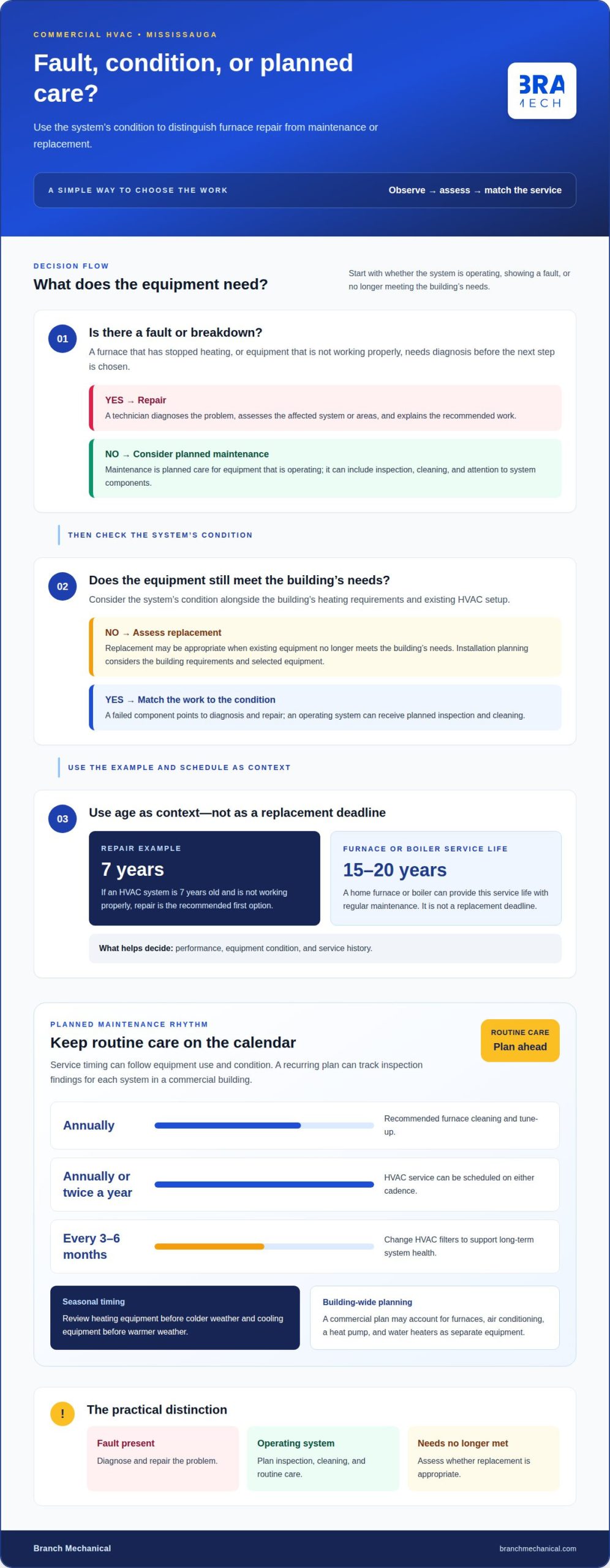
Deciding between furnace repair and maintenance
Repair responds to a fault; maintenance is planned care for equipment that is operating. If an HVAC system is 7 years old and isn’t working properly, repair is the recommended first option. The technician diagnoses the problem and explains the next steps. A planned inspection, by contrast, can identify service needs before a breakdown interrupts heating or air conditioning.
Schedule a heating and cooling system service annually or twice a year. An annual cleaning and tune-up helps keep a furnace and air conditioner properly maintained. A technician can inspect the equipment, clean relevant components, and identify wear that may need attention. The timing can follow the season, with heating equipment reviewed before colder weather and cooling equipment before warmer weather.
Filters are another routine maintenance item. Changing HVAC filters every 3-6 months supports the system’s long-term health. A preventative maintenance program can set recurring service intervals and track inspection findings for each system. For a commercial building, a maintenance plan may account for furnaces, air conditioning, a heat pump, and water heaters, rather than treating every piece of equipment as one unit.
Furnace installation and maintenance work together over the equipment’s service life. A furnace or boiler used to heat an entire home can provide 15 -20 years of service with regular maintenance. That figure is not a replacement deadline: performance, condition, and service history help determine whether continued maintenance or repair makes sense. For a new installation, planned inspections create a clear starting point for ongoing care.
Use the nature of the problem to choose the next step. A sudden loss of heat or a system that won’t operate calls for diagnosis and repair. A functioning system due for cleaning, filter replacement, or inspection calls for routine maintenance. A preventative maintenance contract can organize these recurring tasks, so equipment needs are reviewed across the year instead of only after a failure.
Residential and commercial furnace repair
Residential and commercial furnace repairs both begin with diagnosing the fault. In a home, a technician may investigate a furnace that will not start or rooms that heat unevenly. In a commercial building, the assessment also considers which areas the system serves and how the interruption affects operations.
During a repair appointment, the technician identifies the issue and explains recommended next steps. That diagnosis helps distinguish a repairable component problem from equipment that may need replacement. A furnace that is 15 years old or older is worth considering for replacement, while its condition and service history also matter.
Age alone doesn’t settle the decision. Repairs and regular maintenance can extend the life of an existing furnace that is 10 years old or older by a few more years. A furnace or boiler used to heat an entire home can provide 15 -20 years of service with regular maintenance. Performance, recurring faults, and heating needs help determine the practical next step.
For a residential system, the work may focus on restoring heat to the home and addressing uneven airflow that affects indoor comfort. In a commercial setting, a contractor may need to assess the furnace’s effect on several occupied areas. Changes in indoor comfort or air quality can help describe the problem, but the equipment diagnosis identifies the repair required.
Choose service based on what the system is doing: a sudden shutdown or repeated fault calls for repair assessment, while planned cleaning and inspection support ongoing operation. For commercial heating concerns, arrange commercial furnace service to address the equipment and building needs together.
Branch Mechanical: Commercial & Multi-Residential Mechanical Contracting
Branch Mechanical provides commercial and multi-residential mechanical contracting for buildings that need heating repairs, HVAC service, or planned maintenance. Its commercial HVAC installation and service addresses equipment needs, while commercial boilers and heating systems support broader building requirements.
Preventative maintenance contracts suit properties that need recurring system care rather than waiting for a fault to interrupt operations. The appropriate work depends on the equipment and building requirements, whether the need is furnace service, boiler support, or ongoing HVAC maintenance.
Contact Branch Mechanical to discuss your commercial heating or HVAC needs in Mississauga or Etobicoke.
Set a clear next step for your building
The next step should reflect the building’s needs. Consider whether the concern is isolated to one furnace or points to a wider system issue. Recurring interruptions may call for planned maintenance, while a new fault needs a focused assessment. This helps guide a practical service discussion without assuming every problem requires replacement.
For commercial furnace repair in Mississauga, describe the equipment concern and its effect on building operations. Branch Mechanical can discuss the mechanical work that fits your property, from a repair to ongoing system care. Note the symptoms, affected areas, and any recent changes to give the discussion a useful starting point.
Contact Branch Mechanical to discuss your building’s HVAC needs and take the next step with a plan suited to your property.
Frequently Asked Questions
What’s included with furnace and AC repair?
Furnace and AC repair starts with diagnosing the equipment fault and explaining the recommended next steps. The work depends on what the assessment finds: a furnace that won’t start requires a different repair from an air conditioner that isn’t cooling. For commercial equipment, the assessment also considers which parts of the building are affected. The repair scope follows the identified issue, rather than a standard package.
Are your technicians certified and insured?
Branch Mechanical’s technicians are fully licensed, trained, insured, and safety-certified. That combination matters for commercial work, where a service call can involve equipment connected to a larger building system. For electrical work, Branch Mechanical states that its work complies with the Ontario Electrical Code. The applicable qualifications and work scope depend on the equipment and service being performed.
How long do furnaces last on average?
A gas furnace typically lasts 15-20 years, depending on humidity, use, and maintenance. The age alone doesn’t show whether a particular unit is working well. For example, a furnace nearing the end of that range may still operate, while frequent faults can make its condition more important than its age. Service history and heating performance help inform repair or replacement decisions.
How many quotes should I get?
Get at least three quotes when comparing work for a furnace or HVAC system. Make sure each quote describes the same problem and scope, such as diagnosing a heating fault versus replacing equipment. This makes it easier to compare what each proposed job includes. For commercial buildings, the system involved and the areas affected should be clear in the work description.
Is 24/7 emergency commercial furnace repair available in Mississauga?
Yes. Branch Mechanical provides 24/7 emergency mechanical services for critical HVAC failures, including commercial furnace problems affecting business operations. A report of the affected equipment, symptoms, and building area helps establish the nature of the issue. Emergency service is intended for critical failures; planned inspection or routine system care is handled through preventative maintenance instead.
How do I choose a licensed commercial HVAC contractor in Ontario?
Choose a contractor whose qualifications and work scope fit the commercial system involved. Branch Mechanical’s technicians are fully licensed, trained, and insured, and the company provides commercial HVAC installation and service. For a furnace issue, discuss the affected equipment, the fault, and the recommended work. Electrical work must follow the applicable Ontario requirements.