

Could a routine plumbing visit leave your facility with a missed deadline or an unresolved water-safety risk? For facility managers in Mississauga and Etobicoke, commercial backflow preventer testing is more than a scheduled appointment. It’s a documented check that helps protect the potable water supply and keep required records current.
It’s understandable to have questions: which devices need testing, what happens during the visit, and how can you limit disruption? The City of Toronto, which includes Etobicoke, and the Region of Peel require annual testing, while reporting procedures and other requirements vary by municipality.
This guide explains what a test checks and how to prepare staff, arrange access, and gather records before the service visit. You’ll also learn how to manage deadlines, document results, and plan follow-up if a device needs attention. Connecting testing with your facility’s commercial plumbing maintenance can make the process easier to manage year after year.
Key Takeaways
- Backflow preventers help protect drinking water from contamination when water flow reverses through a cross-connection.
- Commercial backflow preventer testing follows a sequence: identify the device, arrange access, complete the test, document results, and plan any follow-up.
- Verify current testing, reporting, and survey requirements with the City of Toronto for Etobicoke properties and the City of Mississauga for Peel properties.
- Keep a property-level device register with locations, due dates, past reports, findings, and follow-up actions to make future visits easier to coordinate.
- Link testing plans with commercial plumbing maintenance to help organize service and support day-to-day operations.
What commercial backflow preventer testing protects in a GTA facility
Water normally moves from the municipal supply into a building. If pressure changes, flow can reverse and draw or push water from a property’s plumbing back towards the potable supply. A backflow preventer is designed to reduce that risk at connections where water could be exposed to contaminants. Because the device type and plumbing arrangement matter, commercial backflow preventer testing is part of responsible water-system management, not a generic check that applies identically to every property.
In brief: Backflow prevention testing checks whether a specific protective device operates as intended. A routine plumbing inspection looks more broadly at plumbing condition and function.
How backflow can affect commercial water systems
Two pressure changes can cause reverse flow. Back-siphonage occurs when supply pressure drops, such as during a water-main disruption, potentially drawing water from connected equipment into the supply piping. Back-pressure occurs when pressure inside a building’s system rises above the incoming supply, perhaps because of a pump or other pressurized equipment.
A cross-connection is a point where potable water could come into contact with another fluid or water source. Depending on the facility, examples might include irrigation, process equipment, or plumbing connected to commercial systems. These examples don’t mean every building has the same hazards. A properly selected and maintained backflow prevention device helps limit the chance of reverse flow carrying contaminants into drinking water.
Which commercial properties may need a testing plan?
Offices, restaurants, warehouses, and multi-residential buildings can have different plumbing layouts and uses. A restaurant’s equipment and connections may differ from those in an office. A warehouse may have process or wash-down systems, while a multi-residential property can include shared services and varied areas of use. The building’s equipment and water use help shape its risk assessment.
For facility teams, start by identifying installed devices and understanding what each one protects. Device type, property use, and local program rules can all affect testing obligations. Requirements may differ between Mississauga and Etobicoke, so verify the current instructions for the property with the relevant municipal authority.
A general plumbing review may not establish whether a particular backflow device meets its testing requirements. Keep each device’s location and identification details with the property’s plumbing records, then use the applicable local requirements to guide the testing plan. This gives staff a clear view of what needs attention without assuming every building has the same connections or obligations.
How commercial backflow preventer testing works, step by step
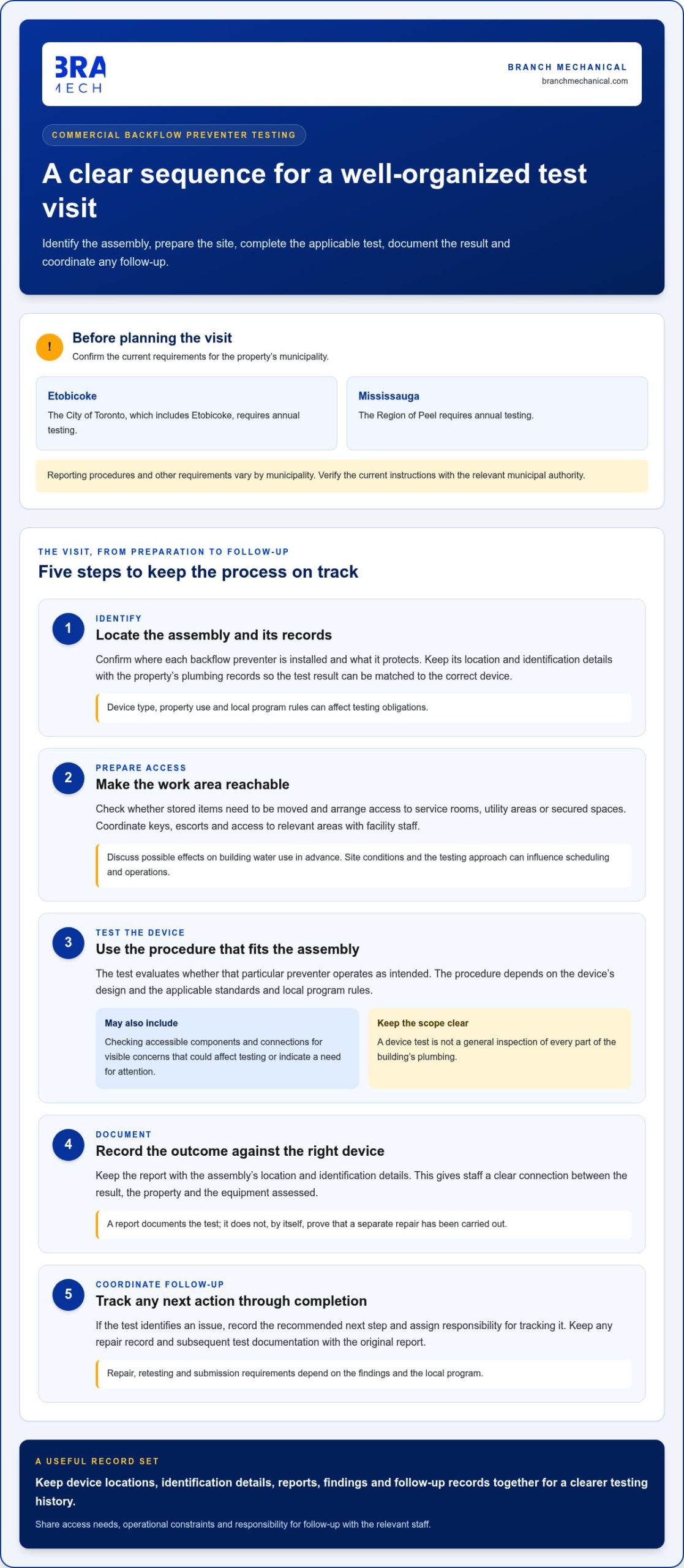
A well-organized visit follows a clear sequence: identify the device, arrange safe access, carry out the applicable test, record the result, and decide whether follow-up is needed. The exact procedure depends on the assembly and the standards and local program rules that apply. The device should be assessed in place, since equipment and plumbing arrangements vary by property.
Before scheduling, confirm where the device is located and whether it can be reached without moving stored items or interrupting other work. Some assemblies are in service rooms, utility areas, or secured spaces. Facility staff can coordinate keys, escorts, and access to relevant areas. Discuss possible effects on building water use in advance, since site conditions and the testing approach can influence scheduling and operations.
In brief: Identify the assembly, arrange access, test it using the appropriate procedure, document the result, then coordinate any required next steps.
What the technician checks during a test
The test evaluates whether the particular preventer operates as intended, using a procedure appropriate to its design. Depending on the device, the work may also include checking accessible components and connections for visible concerns that could affect testing or indicate a need for attention. Technical steps and acceptance criteria should follow the applicable requirements, rather than a one-size-fits-all checklist.
Industry resources such as the American Backflow Prevention Association (ABPA) provide background on cross-connection control and backflow prevention. Device type determines the relevant test procedure. A test result applies to the assembly and conditions assessed; it isn’t a general inspection of every part of the building’s plumbing.
What happens after the test is completed?
Once testing is complete, record the outcome against the correct device and property. Keep the report with the assembly’s location and identification details so staff can connect the result to the right equipment. If the test identifies an issue, record the recommended next action and assign responsibility for tracking it to completion.
A report documents the test; it doesn’t, by itself, prove that a separate repair has been carried out. Repair, retesting, and submission requirements depend on the findings and local program. Keep any repair record and subsequent test documentation with the original report to maintain a clear history.
Clear communication supports a smoother visit. Tell relevant staff which areas need to be accessible, flag operational constraints, and agree on how results and follow-up responsibilities will be shared. Facility managers coordinating testing with other building needs can connect it with commercial plumbing maintenance support, keeping service planning and records organized.
Mississauga and Etobicoke requirements: what facility teams should verify
Commercial backflow preventer testing requirements are shaped by local programs as well as applicable provincial codes and technical standards. These serve different purposes: municipal authorities set program rules for properties in their jurisdiction, while provincial codes and referenced standards may govern plumbing design and technical work.
Don’t assume a neighbouring municipality follows the same testing schedule or reporting process. Before setting calendar reminders, confirm current requirements for the property’s location, device, and use. Record the source and date of the guidance so your team can revisit it if program information changes.
Confirming requirements for Toronto and Etobicoke properties
Etobicoke falls within the City of Toronto. Facility teams should consult the City’s current cross-connection control guidance and verify which devices and property types it covers. Confirm the testing frequency, accepted tester criteria, submission method, deadlines, and any survey or record-keeping obligations. Keep the relevant City guidance or correspondence with the property’s compliance records.
Confirming requirements for Mississauga properties
Mississauga properties are subject to a different local program than Etobicoke properties. Check current City of Mississauga information and the Region of Peel’s backflow prevention program guidance to identify the responsible authority and applicable process. Separately verify whether the Ontario Building Code and CSA B64 standards apply to the specific work, and which current provisions are relevant.
Use a jurisdiction-by-jurisdiction comparison rather than one regional calendar:
| Jurisdiction | Requirement to verify | Responsible contact | Record to keep |
|---|---|---|---|
| Etobicoke | Covered property and device types, testing frequency, tester criteria, report submission method and deadline, and any survey requirements. | City of Toronto cross-connection control program. | Current City guidance, device details, test reports, submission confirmation, and related correspondence. |
| Mississauga | Applicable local program, device and property coverage, testing and reporting process, deadlines, tester criteria, and survey requirements. | City of Mississauga and the Region of Peel, as applicable to the requirement. | Current municipal or regional guidance, device details, test reports, submission confirmation, and related correspondence. |
| Ontario-wide technical requirements | Whether the Ontario Building Code and CSA B64 provisions apply to the building or work, and which current editions or clauses govern. | Relevant provincial code information and the authority responsible for the project. | Applicable code and standards references, project documents, and supporting test or work records. |
Assign someone to confirm the details for each property, especially if your organization manages buildings in both municipalities. A useful record includes the authority consulted, guidance version or date, applicable device, next due date, required submission route, and proof that the report was received. This helps distinguish municipal reporting obligations from the technical basis for work.
Recheck requirements when a device is installed or replaced, a building’s use changes, or a municipal notice arrives. Don’t carry a deadline or tester rule from one address to another without verifying that it applies there. A current property file gives facility staff a sound basis for planning and following up.
A practical commercial backflow testing checklist for facility managers
Preparation helps keep commercial backflow preventer testing organized and reduces avoidable delays. Start by confirming which devices are due, where they’re located, and which building activities could be affected by access or testing. A property-specific checklist also gives staff a clear way to track results and follow-up work. For broader plumbing planning, use this commercial plumbing contractor guide to consider how testing fits with other building needs.
Records and access to prepare before testing
Gather the information your team already has, even if it’s spread across work orders, emails, or paper files. A single record format isn’t essential; the goal is to make each device and its history easy to identify. Before the visit, confirm access arrangements with the staff responsible for mechanical rooms and secured areas.
- List each known device’s location and available identification details.
- Collect previous test reports, repair records, and related correspondence.
- Arrange keys, escorts, and access to rooms or areas where devices are installed.
- Note outstanding actions and who is responsible for tracking them.
Keeping building operations coordinated
Consider which tenants, departments, or equipment rely on water, and flag operational constraints before scheduling. A restaurant may need to coordinate around kitchen activity; a multi-residential building may need staff ready to direct the service team to shared mechanical spaces. Agree on who will communicate with occupants and who can make site decisions if access or scheduling needs to change.
Make the visit easier to manage by sharing device locations, access instructions, and relevant operating considerations with everyone involved. When testing sits alongside broader building work, the mechanical contractors guide for Mississauga and the GTA can help frame coordination across mechanical systems.
Keep a property-level register. A spreadsheet or maintenance log can connect each device to its history and next action. Include the device location and identifier, applicable due date, test date and outcome, report location, and any follow-up task with its status and owner. For multiple buildings, use consistent naming so staff can find the right file without confusing one property’s device with another’s.
Before closing out a visit, compare the returned documentation with the register. Add missing details, record unresolved items, and assign a follow-up owner. This helps prevent a test result from being filed without tracking the next step. For coordinated commercial plumbing planning, work with Branch Mechanical to support your facility’s maintenance needs.
Plan commercial backflow preventer testing with a dependable service partner
A reliable plan connects each device’s local requirements with the facility’s maintenance calendar. Rather than relying on memory or one annual reminder for every property, set reminders according to the current requirements for each device and location. Keep the basis for each date in the property record so staff know why an action is scheduled and what documentation is expected.
Clear ownership matters. Assign responsibility for tracking due dates, arranging site access, retaining reports, and following up on findings. If several people share these tasks, define who closes the loop when a report identifies a repair or retest. That handoff helps prevent open items from disappearing into separate work orders or email threads.
Building a repeatable testing and follow-up plan
Use municipal guidance for the property’s jurisdiction to set reminders, rather than assuming one testing interval applies everywhere. Record the source of the requirement with each device entry. Then review open findings as part of the broader preventative maintenance calendar, where related plumbing work and operational constraints can be considered together.
A repeatable process can include:
- Reviewing upcoming due dates against current municipal requirements.
- Assigning a staff owner for scheduling, access, and report retention.
- Tracking findings, corrective actions, and any required next steps to completion.
- Keeping final reports and related work records together in the property file.
This approach makes testing easier to manage across buildings with different equipment and needs. It also gives facility teams a useful history when responsibilities change, maintenance is planned, or a follow-up item remains open. Keep the schedule flexible enough to reflect current local requirements and each property’s condition and use. The calendar is a planning tool, not a substitute for reviewing the records.
Arrange commercial plumbing support with Branch Mechanical
Branch Mechanical provides commercial and multi-residential mechanical services, including commercial plumbing and preventative maintenance. This work can fit into a wider facility plan, helping managers coordinate plumbing needs with other scheduled building maintenance. Clear records and defined follow-up responsibilities remain essential.
For facilities in Mississauga and Etobicoke, a coordinated plan can keep maintenance tasks visible and give staff a consistent way to manage schedules, access, and documentation. Include commercial plumbing needs in your broader maintenance priorities to help your team plan work in an organized way.
Discuss your commercial plumbing needs with Branch Mechanical and plan a practical approach for your facility.
Make water protection part of your facility’s long-term plan
Use each testing cycle to strengthen how your facility manages water-system responsibilities over time. Reviewing past outcomes alongside upcoming maintenance can help your team identify recurring follow-up needs, keep priorities visible, and plan future work. A consistent process also makes it easier to carry knowledge forward when staff or property responsibilities change.
For facilities in Mississauga and Etobicoke, connect commercial backflow preventer testing with the broader commercial plumbing plan, while keeping municipal requirements and device records specific to each property. Branch Mechanical supports commercial plumbing and mechanical needs as part of a coordinated approach to facility maintenance.
Discuss commercial plumbing support for your facility and take the next step towards a clear maintenance plan.
Frequently Asked Questions
How often does a commercial backflow preventer need to be tested in Ontario?
For commercial properties covered by the City of Toronto and Region of Peel programs, testing is generally required annually, but Ontario doesn’t have one frequency that facility managers should assume applies to every property. Etobicoke falls under Toronto’s program, while Mississauga properties fall under Peel’s. Check current municipal requirements for the address and device, including how the due date is calculated and whether reports have a separate submission deadline.
Who is allowed to test a commercial backflow preventer?
The tester must meet the criteria set by the applicable municipal program. Toronto specifies a certified Cross-Connection Control Specialist for covered properties; requirements in Peel should be checked against the Region’s current rules and accepted qualifications. Confirm that the person conducting the test meets the relevant authority’s criteria for that device and property. General plumbing experience alone may not satisfy a municipal tester requirement.
What should a property manager do if a backflow preventer fails its test?
Review the test report and arrange prompt follow-up based on its findings and the applicable municipal instructions. A failed result doesn’t document that a repair has been completed or that the device has passed a later test. Track the required work, any retest, and applicable reporting steps separately. If the report leaves the device’s status or next action unclear, resolve that with the responsible authority and qualified personnel before closing the item.
Can a commercial building keep operating while its backflow preventer is tested?
It depends on the device, test procedure, and how the building’s water system is arranged. Testing may require temporarily isolating the assembly, which could affect connected areas or water-dependent equipment. Before the appointment, identify operations that rely on water and coordinate an access and communication plan. Don’t assume there will be no service interruption; clarify the expected operational impact for the specific device and site before work begins.
What records should a business keep after backflow preventer testing?
Keep the test report with the property address, device location and identifier, test date, and result. Retain related repair or retest records, municipal submission confirmations, and correspondence about outstanding requirements. If a report identifies follow-up work, keep the completion record with the original test document rather than replacing it. A consistent file for each property helps staff answer questions during a handover or later compliance review.
Does a newly installed commercial backflow preventer need to be tested?
Installation and testing are separate milestones, so don’t treat an installation record as proof that the device has passed a required test. Confirm applicable municipal and project requirements for commissioning, acceptance testing, reporting, and any permit closeout. Keep installation details and test documentation together, and record the next required test date once it’s established under the local program. Requirements can depend on the jurisdiction and device.
Is backflow preventer testing the same as a regular plumbing inspection?
No. A backflow test assesses a specific protective assembly using a procedure suited to its type. A general plumbing inspection may review other parts of the system, such as visible piping or fixtures, but doesn’t automatically provide a device test report or meet a municipal reporting requirement. For a facility in Mississauga or Etobicoke, keep these records distinct so a broad maintenance visit isn’t mistaken for required commercial backflow preventer testing.