
A building-wide HVAC problem rarely stays confined to one suite. Multi-residential mechanical maintenance uses planned inspections and servicing to help keep shared heating and cooling equipment operating as intended, support efficient operation, and reduce avoidable strain on building systems. A well-organized program also gives property teams a clearer picture of upcoming maintenance needs.
Managing a residential or commercial property means balancing occupant comfort, system reliability, and energy use. Preventive maintenance can help address problems before a small equipment fault becomes a larger disruption. The impact on energy use and costs depends on the building and its systems.
This article explains what a maintenance program can cover, how to organize it across a property, and what affects its scope. You’ll also learn how to assess a mechanical contractor and how Branch Mechanical’s commercial and multi-residential mechanical services can support a structured approach to HVAC upkeep.
Key Takeaways
- Build a preventive maintenance plan around equipment condition, system needs, and a clear record of inspections and follow-up work.
- Use maintenance findings to spot operating issues that can affect HVAC performance and energy use.
- In multi-unit buildings, consider how shared equipment and connections to individual suites shape maintenance planning.
- For commercial and multi-residential properties, a mechanical contractor can help organize HVAC service and preventative maintenance around the building’s systems.
Preventive maintenance for mechanical systems
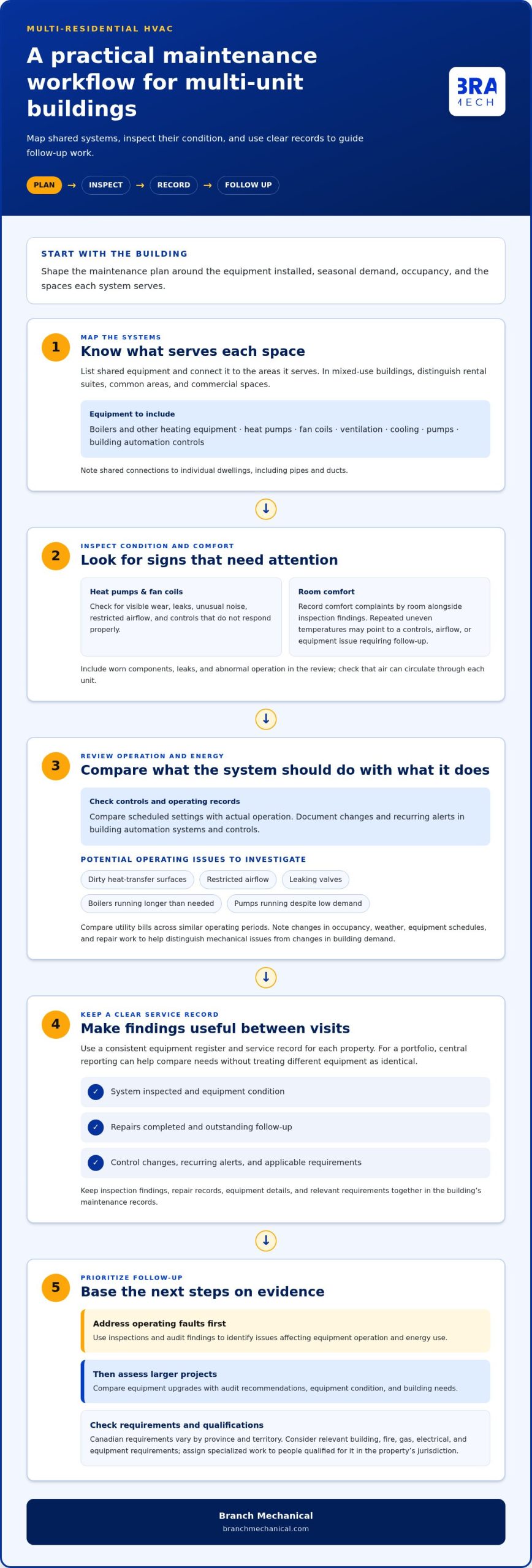
Plan maintenance around equipment condition, seasonal demand, and the systems serving each building. A practical schedule helps property teams track inspections, identify issues, and arrange follow-up work.
Common systems include boilers and other heating equipment, heat pumps, fan coils, ventilation, cooling, pumps, and building automation controls. In multi-unit buildings, shared HVAC equipment may connect to individual dwellings through pipes and ducts.
Heat Pump and Fan Coil Inspections
Inspect heat pumps and fan coil units for visible wear, leaks, unusual noise, and restricted airflow. Check that controls respond properly and air can circulate through the unit. Record comfort complaints by room alongside inspection findings. For example, recurring uneven temperatures may point to a controls, airflow, or equipment issue that needs follow-up.
Equipment Life Span and System Reliability
Routine inspections help teams find worn components, leaks, and abnormal operation before they contribute to a larger failure. Record the equipment inspected, its condition, and any repairs completed. Deferred maintenance can allow a small fault to disrupt heating or cooling, affect occupant comfort, and put added strain on connected equipment.
Include building automation systems (BAS) and controls in the review. Compare scheduled settings with actual operation, then document changes and recurring alerts. These records help building teams understand how equipment operates between service visits.
Applicable Codes and Regulations
Canadian requirements vary by province and territory, and the applicable rules depend on the building, equipment, and work being performed. Maintenance planning should account for relevant building, fire, gas, electrical, and equipment requirements in the property’s jurisdiction.
Keep inspection findings, repair records, equipment details, and applicable requirements together in the building’s maintenance records. This helps property teams track completed work and identify follow-up needs. For a multi-residential property, review the plan against its installed systems, including shared HVAC equipment and controls serving individual spaces.
Energy efficiency and utility cost savings
Energy use depends on how a mechanical system performs under the building’s actual operating conditions. Preventive maintenance can uncover faults that make equipment work harder, such as dirty heat-transfer surfaces, restricted airflow, leaking valves, or controls that run boilers longer than needed. Addressing these issues supports efficient operation and can help limit avoidable energy use.
Compare utility bills with maintenance records to spot patterns. Review usage across similar operating periods, noting changes in occupancy, weather, equipment schedules, and repair work. If energy use rises after a control adjustment, review the schedule and equipment response before changing other settings. This can help distinguish a mechanical issue from a change in building demand.
An energy audit provides a structured review of energy use, equipment, controls, and operating practices, and can identify potential improvements. For example, an audit may find that a boiler runs outside occupied hours or a pump continues operating despite low demand. Prioritize recommendations based on potential energy impact, equipment condition, and project requirements.
Incentive programs can affect which efficiency projects are financially practical, but eligibility and terms vary by program and jurisdiction. Before planning work, identify the applicable program, eligible equipment or upgrades, application timing, and documentation requirements. Keep audit findings and repair records organized to support project planning and any required submissions.
Fuel savings depend on the building’s fuel source and equipment performance. For a gas-fired boiler, addressing poor combustion or faulty controls can reduce unnecessary operation. For electrically powered cooling equipment, correcting airflow or control problems can help prevent excess runtime. Track energy and fuel use alongside comfort complaints to assess whether changes are working.
Use inspection and audit findings to prioritize maintenance and capital projects. Address operational faults first, then compare larger equipment upgrades with audit recommendations and building needs. This keeps energy decisions grounded in the mechanical system’s condition rather than assumptions about savings.
HVAC maintenance programs for multi-unit residential buildings
Plan HVAC maintenance around each building’s equipment, occupancy, and heating and cooling needs. A qualified mechanical professional familiar with the installed systems can perform the work. Assign specialized tasks to people qualified to do them under the requirements in the property’s jurisdiction.
Multi-Family and Mixed-Use HVAC
Start by mapping shared equipment and the spaces it serves. The European Union notes that residential buildings may have centralized HVAC systems connected to individual dwellings by pipes and ducts. In a mixed-use property, record which equipment serves rental suites, common areas, and commercial spaces. This helps teams investigate comfort complaints against the right system and its condition.
Multi-Building Service Agreements and Reporting
For a portfolio, use a consistent equipment register and service record for each property. Include the system inspected, its condition, work completed, and outstanding follow-up. A central report helps property managers compare needs across buildings without treating different equipment as identical. For example, track repeated heating concerns at one property separately from a ventilation issue at another.
Ventilation, Exhaust and Building Airflow
Include supply and exhaust equipment in the maintenance plan. Inspect fans, accessible filters, dampers, and visible duct connections for blockages, damage, or unusual noise. Compare airflow concerns from residents with the spaces served and the system’s operating schedule. In a mixed-use building, assess commercial-area exhaust separately from ventilation serving residential spaces.
Pumps, Distribution and Building Controls
For hydronic heating, inspect pumps, valves, and distribution lines for leaks, unusual vibration, and uneven heat delivery. Check whether controls respond to their settings and whether schedules match building use. Record recurring alerts or temperature complaints alongside the affected area. These details help a service team trace a problem through the distribution system, rather than focusing only on the room where occupants notice it.
Preventive maintenance programs for commercial properties
A commercial maintenance program should reflect how each property operates. An office tower, restaurant, and warehouse place different demands on heating, ventilation, cooling, and refrigeration equipment. Start with an equipment register listing each system, its location, the spaces it serves, and its known condition. Technicians can use this inventory to plan inspections and document repairs.
Set priorities by linking equipment to its operational impact. In a Toronto restaurant, a ventilation fault can affect kitchen operations, while an office heating issue may disrupt tenant comfort. Record recurring complaints, equipment alerts, and repair history together. This helps the maintenance team identify patterns and distinguish an isolated fault from a recurring property-wide problem.
Make service reports useful for decision-making. After each visit, record the equipment inspected, what technicians observed and completed, and what needs follow-up. Owners can use these records to plan upcoming work, review recurring failures, and coordinate access with tenants. For a portfolio, use the same core reporting fields across sites while adapting maintenance tasks to each building’s equipment.
Define the program’s scope around the systems included in the property’s maintenance plan. These may include HVAC, boilers, plumbing, gas, electrical equipment, refrigeration, and ventilation. Connect service planning with operating schedules, tenant needs, and planned capital projects. Clear records also help owners distinguish routine maintenance from repairs or equipment upgrades that need separate planning.
For commercial and multi-residential properties that need structured mechanical upkeep, discuss preventative maintenance contracts as a way to organize scheduled service and reporting around the building’s systems.
Branch Mechanical: Commercial & Multi-Residential Mechanical Contracting
Branch Mechanical provides commercial and multi-residential mechanical contracting for properties that need coordinated HVAC maintenance, service, or installation. Turn to the team when building equipment needs planned service, ongoing HVAC support, or attention to commercial boilers and heating systems.
Preventative maintenance contracts help property teams organize scheduled mechanical work around their buildings’ systems and operating needs. Branch Mechanical also provides HVAC installation and service for commercial and multi-residential properties. The appropriate scope depends on the equipment and the needs of each building.
Contact Branch Mechanical to discuss mechanical maintenance for your property and the systems you need serviced.
Make maintenance part of your building plan
Set a clear next step: decide who will coordinate maintenance, which building records they’ll use, and how completed work will inform future planning. A practical multi-residential mechanical maintenance plan should stay connected to property operations, not sit apart as a one-time checklist. Review it when building use changes, equipment is upgraded, or recurring service needs emerge.
Bring your equipment information and priorities to the discussion. Branch Mechanical provides commercial and multi-residential mechanical contracting, commercial HVAC installation and service, and preventative maintenance contracts. These services can support property teams planning ongoing upkeep or addressing a specific mechanical need. The scope should reflect your property’s systems and requirements.
Contact Branch Mechanical today to discuss a maintenance approach for your building. A thoughtful plan gives your team a practical starting point for managing the work ahead.
Frequently Asked Questions
What is included in a multi-residential mechanical maintenance contract?
A multi-residential mechanical maintenance contract sets out the equipment covered, planned tasks, reporting, and how additional work is handled. Before signing, match the scope to the building’s equipment register and note access requirements for mechanical rooms and suites. Clarify how technicians document findings, communicate urgent defects, and seek approval for repairs beyond scheduled maintenance. These details help property teams coordinate work and track responsibilities.
How often should boilers, HVAC systems, pumps, and ventilation be inspected and serviced?
Set service intervals according to manufacturer guidance, operating conditions, system condition, and seasonal demand. A boiler in a heavily occupied building may need a different plan from equipment used intermittently. Ask the maintenance team to map recommended tasks to each asset, then record completed work and new issues. Review the schedule when equipment changes or recurring faults appear instead of applying one interval to every system.
What preventive maintenance schedule should property managers use for apartment buildings?
Use an asset-based calendar that assigns each system a task, a responsible person, and a record of completion. Group planning around seasonal transitions, such as preparing heating equipment before colder weather and reviewing cooling operation before warmer periods. Add resident reports and repair history to the same log. This gives managers a practical way to coordinate suite access, track overdue work, and adjust priorities as building needs change.
How should property managers compare mechanical maintenance contractors and service agreements?
Compare each agreement with the property’s equipment register and operating priorities. Check that the proposed scope identifies covered systems, scheduled tasks, reporting, repair approvals, and how urgent calls are handled. Branch Mechanical provides commercial and multi-residential mechanical contracting, HVAC service, and preventative maintenance contracts. Use these services as a starting point to define the work your buildings need and review the proposed scope.
What emergency mechanical maintenance services should a multi-residential building have?
Plan for urgent failures that interrupt essential building operations, such as loss of heating, HVAC breakdowns, or electrical and refrigeration failures in shared or commercial areas. Keep equipment locations, access instructions, and escalation contacts together so managers can relay useful details quickly. Branch Mechanical offers 24/7 emergency mechanical services for critical HVAC, refrigeration, and electrical failures, giving building teams a defined route for urgent mechanical response.