
A mechanical maintenance quote is shaped by the building, not a one-size-fits-all rate. For building maintenance mechanical services in Mississauga, start with a provider’s own service page to find contact details and see which systems it supports. The price depends on the building and is provided after a quote request, with the scope of work, equipment, system condition and maintenance schedule all affecting the estimate.
It’s reasonable to want clear costs before planning work for a condo or commercial property. Mechanical maintenance can cover different needs, from routine HVAC servicing to work on heating, plumbing, refrigeration or electrical systems.
This article explains how to locate providers, compare the services they offer and understand what shapes a maintenance quote. It also covers how preventive maintenance can help building teams plan work and keep essential systems operating reliably.
Key Takeaways
- Use providers’ service pages to find contact details and identify which building systems they maintain.
- Map a condo’s shared mechanical systems and recurring needs before defining the maintenance scope.
- Compare HVAC, refrigeration, plumbing and electrical work by the systems and tasks each service covers.
- Scheduled inspections can help building teams spot maintenance needs and plan work; learn how Branch Mechanical’s preventive maintenance contracts fit this approach.
How many commercial building maintenance services are there based in Mississauga, Canada?
There’s no single useful count of commercial mechanical providers in Mississauga. To find a fit for your building, compare the systems each provider services, the work included and how well its scope aligns with your needs.
Commercial Heating and Cooling Work
Commercial heating and cooling work can include installation, maintenance and repair. For example, a property manager can arrange service for a central heating system and report unusual noise or uneven temperatures for diagnosis. Identify the building’s equipment and the areas it serves before comparing scopes. Building maintenance mechanical services in Mississauga can cover different systems, so a clear equipment list makes the comparison more useful.
HVAC Installation and Replacement
Commercial HVAC installation and replacement may involve removing existing equipment, preparing the site and coordinating work with building operations. Before discussing a project, note the equipment, the areas it serves and any operating constraints. For an office fit-out, include the planned layout and related mechanical requirements in the project brief. These details help define the work and compare proposals on the same basis.
Property managers can choose a contractor by comparing its commercial experience, service scope and examples relevant to the building. Find contact information on provider websites and describe the property’s systems and needs. For emergency refrigeration repairs, look for commercial refrigeration service. For an industrial fit-out, outline affected systems and project requirements. Building maintenance mechanical services in Mississauga should align with the equipment and work required.
Ontario requirements depend on the work involved. Building, electrical, gas and fire-safety rules may apply to different parts of a mechanical project. Identify the systems and tasks in scope so the relevant requirements can be considered.
Contractor qualifications should match the trades and tasks involved. HVAC, electrical and gas-fitting work have distinct scopes, so consider the qualifications relevant to each part of the project.
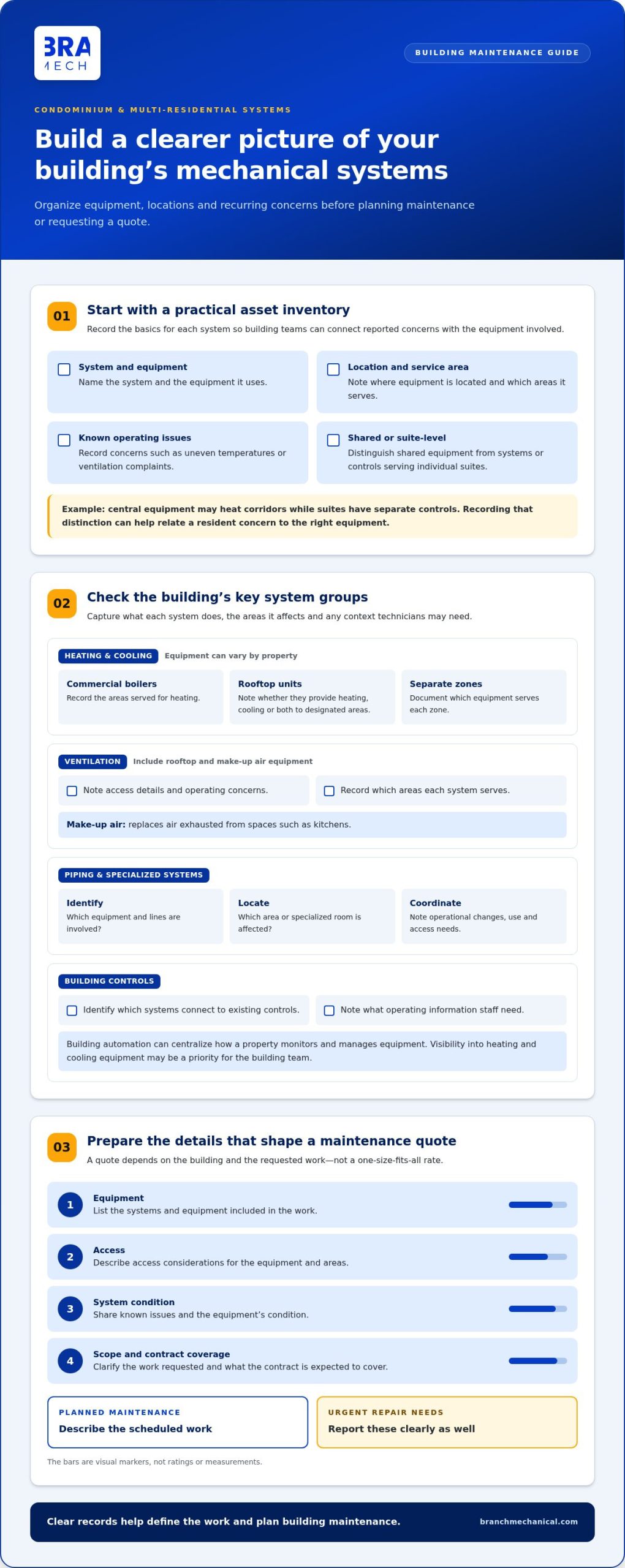
Maintenance costs depend on the equipment, access, condition, scope of work and contract coverage. A quote can reflect both planned maintenance and urgent repair needs, so describe each clearly when requesting one.
Rebate eligibility depends on the program’s criteria, the property and the proposed upgrade. Identify the equipment or improvement, then compare it with the program requirements.
Condominium and multi-residential mechanical systems
A condominium’s mechanical equipment serves shared spaces and individual suites in different ways. Start an asset inventory by recording each system, its location, the areas it serves and any known operating issues. For example, note whether central equipment heats corridors while suites have separate controls. This helps property managers connect resident concerns with the equipment involved.
Include rooftop units and make-up air systems in the building’s maintenance plan. A rooftop unit may provide heating or cooling to designated areas, while make-up air replaces air exhausted from spaces such as kitchens. Record access details, operating concerns and the areas each system serves. This gives technicians useful context when investigating uneven temperatures or ventilation complaints.
Heating and cooling equipment varies by property. A building may use commercial boilers for heating, rooftop equipment for conditioning, or separate systems for different zones. Document each equipment type and the areas it serves before planning repairs or upgrades. These records can help distinguish a suite-level concern from an issue with shared equipment.
Process piping and specialized systems require a clear understanding of what each line serves. In a multi-residential building, identify the relevant equipment, affected area and any operational changes before arranging work. For example, work on piping that serves a specialized room may need to be coordinated with its use and access requirements. Clear records help define the scope.
Building automation upgrades can centralize how a property monitors and manages equipment. Before planning an upgrade, identify which systems connect to the existing controls and what operating information staff need. A building team might prioritize visibility into heating and cooling equipment. This provides a practical basis for defining the upgrade and coordinating work with existing systems.
For a multi-residential property, organize equipment records and recurring concerns before planning mechanical work. Building automation and energy management can be part of that discussion when reviewing building controls and system coordination.
Mechanical, HVAC, refrigeration, plumbing and electrical services
Commercial properties in Mississauga may need HVAC, refrigeration, plumbing, electrical or broader mechanical maintenance. The right scope depends on the systems in the building and the work required.
Mechanical, Plumbing, and Electrical Services
Mechanical service can involve several building systems, while plumbing and electrical work address distinct equipment and faults. For an office building, a manager might report a plumbing issue on one floor and a lighting or electrical concern elsewhere. Record each affected area, the equipment and its symptoms before arranging service. This helps clarify which trades are involved and define the repair scope. For properties with multiple buildings, keep separate records so recurring concerns can be traced to the right location.
HVAC, Refrigeration, and Hydronic Systems
HVAC services for office buildings can include servicing, repairs and installation. Commercial refrigeration and hydronic heating systems have different operating needs, so identify each system and its role before planning maintenance. A hydronic system circulates heated water through equipment such as radiators or fan coils. For a refrigeration concern, note the affected space or equipment. This helps distinguish a localized fault from one that may involve a wider system.
Around-the-Clock Service and Emergency Response
Some commercial mechanical service arrangements include 24/7 support for urgent HVAC/R and plumbing issues. Emergency HVAC repairs focus first on understanding the reported failure and the affected building areas. For example, a loss of heating in an occupied office tower differs from a refrigeration fault affecting stored goods. Keep the equipment location, observed symptoms and operational impact together when reporting an issue. Clear details help the service team understand what needs attention.
To organize service needs, list each system, its location and the issue or maintenance task. Separate planned work from urgent repairs, and group related HVAC, plumbing, refrigeration and electrical needs by building. This gives property teams a clearer basis for defining scope and coordinating work across multiple buildings.
Preventive maintenance and scheduled inspections
A planned maintenance program turns equipment care into assigned tasks rather than last-minute decisions. Property teams can list each system, record its condition and schedule inspections around building operations. For example, a commercial boiler and a rooftop unit need different checks, access arrangements and service records.
Preventive maintenance identifies service needs before they become urgent, while reactive repairs address failures after symptoms appear. Scheduled checks can help commercial building teams plan access and coordinate work. By contrast, an unexpected HVAC breakdown may disrupt occupied areas.
Delaying maintenance can allow a small issue, such as unusual equipment noise or a minor leak, to worsen. A failure may affect building comfort, interrupt operations or require broader repairs. Logging changes promptly gives the maintenance team a useful starting point for diagnosis.
Preventative maintenance works best when tasks match the equipment and its operating context. Create an asset list, note service history, assign responsibility and record completed work. For example, log recurring temperature complaints alongside the affected equipment so technicians can compare reports with inspection findings.
Scheduled inspections should produce clear findings and follow-up actions. Record the equipment inspected, its condition, work completed and any item requiring attention. Building managers can then track open tasks and plan access around tenants, office schedules or shared mechanical-room use.
Include backflow prevention testing in the building’s maintenance records. Document the device location, test outcome and any follow-up work so staff can track its status. Keep these records with plumbing service notes to make related issues easier to review during future maintenance planning.
Start with the building’s equipment inventory and recent service records. Use them to create a practical schedule, assign follow-up tasks and distinguish planned work from urgent repairs.
Branch Mechanical: Commercial & Multi-Residential Mechanical Contracting
Branch Mechanical supports commercial and multi-residential properties with mechanical contracting, HVAC installation and service, and preventative maintenance contracts. Property managers in Mississauga and Etobicoke can turn to the team to plan ongoing system maintenance, address HVAC needs or coordinate work on commercial boilers and heating systems.
For a condo or commercial building, a maintenance contract can organize scheduled service around the property’s equipment and operating needs. For installation or repair work, share the affected system and project scope to make the discussion specific.
Contact Branch Mechanical or visit branchmechanical.com to discuss your building’s mechanical service needs.
Make your next maintenance decision with a clear plan
Before your next maintenance discussion, turn building records into a short working brief. Identify the equipment that needs attention, note access constraints and distinguish recurring concerns from new work. This gives the conversation a practical starting point and helps align service planning with the property’s operations.
For property teams arranging building maintenance mechanical services in Mississauga, a brief can keep the discussion focused on actual priorities. Branch Mechanical provides Commercial & Multi-Residential Mechanical Contracting, Commercial HVAC Installation & Service, and Preventative Maintenance Contracts. Match the requested work to the relevant systems rather than treating every maintenance task alike. A clear brief gives building staff and the mechanical team a more focused starting point.
Contact Branch Mechanical today to discuss your building’s needs and plan a practical next step. A clear, organized approach is a strong foundation for ongoing building care.
Frequently Asked Questions
How do I get contact information for these companies?
Find contact details on a contractor’s official website, usually on its contact or service page. Check that the listed services match your building’s needs before reaching out. For Branch Mechanical, property managers can call 416‑672‑0493 or email sales@branchmechanical.com. Have the property address, affected equipment and a concise description of the work ready to help make the initial conversation focused.
Which Mississauga contractors provide commercial HVAC, plumbing, and mechanical maintenance?
Branch Mechanical provides commercial and multi-residential mechanical contracting in Mississauga and Etobicoke, including commercial HVAC installation and service, plumbing and gas fitting, and preventative maintenance contracts. Property managers can use these services to coordinate work across a commercial building or multi-unit property. To make the initial discussion useful, identify the building type, systems involved and whether you’re planning ongoing maintenance or addressing a specific service need.
What mechanical maintenance services do commercial buildings typically need?
Maintenance priorities vary by building and the role its equipment plays in daily operations. A restaurant may prioritize kitchen ventilation and refrigeration, while an office may focus on heating, cooling and building controls. Use asset records and work orders to identify recurring issues, note the equipment affected and set priorities according to operational impact.
How often should commercial HVAC and mechanical systems be inspected and serviced?
Set inspection timing according to equipment guidance, operating conditions and service history. A heavily used system may need a different schedule from equipment used seasonally. Record inspection dates, findings and repairs for each asset, then review the plan when occupancy, use or equipment changes. This helps managers base schedules on the building’s needs instead of applying the same interval to every system.