
A heater can run and still leave a warehouse shift cold. Warehouse heating system repair in Mississauga or Etobicoke should begin with finding the cause, whether it is uneven heat, a burner or ignition fault, or a boiler problem. Effective repair addresses both the equipment fault and how heat reaches work areas.
This matters when heating needs vary by shift, shipping doors open frequently, or high ceilings trap warm air above the work floor. Troubleshooting should consider both the heating equipment and airflow through the warehouse.
This article explains how warehouse heating and cooling challenges affect comfort, what technicians inspect when burners or ignition systems fail, and how boiler faults can disrupt operations. It also covers factors that shape repair work and when preventative maintenance or commercial mechanical service can help support reliable heating as shift demands change.
Key Takeaways
- Review airflow patterns and door-related heat loss to identify why conditions vary across warehouse zones and shifts.
- Burner and ignition troubleshooting should include checks of combustion and venting, not just whether the equipment starts.
- Recognize how Calgary’s cold-weather demands can expose boiler faults that affect reliable heating.
- Track recurring breakdowns and temperature changes to help determine when repair or preventative maintenance is the practical next step.
Warehouse heating and cooling challenges
Warehouse heating and cooling systems must accommodate changing shifts, tall spaces, and frequent loading-bay activity. Proper airflow and seasonal adjustments help maintain workable indoor conditions and air quality.
Warehouse Heating and Cooling Systems
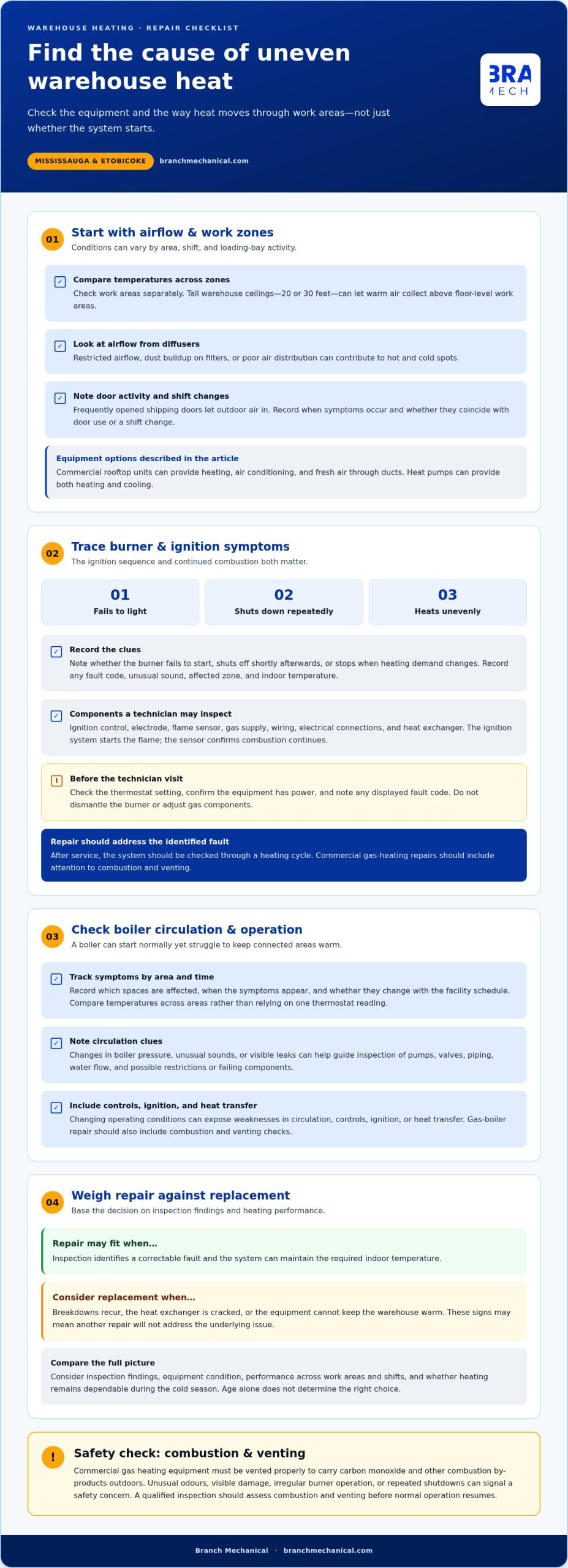
Commercial rooftop units can provide heating, air conditioning, and fresh air through ducts; heat pumps can provide both heating and cooling. Warehouse ceilings can reach 20 or 30 feet, so warm air may collect above floor-level work areas. Check temperature differences between work zones, airflow from diffusers, and whether outdoor air entering through shipping doors disrupts comfort. These challenges can affect each shift differently.
Repair Versus Replacement Decisions
Repair is generally appropriate when inspection identifies a correctable fault and the system can maintain the required indoor temperature. Consider replacement if the equipment breaks down repeatedly, has a cracked heat exchanger, or cannot keep the warehouse warm. These signs may mean another repair will not address the underlying issue. Compare the inspection findings with performance across work areas and shifts, including whether heating remains dependable during the cold season.
Common Causes of System Failure
Common causes include burner or ignition faults, boiler problems, restricted airflow, and worn or damaged components. Frequently opened shipping doors let outdoor air in, increasing heating demand and making indoor temperatures harder to control. Dust can build up on filters and restrict airflow, while poor air distribution can create hot and cold spots. Start by recording when symptoms occur, which zones are affected, and whether they coincide with door activity or shift changes.
Safety Risks of Malfunctioning Systems
A malfunctioning gas heating system can raise combustion and venting concerns. Commercial heating equipment must be vented properly to carry carbon monoxide and other combustion by-products outdoors. A qualified inspection should assess combustion and venting, particularly if a burner runs irregularly or the system fails to heat properly. Treat unusual odours, visible damage, or repeated shutdowns as more than comfort issues. These symptoms may signal a safety concern that needs prompt attention before normal operation resumes.
Burner assembly and ignition repairs
A burner that fails to light, shuts down repeatedly, or produces uneven heat needs a methodical diagnosis. In a warehouse, delayed ignition can leave work areas below the required temperature, especially during winter shifts. The fault may involve the ignition control, electrode, flame sensor, gas supply, or wiring. These components work together: the ignition system starts the flame, and the sensor confirms that combustion continues.
Repeatedly resetting the equipment can obscure useful clues without fixing the cause. Note whether the burner fails to start, shuts off shortly afterward, or stops working only when heating demand changes. Record any control-panel fault code, unusual sound, or affected zone. A commercial heating technician can use these observations to focus the inspection on the burner, controls, electrical connections, and heat exchanger.
Before calling a technician, check the thermostat setting, confirm the equipment has power, and note any displayed fault code. Record the indoor temperature, when the problem occurs, and whether it affects one heater or several. Do not dismantle the burner or adjust gas components; these tasks require inspection of combustion and venting.
Repair should address the identified fault, not just restore a temporary flame. A technician may clean or replace a failed ignition component, correct a control or wiring issue, or investigate restricted fuel delivery. After service, the system should be checked through a heating cycle. Combustion and venting checks are important because commercial gas-heating repairs must account for safe operation and exhaust removal.
Replacement may be worth considering if inspection finds a cracked heat exchanger or repeated failures that keep the warehouse from staying warm. High ceilings can make uneven heating more noticeable, so assess temperatures at floor level as well as near the equipment. Share recorded symptoms and fault codes to help focus diagnosis on the burner assembly and ignition sequence.
Common Calgary climate-related boiler faults
For warehouse operators in Mississauga and Etobicoke, boiler faults can disrupt heating across work areas and shifts. A boiler may start normally but struggle to maintain consistent warmth in connected spaces. Changing operating conditions can expose weaknesses in circulation, controls, ignition, or heat transfer. Record which areas are affected, when symptoms appear, and whether they change with the facility’s schedule.
Circulation problems can create uneven heat across a building. Branch Mechanical technicians can inspect pumps, valves, piping, and water flow to identify restrictions or failing components. Changes in boiler pressure, unusual sounds, or visible leaks provide useful clues. Track these symptoms alongside temperatures in each area rather than relying on a single thermostat reading to represent the whole facility.
Equipment condition is central to repair decisions. Repeated breakdowns, difficulty heating the building, or a cracked heat exchanger can indicate that replacement deserves consideration. Age alone does not determine the right choice. An inspection should assess the equipment’s condition, the fault, and whether the boiler can meet the facility’s heating requirements.
Combustion and ventilation also need attention during gas-boiler repairs. Problems with burner operation or exhaust flow can create safety concerns. A technician should inspect combustion and venting, then assess operation through a heating cycle. Do not dismiss recurring shutdowns as thermostat issues, especially if the boiler also displays an error code or makes unusual sounds.
Before arranging service, note the boiler’s make and model, any displayed fault codes, and the affected work areas. Include when the problem began and whether it coincided with a schedule or building-use change. These details can focus the assessment on the system’s controls, circulation, or burner. If the boiler stops heating essential spaces, treat the disruption as urgent and arrange a prompt assessment. The findings can guide whether repairing the existing equipment or planning a replacement better suits the facility.
What are common signs that a warehouse heating system needs repair?
Look for patterns across shifts and work areas. A thermostat reading alone may not reveal a failing system, especially in a warehouse with high ceilings. Record indoor temperatures by zone, when symptoms appear, and whether they follow changes in occupancy or loading activity. This log can help distinguish a local comfort issue from a system-wide fault.
Common warning signs include:
- Some work areas stay cold while others become unusually warm.
- The heater starts and stops repeatedly or fails to maintain its set temperature.
- Burner ignition becomes unreliable, or the equipment displays a recurring fault code.
- A boiler makes unusual operating sounds, leaks, or struggles to heat connected spaces.
- Staff notice new odours, visible damage, or changes in ventilation near the equipment.
Look for changes over time. A cold area may point to airflow or distribution trouble, while several zones losing heat can indicate a broader equipment fault. Repeated shutdowns deserve attention during the heating season in Mississauga and Etobicoke. Commercial boilers around 18-22 years old may warrant closer condition assessment, though age alone doesn’t prove a repair is needed.
Distinguish comfort symptoms from potential safety concerns. A gas-heating problem involving combustion or venting needs prompt professional attention. Do not open burner assemblies, adjust gas components, or repeatedly reset a unit that keeps shutting down. Instead, note displayed codes and affected areas. These details help a technician focus the inspection and assess safe operation.
Arrange an assessment when symptoms recur, temperatures remain uneven, or the equipment can’t maintain heat during normal shifts. A professional can inspect the controls, burner, boiler, heat exchanger, and venting, then identify whether repair addresses the cause. For persistent boiler or heating issues, arrange commercial heating system service to assess the equipment and determine the appropriate next step.
Branch Mechanical: Commercial & Multi-Residential Mechanical Contracting
Branch Mechanical provides commercial mechanical contracting for facilities with warehouse heating concerns, including uneven temperatures, recurring equipment faults, and boiler issues. Its Commercial HVAC Installation & Service and Commercial Boilers & Heating Systems offerings address heating equipment needs, while Preventative Maintenance Contracts support planned system upkeep.
Turn to Branch Mechanical when a heating problem needs professional assessment, recurring faults are disrupting operations, or you are planning maintenance for commercial equipment. The right next step depends on the system and the issue affecting your facility.
Contact Branch Mechanical to discuss your commercial heating needs.
Plan the next step for dependable warehouse heat
Base your next heating decision on operating information, not a single cold day or a temporary reset. Record which areas are affected, when the problem occurs, and how it changes across shifts. These details give a service assessment a practical starting point and connect the repair decision to your facility’s operating needs.
For warehouse heating system repair, Branch Mechanical offers Commercial & Multi-Residential Mechanical Contracting and Commercial HVAC Installation & Service. Preventative Maintenance Contracts support planned upkeep, helping facility teams organize service around equipment condition and operating demands. The next step may be a repair assessment or a maintenance discussion, depending on your system’s symptoms.
Share your warehouse’s heating concerns with Branch Mechanical to discuss the service that fits. Contact Branch Mechanical for service and take a clear, considered step towards more dependable heating for your shifts.
Frequently Asked Questions
How much does warehouse heating system repair cost in Canada?
Repair cost depends on the fault and the work needed to correct it; there is no single price for warehouse heating system repair across Canada. A technician’s assessment identifies the affected equipment, required parts, and repair scope. For Branch Mechanical’s commercial services, pricing depends on the case and is provided after a quote request. Share the equipment type and symptoms to support an informed assessment.
What factors affect the cost of repairing a warehouse furnace or unit heater?
The main cost factors are the diagnosed fault, required parts, equipment condition, and time needed to complete and test the repair. A failed control component differs from damage to a major assembly. Access to the furnace or unit heater, and whether the problem affects connected equipment, can also shape the work. A clear description of symptoms helps define the scope before a quote is prepared.
How can I find a licensed commercial HVAC repair contractor near me in Canada?
Choose a contractor serving your municipality and confirm their licence, insurance, and relevant commercial HVAC experience. Licensing requirements vary by province and type of work, so assess credentials against the work being performed. Branch Mechanical’s technicians are fully licensed, trained, insured, and safety-certified. Branch Mechanical serves the Greater Toronto Area, including Mississauga and Etobicoke, making its service area relevant to businesses in those communities.
What Canadian codes and regulations apply to commercial warehouse heating system repairs?
In Ontario, commercial gas-fired appliances must be installed and serviced by TSSA-certified technicians. Gas-heating repairs should also include checks to ensure combustion and venting safely carry carbon monoxide and other by-products outdoors.
How often should commercial warehouse heating systems be inspected and maintained?
Arrange professional commercial heating maintenance before winter begins. For gas-heating service, include checks of combustion and venting.