
Waiting for equipment to fail is a reactive way to manage building maintenance. Preventative maintenance contracts for buildings define which assets a service provider maintains, what work is performed and when it takes place. The goal is to identify developing issues early and address them before they disrupt building operations.
It’s easy to focus on equipment only when it stops working, but planned care makes maintenance more predictable. A contract can schedule inspections and servicing around a building’s needs, including routine care for HVAC and plumbing systems. This article explains what preventive maintenance involves, what a commercial contract may cover and how regular service can help limit disruptive emergency repairs and support equipment longevity.
Key Takeaways
- Understand how scheduled maintenance can address developing issues before they become disruptive equipment failures.
- Use equipment manuals, warranties and building records to shape maintenance activities and review the plan before budgeting.
- Recognize how routine inspections and cleaning help keep building systems operating effectively.
- Connect equipment condition and repair history to longer-term replacement planning and capital budgets.
- See how a contract can define responsibility for commercial HVAC and plumbing assets, the work involved and its schedule.
Avoiding costly emergency repairs
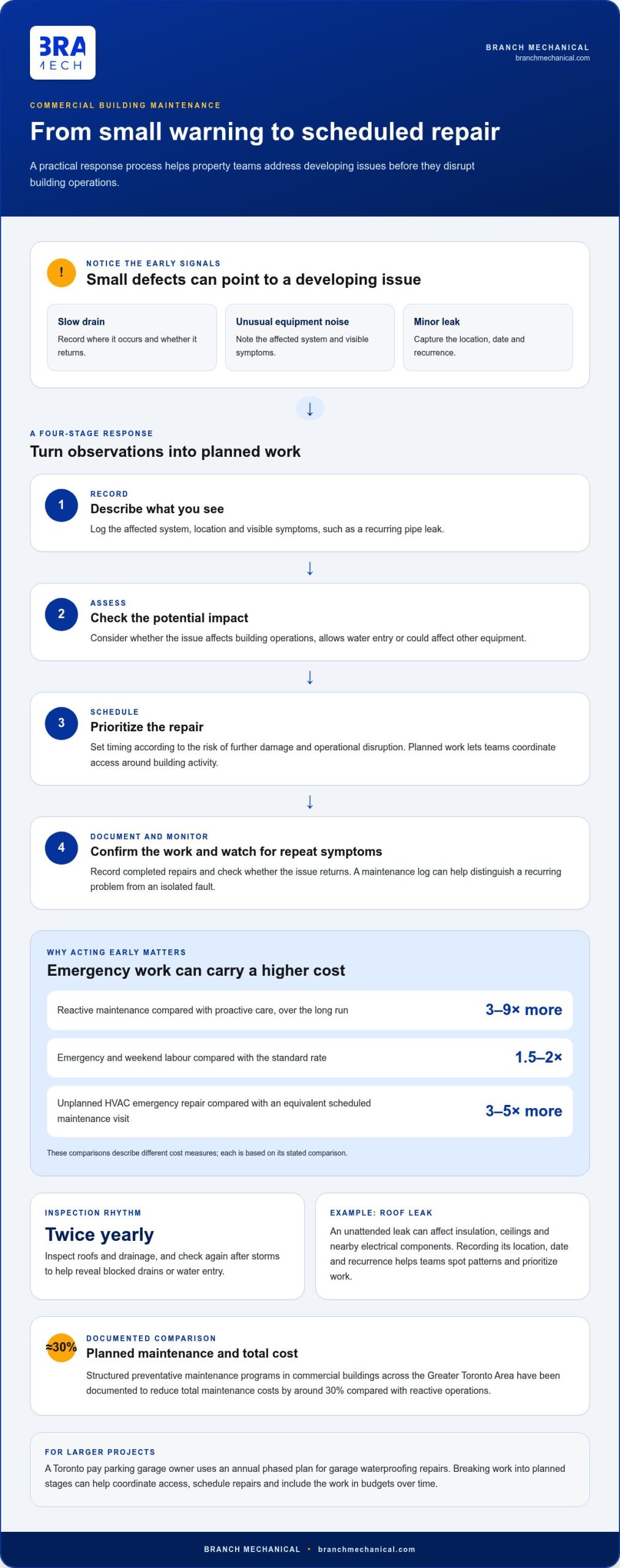
Small defects are easier to manage before they interrupt building operations. A slow drain, unusual equipment noise or minor leak can signal a developing issue. Managers can record observations, assign follow-up work and track repairs in a maintenance log. This information supports clearer budgeting and helps distinguish a recurring problem from an isolated fault.
Reactive maintenance can cost three to nine times more over the long run than proactive care. Emergency repairs can also disrupt tenants, staff and business operations while trades coordinate access and investigate the failure. Emergency and weekend labour is typically charged at 1.5-2 times the standard rate. For HVAC, an unplanned emergency repair can cost 3-5 times more than an equivalent scheduled maintenance visit.
Prompt repairs can keep minor problems from spreading to connected systems. For example, an unattended roof leak can affect insulation, ceilings and nearby electrical components. Recording the leak’s location, date and recurrence helps managers identify patterns and prioritize work. Roof and drainage inspections twice yearly and after storms can also help reveal blocked drains or water entry before the next heavy rainfall.
Large projects don’t always need to happen all at once. A Toronto pay parking garage owner uses an annual phased plan to repair garage waterproofing. Breaking work into planned stages can help property teams coordinate access, schedule repairs and include the work in budgets over time. The same approach can keep projects manageable when building components have distinct sections or areas.
Use a practical response process when monitoring identifies a concern:
- Record the affected system, location and visible symptoms, such as a recurring pipe leak.
- Assess whether the issue affects building operation, water entry or other equipment.
- Schedule repairs based on the risk of further damage and operational disruption.
- Document completed work and monitor the area for repeat symptoms.
This approach won’t prevent every equipment failure, but it can limit avoidable escalation. Planned repairs let managers coordinate access and schedule work around building activity. A sudden failure may demand urgent decisions while occupants or operations are affected. For commercial properties, clear records of minor issues, inspections and completed repairs help ensure maintenance plans respond to actual conditions, not just visible emergencies.
Promptly addressing minor maintenance problems can help prevent major failures and reduce future repair costs. In commercial buildings, completing small repairs early can cost less than facing larger repairs or replacements later. Preventive maintenance can also help avoid unplanned interruptions, preventable repairs and equipment replacement costs. Emergency work on building systems is generally more disruptive to operations and costlier than repairs scheduled in advance.
Structured preventative maintenance programs in commercial buildings across the Greater Toronto Area, including those supported by Branch Mechanical, have been documented to reduce total maintenance costs by around 30% compared with reactive operations. These comparisons support treating maintenance as planned operational work: consistent attention to smaller issues can limit their effects on building activity and help avoid more expensive interventions.
Why Is Routine Maintenance Important?
Planned maintenance turns building records into a workable schedule. Managers can use equipment manuals, warranties, manufacturer guidance and a reserve study to identify components for inspection, servicing or replacement. A pump’s service requirements, for example, may differ from an air-handling unit’s, so a single general calendar can miss important tasks.
Contract prices depend on the work included, the building’s systems and the maintenance frequency. Pricing may be calculated by square footage, by the assets covered or through a combination of both, with equipment type, condition, access and service scope affecting the calculation. The price depends on the case and is given after a quote request, based on factors such as the building’s size, asset inventory, service frequency and required work.
Build the schedule around asset information, not guesswork. An asset register can record each system’s location, age, condition, service history and manufacturer guidance. Managers can compare similar components, identify repeat repairs and develop a lifecycle plan. In an apartment building, for example, the register might distinguish shared boilers and pumps from equipment serving individual areas, clarifying responsibilities and priorities.
Use the register to connect current maintenance with capital planning. Repair histories can show whether a component needs continued servicing, a planned upgrade or eventual replacement. Review building maintenance activities annually before budget season. This gives managers time to identify upcoming work, align spending with building priorities and avoid treating every repair as an unexpected expense.
Planned work also helps teams prepare for downtime. Service affecting heating, ventilation or water can be scheduled around building use, with access and tenant communication arranged in advance. In a commercial property, managers can coordinate work during a lower-occupancy period and plan temporary adjustments before technicians begin, reducing uncertainty for occupants and operations.
Building management systems need their own review cycle. A schedule may include quarterly calibration and an annual full review, helping teams identify control issues and plan repairs or upgrades. Since reactive facilities spend an average of 4.8 times more per repair event than facilities doing the same work under a planned schedule, timely maintenance can support savings as well as continuity.
For managers comparing preventative maintenance contracts for buildings, a clear scope connects the asset register, service intervals and planned work. A preventative maintenance contract can help organize those activities around the building’s systems, making the schedule easier to manage and budget for.
Planning gives owners and tenants time to prepare before work affects building operations. A preventive maintenance plan can draw on a reserve study, owner manuals and warranties to identify tasks and set schedules. Manufacturer or contractor information can also help shape the calendar. Property managers can bring these elements together in an integrated plan.
Regular maintenance can reveal when control systems may need replacement, giving teams time to budget and plan repairs or upgrades before equipment fails. For a large project, building owners are advised to seek consultation up to a year before undertaking it. Advance planning can help owners and tenants minimize downtime and disruption.
What is preventive maintenance?
Preventive maintenance is planned work that keeps building equipment in working order and addresses developing problems early. For a property team, it combines routine checks, cleaning and action based on equipment condition.
Routine checks, cleaning and monitoring
Routine checks assess equipment condition, while cleaning removes dirt and debris that can reduce performance. A technician might inspect a boiler, clear debris from an air intake and record an unusual vibration for follow-up. Thermal imaging can identify heat patterns without shutting down equipment; oil sampling can reveal wear and assess lubricant condition.
Condition monitoring can also use sensors and automated management systems to track equipment continuously. These tools help direct attention to assets showing a change, rather than treating every component alike. Recording readings, observations and completed work gives managers a useful basis for deciding what to do next.
Equipment life, efficiency and reliability
Regular servicing can help equipment operate efficiently and extend its useful life. Well-maintained HVAC systems can achieve energy savings of up to 40% compared with neglected equipment. Replacing worn components before they fail can also support dependable operation, while cleaning helps prevent dirt from restricting airflow or reducing equipment performance.
For tenants, a system failure can mean uncomfortable spaces or interrupted building services. Preventive work helps teams find developing faults and plan interventions before they become disruptive. It can’t eliminate every failure, but consistent records make recurring issues easier to identify and address.
Preventive maintenance differs from facility management and reactive maintenance. Facility management coordinates broader building operations; preventive maintenance focuses on scheduled asset care, while reactive maintenance addresses faults after they occur.
When comparing contractors, review which assets are covered, task descriptions, service intervals, condition reporting and responsibility for follow-up work. A scope that names each system and scheduled activity makes proposals easier to evaluate.
Review contract boundaries for exclusions involving replacement parts, corrective repairs, consumables, access requirements and work outside scheduled visits. Clear wording helps owners understand which tasks are preventive and which may require separate repair work.
A useful contract checklist covers the asset register, services for each asset, visit timing, inspection records and how defects are reported. For example, the scope can distinguish routine boiler servicing from repairs needed after a fault is found.
In a commercial kitchen, ventilation and refrigeration have different operating demands. A well-defined schedule assigns appropriate checks to each system, records their condition and gives the maintenance team a clear basis for follow-up.
Asset lifespan and capital replacement
Maintenance records help owners assess whether assets need continued care, repair or replacement. For a commercial property, that evidence links day-to-day inspections with longer-term capital planning.
Planning asset lifespan and capital replacement
Lifecycle planning compares an asset’s condition and repair history with its expected service life. Commercial building systems managed reactively commonly fail 5-8 years before their designed lifespan. That gap can bring replacement forward, leaving less time to plan funding, coordinate work and manage disruption. A Building Condition Assessment can estimate repair or replacement costs across a defined timeline of 5 to 25 years, helping owners organize future decisions.
Use inspection findings to distinguish immediate concerns from future capital needs. Repeated faults in a heating system, for example, may signal that repairs are becoming less effective, while a single service issue may remain manageable. Recording an asset’s age, condition, repair history and operating performance helps managers decide whether to maintain, repair or replace it.
Capital plans should account for more than the equipment itself. Replacing a boiler, for instance, may involve coordinating access, scheduling work around building use and considering connected heating components. An organized timeline lets owners plan related tasks together instead of treating each replacement as an isolated emergency. Regular updates based on inspection findings keep priorities aligned with the property’s needs.
Replacing worn parts
Replacing a worn component before it fails is a targeted maintenance action, not the same as replacing an entire asset. During service, a technician may identify and replace a deteriorating pump component to help preserve system performance. Timely parts replacement can support equipment reliability and energy efficiency, while reducing the chance that a minor defect will damage connected components.
Parts decisions should reflect observed condition and equipment maintenance history. A recurring issue with the same component may point to a wider system problem, so simply fitting another part may not address the cause. Comparing inspection notes with earlier service records helps determine whether to replace the part, investigate operating conditions or assess the broader asset.
For a proactive plan, record which part was replaced, why the work was done and whether a follow-up inspection is needed. This gives future maintenance teams a useful history and helps owners track recurring wear. If several assets show similar deterioration, the pattern can inform capital planning and help prioritize further assessment before an emergency failure disrupts building operations.
Commercial building HVAC and plumbing maintenance
A commercial maintenance plan should connect HVAC and plumbing tasks to the facility’s equipment, operating needs and service history. A clear scope and reporting process help managers coordinate planned work and identify developing problems before they cause unplanned interruptions.
Contract inclusions for commercial buildings
A preventative maintenance contract defines the assets covered, the work performed and the timing of visits. For HVAC systems, the scope can specify equipment for inspection, cleaning and servicing; plumbing tasks can include scheduled checks of pipes, pumps and related components. Naming each asset helps prevent gaps and clarify the provider’s responsibilities.
Contracts can also explain how technicians record findings and report recommended repairs. In Canada, insurance, trade qualifications and safety requirements depend on the province or territory and the work involved. The agreement should set out applicable responsibilities and document insurance and qualifications relevant to its scope.
Service levels, response times and reporting
Service levels explain how the provider handles scheduled visits, reported faults and urgent requests. The contract should define priority categories and response targets for each, rather than relying on broad terms such as “prompt service.” Reports should identify the equipment inspected, its condition, work completed and outstanding recommendations.
These details help facility managers understand what happens when a technician identifies a concern. A service report can distinguish completed maintenance from repairs requiring approval, parts or a separate visit. Clear records also support maintenance planning across the building.
HVAC deserves attention in a commercial facility because it accounts for approximately 39% of total commercial building energy consumption. A structured preventative maintenance program can reduce unplanned HVAC downtime by up to 73%. Those figures make system condition, service history and scheduled attention useful considerations when organizing a maintenance plan.
Plumbing checks should reflect how each building uses water. A multi-tenant property, for example, may need attention to shared pumps and common piping, while a restaurant’s maintenance plan may account for plumbing that supports kitchen operations. Identifying assets and their locations helps technicians focus inspections and gives managers clearer information for follow-up.
HVAC and plumbing work can affect other building systems too. For example, an inspection of a mechanical room may reveal an issue requiring coordination with electrical equipment or building automation controls. A contract that defines reporting and follow-up helps managers organize the work without treating each system as an isolated asset.
For buildings that need scheduled HVAC and plumbing upkeep, discuss a maintenance plan that identifies covered assets, service tasks and reporting expectations.
Branch Mechanical: Commercial & Multi-Residential Mechanical Contracting
Branch Mechanical provides commercial and multi-residential mechanical contracting, including preventative maintenance contracts for buildings in the Greater Toronto Area. Property managers in Mississauga and Etobicoke can turn to the company for structured upkeep of commercial HVAC systems, boilers and heating equipment.
A maintenance contract organizes scheduled service around a building’s equipment and operating needs. For example, a property manager can plan routine care for heating systems and commercial HVAC assets, then use service findings to guide follow-up repairs and future maintenance decisions.
Branch Mechanical also provides commercial HVAC installation and service, along with commercial boilers and heating systems. These related mechanical services help building teams address ongoing maintenance needs and system work.
Contact Branch Mechanical to discuss preventative maintenance for your commercial or multi-residential building in Mississauga or Etobicoke.
Make your next maintenance decision with confidence
Before setting the next maintenance cycle, identify which building decisions need coordination. Decide who approves follow-up repairs, how technicians should report emerging issues and when equipment can be accessed without disrupting operations. These details make preventative maintenance contracts for buildings a practical part of property planning, connected to daily facility decisions.
Branch Mechanical provides commercial and multi-residential mechanical contracting, including preventative maintenance contracts and commercial HVAC installation and service. If your team is organizing upkeep for building systems, a conversation can help connect maintenance needs with the mechanical work involved. Contact Branch Mechanical to discuss your building’s maintenance requirements and plan a clear next step.
Frequently Asked Questions
What is the single largest hidden cost of reactive maintenance?
The largest hidden cost is often operational downtime, not the repair invoice. A failed system can interrupt work, displace tenants, force staff to reschedule tasks and affect business activity. The consequences may spread beyond the failed equipment. Managers can identify vulnerable operations by noting which spaces or services depend on each asset, then factor potential disruption into maintenance priorities.
Why do so many organisations still operate reactively?
Reactive maintenance often persists because immediate operating demands take priority over planned work. Tight budgets, incomplete asset records and unclear responsibilities can make inspections harder to organize. A leak or heating problem needs attention now, while an asset register or service schedule may seem less urgent. Assigning responsibility for planned tasks and recording repeat faults helps make preventive work part of routine operations.
What building systems should be covered in a preventative maintenance plan?
Cover the systems that keep the building functional and support its operations. Depending on the property, this may include HVAC, boilers, plumbing, electrical equipment, refrigeration, kitchen ventilation and building automation controls. A restaurant, for example, may prioritize refrigeration and kitchen ventilation alongside heating and plumbing. Include each asset’s location and role so inspections focus on equipment important to occupants and operations.
How often should commercial buildings receive preventative maintenance inspections in Canada?
There isn’t one inspection interval for every Canadian commercial building. Set the schedule using equipment manuals, manufacturer guidance, asset condition and operating demands. A plan might include daily equipment readings and weekly onsite inspections, while contractor visits follow the needs of specific systems. Reviewing inspection records helps managers adjust timing when equipment condition or building use changes.