
A condo HVAC problem can start in one suite and affect building operations. In Humber Bay Shores, identifying whether the issue involves a suite fan coil or shared building equipment helps clarify the next steps. Condo building HVAC maintenance in Etobicoke can range from diagnosing a repair to planning routine heating service.
It’s reasonable to want a clear sense of potential costs before arranging work. The amount depends on the fault, required parts and labour, and whether the repair involves suite equipment or shared building systems. This article explains the factors that affect condo HVAC repair costs, how fan coil service and heating tune-ups are approached, and what building-wide maintenance can involve. It also covers how preventative maintenance supports consistent equipment operation and when a multi-residential mechanical contractor may be a good fit.
Key Takeaways
- Recognize common fan coil symptoms, from airflow trouble to thermostat issues, and understand when service, retrofit, or replacement may be relevant.
- Learn what a heating tune-up can cover and how preventative maintenance can help reduce avoidable breakdowns.
- See how maintenance planning differs between an individual suite’s equipment and a condo building’s broader mechanical systems.
- Understand how Branch Mechanical’s commercial and multi-residential HVAC service and preventative maintenance contracts can support building operations.
How much does condo HVAC repair cost in Etobicoke?
There isn’t one fixed price for condo HVAC repair in Etobicoke. The cost depends on the fault, parts, labour, equipment access, and whether work affects one suite or shared building systems. A thermostat adjustment, for example, has a different scope from replacing a major component. A clear quote should set out the work involved.
Scope also depends on the equipment. A technician may assess a suite heat pump or air-conditioning system, a furnace serving a residential space, or a building boiler and hot-water equipment. In Etobicoke and the wider Greater Toronto Area, a clear assessment identifies the affected system, the work required, and whether the issue belongs to the suite or the building’s mechanical infrastructure.
For Etobicoke condos, including waterfront buildings, service planning starts with equipment location and access. A fan coil inside a suite may require a different visit from equipment in a mechanical room. Fully licensed, trained, and insured technicians can use reported symptoms and an on-site inspection to identify the fault and explain a practical solution. Commercial and residential systems also differ in scale and service requirements.
When choosing an HVAC contractor for a condo building, review licensing and experience with the building’s system. Compare each maintenance plan’s inspection tasks, repair coverage, exclusions, and reporting process. A written scope makes it easier to see whether the plan addresses furnaces, heat pumps, air-conditioning, boilers, and hot-water equipment.
Urgent warning signs include a burning smell, water leaking near HVAC equipment, sudden loss of heat, or repeated system shutdowns. Delaying assessment can allow a fault to worsen, increase the risk of water damage, or leave a suite without heating or cooling. Report the symptom and its location promptly so the responsible team can assess the situation.
Condo fan coil repair, maintenance, retrofits, and replacement
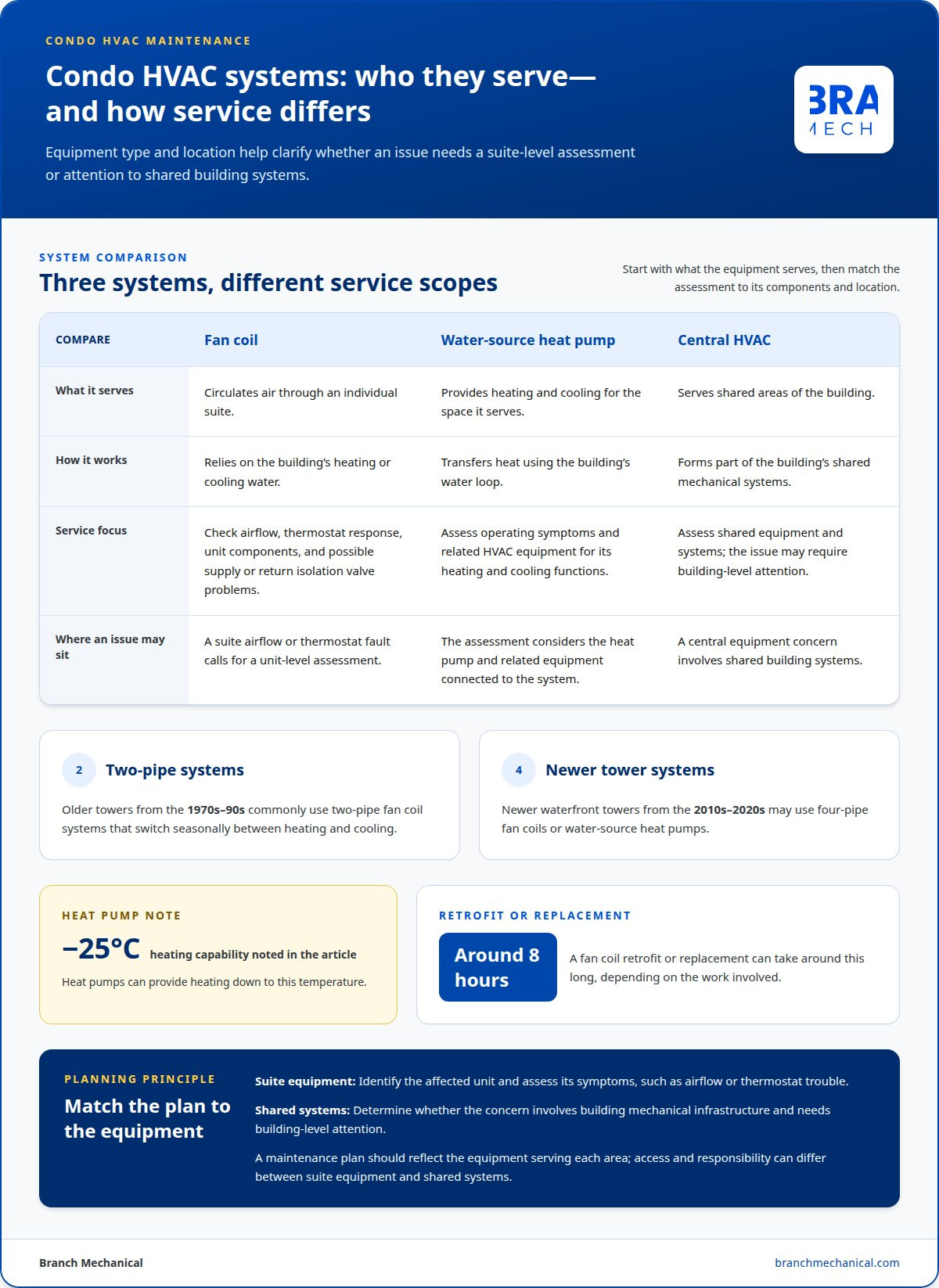
Fan coils, heat pumps, and central HVAC equipment each need a different service approach. In Etobicoke condos, the system type and whether it serves one suite or shared areas shape the maintenance work.
Fan Coil Repairs, Retrofits, and Replacement
Fan coil service can address restricted airflow, thermostat faults, mould, or supply and return isolation valve problems. Maintenance focuses on checking the unit’s components and tracing symptoms before repair or replacement. Older towers from the 1970s-90s commonly use two-pipe systems that switch seasonally between heating and cooling. A retrofit or replacement takes around 8 hours, depending on the work involved.
Hot-water equipment service may involve inspecting the water heater, connections, and visible signs of leakage. Planning an installation or repair means distinguishing suite equipment from shared building systems, since access and responsibility can differ.
Air Conditioner Repairs and Maintenance
Etobicoke air conditioner maintenance starts by identifying whether cooling comes from a fan coil, dedicated air-conditioning unit, or heat pump. Technicians can assess airflow, thermostat response, and visible equipment condition to narrow down the cause of weak cooling. Note when the problem occurs and which rooms are affected. These details help distinguish a local issue from a broader system concern.
Water-source heat pumps also need service suited to their heating and cooling functions. A repair assessment can examine operating symptoms and related HVAC equipment, while maintenance helps identify developing issues. Newer waterfront towers from the 2010s-2020s may use four-pipe fan coils or water-source heat pumps.
Comparing Condo HVAC Maintenance Needs
A fan coil circulates air through a suite and relies on the building’s heating or cooling water. A water-source heat pump transfers heat using the building’s water loop, while central HVAC equipment serves shared areas. Each system has different components and maintenance priorities.
That difference matters: a suite’s airflow or thermostat fault calls for a unit-level assessment, while central equipment issues require attention to shared systems. Heat pumps can provide heating down to −25°C. For coordinated multi-residential HVAC maintenance, the service plan should reflect the equipment serving each area.
Heating equipment inspections and tune-ups
An annual heating inspection gives technicians an opportunity to assess the HVAC system before seasonal demand rises. The visit can include the heater, boiler operation, controls, and visible connections. In a condo, the assessment should distinguish suite equipment from shared plant equipment. This helps determine whether a concern affects one resident or needs building-level attention. A tune-up can also document uneven heating, unusual sounds, or repeated thermostat adjustments.
Routine maintenance can help prolong equipment lifespan, prevent costly breakdowns or emergency repairs, reduce energy consumption, and lower utility bills. Those outcomes depend on equipment condition and the work required, but neglected issues can make a system work harder. During service, technicians can assess operating performance, controls, and components for signs of wear. Owners can use the findings to prioritize repairs and plan maintenance rather than wait for a heater to fail during cold weather.
Indoor air-quality equipment deserves attention alongside heating and cooling. A service visit can assess filter condition, airflow, and ventilation components that affect air movement through a suite. For example, restricted airflow at a return grille can make a room uncomfortable even when the thermostat calls for heat. The inspection should document the issue and identify whether it relates to suite equipment or a shared system.
To prepare for maintenance and support efficient energy use, clear access to the HVAC equipment, note when symptoms occur, and share those details with the technician. After the visit, follow the service recommendations and avoid blocking supply or return grilles. Coordinated annual preventative maintenance and flood-prevention planning can help condo owners address equipment issues systematically. Building-wide inspection records also help identify recurring faults and set maintenance priorities.
Condominium and multi-residential HVAC maintenance
Condo HVAC planning needs to account for both suite equipment and shared building systems. In Etobicoke, waterfront exposure can make a consistent maintenance schedule especially useful. At least annual HVAC maintenance is recommended for waterfront condos, and service is often scheduled twice yearly. A building plan should identify equipment locations, access requirements, and how residents report faults.
Responsibility can be divided between a condo suite and common building areas. Each condo owner is responsible for maintaining and repairing their own cooling system. A fan coil serving one suite differs from central equipment serving shared spaces, so maintenance records should identify the affected system and who manages it. Clear records help prevent missed issues when a resident reports weak cooling or a system that keeps running.
Thermostat complaints show why diagnosis matters. During one reported condo visit, a separate thermometer read 80.2°F while the thermostat displayed 71°F. A temperature mismatch like this calls for assessing the control and the equipment’s operation, rather than assuming the thermostat reading identifies the fault. Recording the reported temperature, room, and operating conditions gives technicians useful context.
In a multi-residential building, coordinate suite reports with work on shared HVAC equipment. A useful maintenance record lists the unit or common area, reported symptom, assessment, and required follow-up. This helps building teams spot recurring concerns across residential spaces and distinguish isolated cooling problems from broader system patterns. It also supports planning for access, resident communication, and building operations.
For condo building HVAC maintenance in Etobicoke, the key takeaway is to combine suite-level responsibility with building-wide oversight. Establish a reporting route for residents, track recurring faults, and plan regular assessments for waterfront equipment. Arrange multi-residential HVAC maintenance to help coordinate the work across your building.
Branch Mechanical: Commercial HVAC Installation & Service
Branch Mechanical supports condo and multi-residential properties with commercial HVAC installation and service. For building managers coordinating suite concerns alongside shared equipment, commercial and multi-residential mechanical contracting can address system needs at the building level.
Preventative Maintenance Contracts provide a structured approach to planned equipment care. Building Automation & Energy Management Systems can also support building operations when automation and energy management are part of the project. These services suit properties that need coordinated maintenance or a broader mechanical-system plan, rather than a repair limited to one suite.
Etobicoke property teams planning HVAC service or maintenance can contact Branch Mechanical to discuss the building’s requirements.
Turn maintenance findings into a building plan
In the next planning discussion, assign each open HVAC issue a clear path: suite-level follow-up, shared-system work, or scheduled maintenance. A coordinated plan for condo building HVAC maintenance in Etobicoke helps property teams organize responsibilities and connect repair decisions to the building’s needs. Record the affected area, reported issue, and next action so residents and building staff share a clear reference.
Branch Mechanical supports this work through Commercial & Multi-Residential Mechanical Contracting, Commercial HVAC Installation & Service, and Preventative Maintenance Contracts. These services can suit a property that needs building-level mechanical support or a structured approach to ongoing equipment care. Start by outlining the building’s systems and priorities.
For a practical next step, contact Branch Mechanical about condo HVAC service. A well-organized plan gives your team a sound basis for moving forward.
Frequently Asked Questions
Do you service the Humber Bay Shores condo towers?
Yes. Branch Mechanical provides multi-residential mechanical contracting and HVAC service in Etobicoke, including support for condo properties in Humber Bay Shores. Work can address building-level mechanical needs and HVAC systems in multi-unit properties. Sharing the building’s location, system type, and whether the concern affects one suite or common equipment helps define the service scope.
Do you work with Etobicoke property management companies?
Yes. Branch Mechanical works with property managers and building owners on mechanical systems for multi-unit properties. Existing HVAC systems can be serviced, repaired, or upgraded, including systems installed by another contractor. Describe the affected areas, known equipment, and current operational concern to help define the work required.
How often should waterfront condo HVAC be serviced?
Plan at least annual HVAC maintenance for waterfront condos; service is often scheduled twice yearly. A spring visit can prepare cooling equipment for warmer weather, while a fall assessment can focus on heating operation. Building teams can use maintenance records to track recurring concerns and coordinate access to suites and shared equipment. System condition and the equipment serving each area help shape the schedule.
What areas of Etobicoke do you cover?
Branch Mechanical serves Etobicoke and Mississauga, providing specialized mechanical contracting and condo building HVAC maintenance Etobicoke property managers rely on. For an Etobicoke property, provide the building address and whether the request concerns a condo suite, common area, or central mechanical equipment. This context helps connect the service request to the property’s location and mechanical needs.
Who Is Responsible For Fan Coil Maintenance In Your Condo?
Each condo owner is responsible for maintaining and repairing their own cooling system. For a fan coil, responsibility for specific components can depend on how the condo divides suite equipment and shared building systems. Review the building’s governing documents or maintenance guidance to understand the applicable arrangement. Reporting the fan coil issue with its suite location helps direct it appropriately.
What HVAC systems are commonly used in Etobicoke condo buildings?
Etobicoke condos use systems such as fan coils and water-source heat pumps. Older towers from the 1970s-90s commonly have two-pipe fan coils that switch between heating and cooling seasonally. Newer waterfront towers from the 2010s-2020s may have four-pipe fan coils or water-source heat pumps. Building records or equipment labels can help identify the system before service is arranged.