
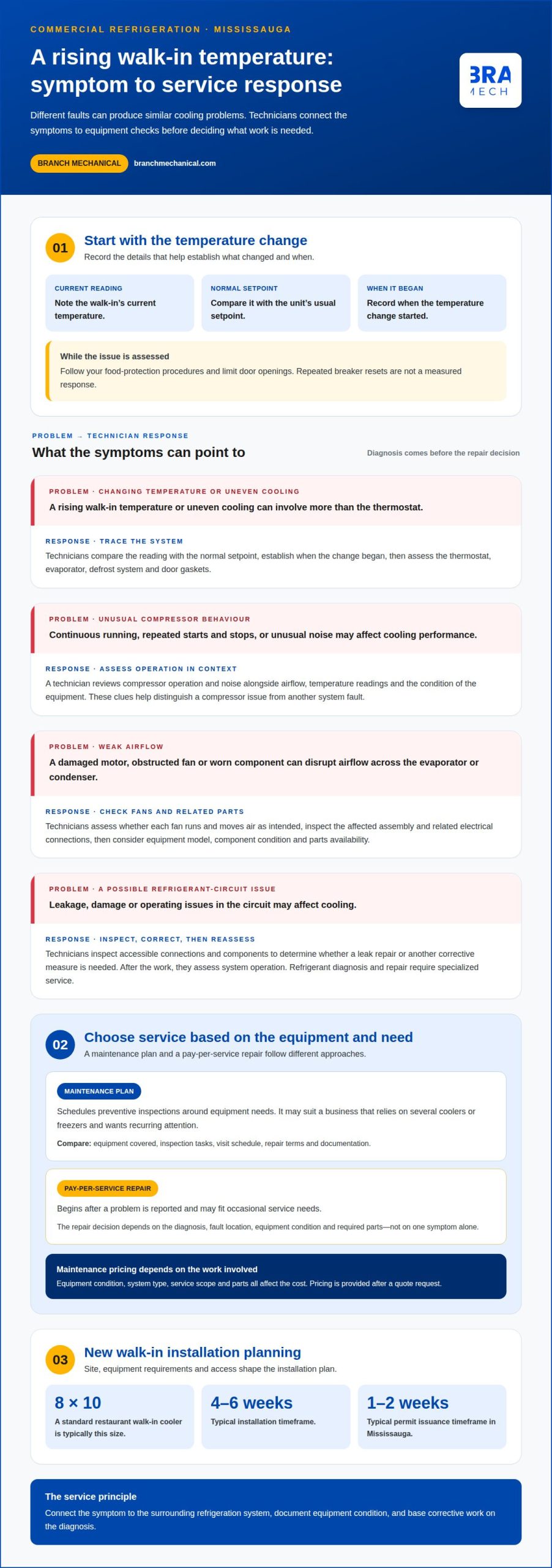
A rising walk-in temperature calls for a measured response, not repeated breaker resets. Note the current temperature, normal setpoint and when the change began, then follow your food-protection procedures and limit door openings. A commercial freezer maintenance plan in Mississauga can help identify developing equipment problems before they disrupt operations.
For restaurants, grocers, bakeries, caterers and food distributors, a temperature change can put daily operations and stored inventory at risk. Finding the cause means looking beyond the thermostat: the compressor, defrost system, evaporator, door gaskets and refrigerant circuit can all affect performance.
This article explains how technicians diagnose walk-in temperature problems and what routine maintenance can cover across freezers, coolers, compressors and fan motors. You’ll also learn which equipment details help guide an assessment and how preventative maintenance supports the ongoing operation of a food business.
Key Takeaways
- Walk-in temperature problems can involve more than the thermostat; learn which refrigeration components technicians assess to find the cause.
- Compressor and fan motor checks help identify mechanical issues that can affect cooling performance and equipment operation.
- A maintenance plan can address freezer and cooler needs based on the equipment and the demands of your food business.
- Preventative maintenance contracts can provide a structured approach to refrigeration upkeep and help businesses plan for service.
Refrigeration service for restaurants, grocers, bakeries and caterers
For food businesses in Mississauga and Etobicoke, commercial refrigeration service can address temperature changes, equipment wear and installation needs. A structured assessment connects symptoms to the freezer, cooler and refrigeration system.
Common refrigeration symptoms and equipment issues
A rising walk-in temperature, uneven cooling, unusual compressor noise or repeated cycling can point to different faults. Technicians compare the current reading with the normal setpoint and establish when the change began. They then assess components such as the thermostat, evaporator, defrost system and door gaskets. Recording these details helps distinguish an isolated issue from a wider refrigeration problem.
Maintenance and repair services
Commercial refrigeration maintenance can include examining controls, airflow, coils, door seals and defrost operation. Repair work follows the diagnosis, with the affected component and system operation guiding the next step. For new equipment, installation planning considers the site, equipment requirements and access. A standard restaurant walk-in cooler is typically 8×10, and installation commonly takes 4 to 6 weeks. Permit issuance in Mississauga typically takes 1 to 2 weeks.
Refrigerant circuit checks and leak repair
A refrigerant circuit assessment looks for signs of leakage, damage and operating issues that may affect cooling. Technicians inspect accessible connections and components, then determine whether a leak repair or another corrective measure is needed. After the work, they assess system operation to see whether the temperature concern has improved. Food businesses shouldn’t attempt refrigerant work themselves; circuit diagnosis and repair require specialized service.
Maintenance plans versus pay-per-service repairs
A maintenance plan schedules preventive inspections around equipment needs, while pay-per-service repairs begin after a problem is reported. A plan may suit a business that relies on several coolers or freezers and wants recurring attention; individual repairs may fit occasional service needs. Before choosing a contract, compare the equipment covered, inspection tasks, visit schedule, repair terms and documentation. The average cost of commercial freezer maintenance in Mississauga depends on equipment condition, system type, service scope and parts; pricing is provided after a quote request.
Compressor and fan motor checks and repairs
A compressor and its fan motors move heat out of a commercial freezer. If the compressor runs continuously, starts and stops repeatedly, or makes unusual noise, cooling performance may suffer. A technician assesses operating behaviour alongside airflow, temperature readings and equipment condition. These clues help identify whether the problem involves the compressor, a fan motor or another system component.
Fan motor checks focus on whether each fan runs properly and moves air through the equipment. A damaged motor, obstructed fan or worn component can disrupt airflow across the evaporator or condenser. Technicians inspect the affected assembly and related electrical connections, then determine whether repair or replacement best addresses the fault. The equipment model, component condition and parts availability all inform that decision.
- Compressor: Review its operation, noise and response to the cooling demand.
- Fan motors: Assess whether fans run and support the intended airflow.
- Temperature: Compare readings with the unit’s normal setpoint.
- Repair decision: Consider equipment condition, fault location and required parts.
Commercial freezer repair starts with diagnosis, not replacing a component based on one symptom. For example, weak cooling can result from restricted airflow or a compressor issue, so the technician examines the surrounding system before recommending corrective work. Repair may suit a serviceable component; replacement may be considered when its condition or the wider equipment problem makes repair unsuitable.
For an emergency request, share the freezer’s current temperature, normal setpoint, when the change began and any unusual sounds. Service timing depends on active calls, equipment access and required parts. Follow your product-protection procedures while the issue is assessed. For help with commercial refrigeration service, call us with those details so the equipment concern can be clearly described.
Maintenance for restaurants, grocers, caterers, and food distributors
Refrigeration needs follow each business’s workflow. A restaurant may rely on a walk-in cooler during meal preparation, while grocers need dependable cold storage across display and back-of-house units. Caterers and food distributors may handle changing loads as products move through staging and delivery. A maintenance visit should account for the equipment in service and how each unit supports daily operations.
Technicians can organize maintenance around equipment condition, access and operating demands. They assess each freezer and cooler as a separate unit, then record its condition and any repair needs. That record helps operators identify which equipment needs attention first and plan around receiving, preparation or dispatch activity. A plan should also make clear which units and tasks each visit covers.
- Restaurants: Identify the freezer and cooler supporting routine preparation and storage.
- Grocers: Keep unit-specific maintenance notes for back-of-house and display equipment.
- Caterers: Coordinate equipment access with staging and order preparation.
- Food distributors: Consider how refrigeration supports product movement through storage and dispatch.
If a walk-in temperature changes, operators should note the current temperature, normal setpoint and when the change started. These details give the technician a clear starting point for assessing the equipment. While the issue is addressed, businesses should follow their product-protection procedures and limit walk-in door openings. Consistent records also help distinguish a new concern from an earlier service issue.
Useful maintenance records connect each visit to a specific unit, its observed condition and the work completed. That makes follow-up clearer when a restaurant has separate freezer and cooler concerns, or a grocer operates several refrigeration units. Organize service around equipment roles, access requirements and condition, rather than treating every food business as having the same refrigeration needs.
What does a commercial freezer maintenance plan in Mississauga typically include?
A commercial freezer maintenance plan sets out which equipment receives attention, what each inspection covers and how findings are recorded. For a food business, the plan may cover walk-in freezers, coolers and related refrigeration components. The equipment list matters: a bakery’s freezer and proofing-area cooler have different roles from a grocer’s storage units. Clear scope helps technicians assess the right equipment and report useful next steps.
A planned visit can review the condition and operation of key refrigeration parts. Technicians may assess the thermostat, defrost system, evaporator, door gaskets and refrigerant circuit, then document visible concerns and required repairs. The plan should identify which checks apply to each unit, rather than assume every freezer has identical equipment or needs. A record of findings connects later service to the unit and its observed condition.
- Equipment coverage: List the walk-in freezers, coolers and systems included.
- Inspection scope: Set out which components technicians assess on each unit.
- Service records: Note findings, completed work and recommendations by equipment.
- Repair process: Clarify how identified issues are reported and handled.
For a Mississauga restaurant, access and operating hours can shape how technicians approach an inspection. A grocer may need separate attention for back-of-house storage and display refrigeration. Equipment condition, system type and the history of reported issues also help determine the appropriate scope. A useful plan explains how these factors affect service, without assuming a fixed checklist suits every site.
Before approving a commercial freezer maintenance plan in Mississauga, businesses can provide an equipment inventory, normal setpoints and known service concerns. Those details help define coverage and focus the assessment. The resulting plan should make clear what equipment is included, what the technician will inspect, how findings are documented and how follow-up repairs are addressed. This gives operators a practical basis for coordinating refrigeration maintenance with food preparation, receiving and storage.
Branch Mechanical: Preventative Maintenance Contracts
Branch Mechanical offers Preventative Maintenance Contracts for businesses seeking a planned approach to mechanical equipment upkeep. For food operations with walk-in freezers and coolers, a contract can provide a framework for organizing maintenance around equipment coverage, inspection scope and service records.
Consider this option when refrigeration equipment supports daily storage and a reactive repair approach makes planning difficult. A useful discussion starts with the units in your facility, their roles and any recurring concerns. Those details help define maintenance requirements for your operation. Branch Mechanical also provides Commercial & Multi-Residential Mechanical Contracting, alongside Commercial HVAC Installation & Service and Commercial Boilers & Heating Systems.
Contact Branch Mechanical to discuss preventative maintenance for your facility’s equipment.
Make refrigeration planning part of daily operations
Use the next service discussion to turn equipment observations into a practical priority list. Identify which units are essential to your operation, which concerns need attention first, and what information staff should record when performance changes. This gives your team a clearer basis for coordinating maintenance with food storage and daily work.
A commercial freezer maintenance plan in Mississauga can also help organize future equipment-care decisions. Keep service notes connected to each unit so recurring concerns and completed work are easier to review. These records can support conversations about maintenance scope and help you plan around your facility’s needs.
Branch Mechanical can discuss the refrigeration requirements of your business and the next step for your equipment. Contact Branch Mechanical for service to start that conversation. With a clear view of your equipment and priorities, you can move forward with a more organized approach to refrigeration care.
Frequently Asked Questions
Is the walk-in temperature rising?
Yes, treat a rising walk-in reading as an equipment concern that needs prompt attention. Record the display reading and compare it with the unit’s usual setpoint. Note whether the change is steady or fluctuating, and when staff first noticed it. Keep the door closed as much as operations allow, follow your product-protection procedures, and arrange a professional assessment rather than relying on repeated resets.
How often should commercial freezers be inspected and serviced?
There’s no single inspection interval that suits every commercial freezer. The schedule should account for the manufacturer’s recommendations, equipment age, operating workload and service history. A heavily used walk-in supporting daily restaurant production may need a different maintenance rhythm from a lightly used backup unit. A technician can use those factors to set a practical schedule and revise it when operating conditions or equipment condition change.
What temperature and food-safety requirements apply to commercial freezers in Ontario?
Ontario food businesses should follow the applicable food-safety requirements for the products they store and serve. Don’t assume one freezer setpoint suits every product or operation. The right operating target depends on the food and the business’s food-safety procedures. Keep equipment settings and temperature records consistent with those requirements, and address readings outside the established operating range promptly to protect stored products.
What routine cleaning and maintenance should a commercial refrigeration technician include, and what can staff safely do between visits?
A technician can assess evaporator and condenser condition, defrost operation, drains, door seals and airflow, then document issues requiring repair. Between visits, staff can keep the surrounding area clear, clean accessible surfaces according to equipment instructions, and record unusual frost, water or temperature changes. Leave refrigerant work, electrical repairs and internal component servicing to qualified technicians. This keeps routine observations useful without turning staff into repair personnel.
What warning signs indicate a commercial freezer needs immediate service?
Arrange service promptly if the temperature keeps rising, the compressor repeatedly stops and starts, or a fan makes an unusual sound. Heavy frost, water near the unit or inconsistent cooling across stored products can also signal a developing fault. Record what changed and when, then follow your product-protection procedures. Don’t repeatedly reset a breaker or attempt refrigerant repairs; those actions can obscure the fault or create additional risk.
Do Mississauga refrigeration contractors offer emergency service and after-hours support?
Branch Mechanical provides 24/7 emergency mechanical services, including emergency repairs for critical refrigeration failures. If a walk-in freezer develops an urgent problem outside regular business hours, share the equipment type, current reading, when the issue began and any visible symptoms. Clear details help describe the situation. Service timing can depend on active calls, access to the equipment and the parts required for the repair.