
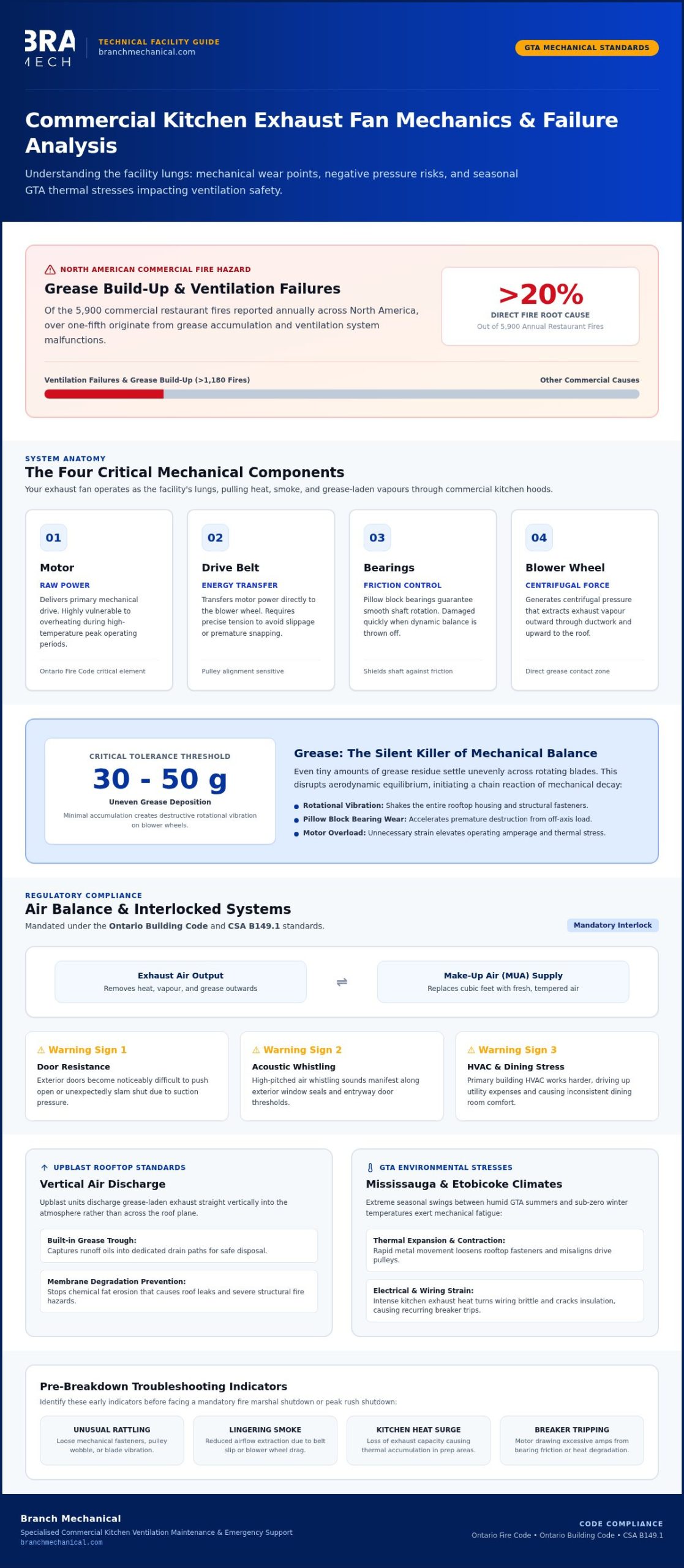
Did you know that over 20% of the 5,900 commercial restaurant fires reported annually across North America are caused by grease build-up and failures in ventilation systems? It’s a sobering reality for any facility manager in Mississauga or Etobicoke. You already know that a malfunctioning fan isn’t just a noise nuisance; it’s a direct threat to your staff’s productivity and your building’s safety. When smoke starts to linger or the heat in the kitchen becomes unbearable, the pressure to find a fast, reliable solution for commercial kitchen exhaust fan repair is immense.
This guide will show you how to identify early warning signs, troubleshoot mechanical failures, and resolve issues before they lead to a fire marshal shutdown or a costly emergency. We’ll explore the critical components of your ventilation system, provide a checklist for common mechanical problems, and explain how to maintain a code-compliant environment that protects your bottom line. By the end, you’ll have the knowledge needed to manage your facility’s ventilation with confidence and precision.
Key Takeaways
- Recognize how the exhaust fan functions as the “lungs” of your facility to better manage the health of critical components like motors and drive belts.
- Identify how grease buildup and Ontario’s harsh seasonal temperature shifts create specific mechanical strains on your ventilation system.
- Learn to spot early warning signs, such as unusual rattling or rising kitchen temperatures, to arrange a commercial kitchen exhaust fan repair before facing a mandatory shutdown.
- Determine the most cost-effective path forward by weighing the age of your equipment against the energy-saving benefits of modern replacement units.
- Understand the importance of 24/7 emergency support and preventative maintenance in keeping your facility fire-safe and fully code-compliant.
Understanding Commercial Kitchen Exhaust Systems and Fan Mechanics
Imagine your kitchen as a living organism. In this analogy, the exhaust fan acts as the facility’s lungs. It’s responsible for inhaling heat, smoke, and grease-laden vapours and exhaling them safely outside. When these “lungs” fail, the entire operation suffocates. Staff productivity drops as temperatures soar, and the risk of a flash fire increases. Understanding the mechanics of this system is the first step in managing a successful commercial kitchen exhaust fan repair strategy.
Four main components drive this process. The motor provides the raw power, while the drive belt transfers that energy to the blower wheel. The bearings ensure the shaft rotates smoothly without friction. Finally, the blower wheel creates the centrifugal force needed to pull air through the commercial kitchen exhaust hoods. If any of these parts fail, the system’s efficiency collapses. Maintaining these components isn’t just about airflow; it’s about ensuring your kitchen meets Ontario Fire Code requirements for safe operation.
The Role of Upblast Fans in Commercial Ventilation
Upblast fans are the industry standard for rooftop ventilation because they discharge air vertically. This design is intentional. By directing grease-laden air upward, these units prevent oil and fat from settling on your roof’s surface. Most units include a built-in grease trough and drainage system. This setup is vital for protecting your building’s structural integrity. Without a functioning upblast fan, grease can accumulate on the roof membrane, leading to chemical degradation and significant fire hazards. Professional maintenance ensures these drainage paths remain clear and functional.
Why Air Balance Matters for Your Kitchen
Effective ventilation relies on a delicate equilibrium called air balance. For every cubic foot of air your fan exhausts, your make-up air (MUA) unit must replace it with fresh, tempered air. In Ontario, the Building Code and CSA B149.1 mandate that these systems be interlocked. When a fan begins to fail or the MUA isn’t calibrated correctly, your kitchen enters a state of negative pressure.
You’ll notice the signs immediately. Doors might become difficult to open or slam shut unexpectedly. You might hear a high-pitched whistling sound around windows or doorways. This imbalance doesn’t just affect the kitchen; it forces your building’s primary HVAC system to work harder, driving up energy costs and causing inconsistent temperatures throughout the dining area. Proactive commercial kitchen exhaust fan repair ensures this balance remains stable, protecting both your equipment and your utility budget.
Common Causes of Exhaust Fan Failure in GTA Kitchens
Kitchens in the Greater Toronto Area face unique mechanical challenges. The extreme thermal swings between our humid summers and sub-zero winters put immense pressure on rooftop systems. These temperature fluctuations cause metal components to expand and contract rapidly, which often leads to loosened fasteners or misaligned pulleys. This environment makes timely commercial kitchen exhaust fan repair a necessity rather than a luxury for local facility managers.
Grease is the most persistent enemy of any ventilation system. When grease-laden vapour is the primary byproduct that fans must manage, it’s inevitable that some residue will settle on the internal blower wheel. Even as little as 30 to 50 grams of uneven grease deposition can create severe rotational vibration. This imbalance doesn’t just make noise; it accelerates the destruction of pillow block bearings and puts unnecessary strain on the motor. Following established ventilation fan maintenance standards is the best way to prevent this mechanical decay.
Electrical failures also frequently occur in high-heat environments. Excessive heat can cause wiring to become brittle or insulation to crack, leading to short circuits or tripped breakers. When a fan stops during a peak rush, it’s often a result of a motor that has overheated due to a lack of airflow or an electrical component that finally gave out under the stress of a Mississauga summer. If you notice recurring electrical trips, it’s a clear sign that your system’s internal health is compromised.
Grease: The Silent Killer of Mechanical Efficiency
Grease acts as a heavy, sticky coating on the blower wheel, which disrupts the fan’s aerodynamic balance. This imbalance causes the unit to vibrate excessively, shaking the entire rooftop housing. Over time, this vibration creates a domino effect. The motor must work harder to maintain RPMs, leading to internal overheating and eventually a complete winding failure. Proactive cleaning and mechanical checks are essential to stop this cycle before it starts. Grease-laden vapour is the primary byproduct that fans must manage.
Worn Belts and Bearing Fatigue
Belts are the most common point of failure in belt-driven systems. A slipping belt often announces itself with a high-pitched squealing noise. This slippage reduces airflow by up to 20 or 30 percent, which leaves smoke and heat trapped in your kitchen. Bearings are equally critical. Without regular lubrication, bearings can seize entirely. A seized bearing will lock the shaft, causing the motor to burn out in minutes. If you hear unusual noises from your rooftop, it’s time to consider a professional preventative maintenance contract to avoid a total system collapse.
Troubleshooting Guide: Identifying Warning Signs Before a Breakdown
Facility managers often feel the pressure of maintaining a seamless operation. You don’t need to be a mechanical engineer to spot a failing system. Most issues announce themselves long before a total breakdown occurs. By training your staff to recognize these early indicators, you can schedule a commercial kitchen exhaust fan repair during off-hours. This proactive approach avoids the chaos of an emergency shutdown during a Friday night rush.
The kitchen environment itself is your best diagnostic tool. If the line is uncharacteristically hot or smoky, your exhaust volume has likely dropped. Don’t wait for a fire marshal to point this out. Be alert for “burnt” smells. An ozone-like scent or the smell of scorched rubber indicates electrical issues or a motor struggling to turn. Finally, observe the unit’s movement if you have roof access. Excessive shaking isn’t normal. If the fan housing is visibly vibrating, it’s likely due to the grease imbalance mentioned in previous sections. This vibration transfers directly to the roof structure, potentially causing leaks or mechanical fatigue in the ductwork.
Auditory Cues: What Your Fan is Trying to Tell You
Your exhaust fan communicates its health through sound. Learning to interpret these noises can prevent a minor fix from becoming a major capital expense. Listen for these specific sounds:
- Squealing: This high-pitched noise usually indicates a belt issue. The belt may be loose, glazed, or worn, causing it to slip against the pulley and reduce airflow.
- Grinding or Humming: These sounds are more serious. They often point to bearing fatigue or internal motor wear. A motor that hums but won’t start is likely experiencing a capacitor or winding failure.
- Rattling: Rhythmic rattling suggests something has come loose or the blower wheel is off-centre. It can also indicate that the fan’s housing fasteners have vibrated loose over time.
Visual Inspections for Facility Managers
A quick trip to the roof can save thousands in structural repairs. Look for grease pooling around the fan base. While upblast fans are designed to manage grease, visible overflow indicates a failure in the drainage system or a saturated grease trap. This isn’t just a fire risk; it’s a liability for your roof warranty. While you are there, check the fan’s power disconnect switch to ensure it hasn’t been accidentally turned off. Sometimes, vibration or accidental contact can flip the switch to the “off” position. If the fan is silent and the switch is on, you’ve confirmed a failure that requires a professional commercial kitchen exhaust fan repair. Checking these simple visual cues keeps your facility safe and your maintenance budget predictable.
Repair vs. Replacement: Making a Cost-Effective Decision
Deciding between a targeted fix and a total system overhaul is one of the most significant choices a facility manager faces. The math is often simple. Most commercial exhaust fans are engineered for a 10 to 15 year lifespan. If your unit is approaching that decade mark, a simple commercial kitchen exhaust fan repair might just be a temporary patch on a larger problem. You must evaluate the unit’s history. If you’re calling for service monthly, the cumulative cost of labour and downtime will quickly eclipse the price of a new installation.
Energy efficiency is the other side of the coin. Older fans run at a constant speed regardless of the cooking volume, which wastes electricity and accelerates mechanical wear. Modern high-efficiency units often utilize Variable Frequency Drives (VFDs). These systems allow the fan to ramp up during peak service and slow down during prep hours. Over a year, the energy savings from a VFD-equipped fan can significantly offset the initial capital expenditure. When you weigh the cost of a third motor replacement against a new unit, remember to factor in these reduced utility bills and the peace of mind that comes with a manufacturer’s warranty.
When a Repair Makes the Most Sense
A repair is usually the logical path for relatively new units, specifically those under five years old. If the fan housing is structurally sound and the blower wheel shows no signs of severe corrosion or warping, replacing isolated components is highly cost-effective. Minor issues like a snapped drive belt, worn pulleys, or seized bearings are routine maintenance tasks. These interventions restore the unit to peak performance without the need for crane rentals or structural roof modifications. Keeping these units running through professional commercial kitchen exhaust fan repair preserves your initial investment while maintaining safety standards.
The Argument for Upgrading Your Ventilation
Replacement becomes the better option when the system can no longer keep up with your kitchen’s demands. If you’ve recently added larger cooking appliances or high-output charbroilers, your existing fan may lack the required CFM (cubic feet per minute) capacity. Chronic motor failures or severe housing corrosion are also clear signs that the unit is reaching the end of its life. Upgrading allows you to integrate your ventilation into a building automation system. This level of control ensures your kitchen ventilation works in perfect harmony with the rest of your facility’s HVAC. If your current system is struggling to keep the air clear, it’s time to request a mechanical audit to see if an upgrade is your best path forward.
The Branch Mechanical Approach to Kitchen Ventilation Maintenance
Branch Mechanical doesn’t just fix parts; we manage systems. A broken fan is often a symptom of a larger mechanical imbalance that affects your entire facility. Our team provides 24/7 emergency support across Mississauga and Etobicoke to ensure your kitchen stays operational when it matters most. We focus on keeping GTA businesses compliant with Ontario Fire Code requirements and local health bylaws, turning a stressful breakdown into a managed, professional resolution.
Preventative maintenance is the cornerstone of our approach. By scheduling regular mechanical audits, we identify bearing fatigue or belt wear before they cause a total system failure. This proactive stance significantly reduces long-term commercial kitchen exhaust fan repair costs by extending the life of your motor and blower wheel. We believe in providing predictability for your maintenance budget, ensuring you aren’t surprised by capital expenses that could have been avoided with simple, routine care.
Integrated Mechanical Care for Busy GTA Restaurants
A commercial kitchen is a delicate ecosystem. When our technicians perform a commercial kitchen exhaust fan repair, they also consider how the ventilation failure impacted your climate control and food storage. Excessive heat from a failing fan forces your walk-in coolers to run constantly, which leads to premature compressor wear. Having a single point of contact for HVAC, plumbing, and commercial refrigeration services in Mississauga simplifies your facility management. It ensures that every mechanical component works in harmony rather than in conflict, protecting your equipment from the “domino effect” of heat-related stress.
Ensuring Business Continuity with 24/7 Support
Revenue is lost every minute a kitchen is forced to stop cooking. Our rapid response team is available 24/7 to handle critical ventilation failures as they happen, not just during standard business hours. We prioritize a high “first-time fix” rate by arriving in service vehicles stocked with common motors, belts, and electrical components. This efficiency minimizes your downtime and protects your reputation with guests. We take pride in being the reliable partner that facility managers can trust to handle the complex mechanical needs of a modern kitchen. If you want to move from reactive repairs to a stable, managed maintenance plan, contact Branch Mechanical for your kitchen ventilation assessment today.
Securing Your Kitchen’s Long-Term Operational Safety
Maintaining a compliant kitchen requires more than just reacting to smoke or heat. It involves understanding the mechanical synergy between your exhaust fans and your building’s wider HVAC infrastructure. By recognizing auditory and visual warning signs early, you protect your facility from the high costs of emergency downtime and regulatory penalties. Investing in a professional commercial kitchen exhaust fan repair strategy isn’t just about fixing a motor; it’s about preserving your business’s continuity and ensuring the safety of your staff.
Since 2012, Branch Mechanical has served the GTA community with specialized expertise in integrated mechanical and building automation systems. We understand that a failure during a peak rush is a crisis. That’s why we provide 24/7 emergency service across Mississauga and Etobicoke to keep your kitchen operational. Our team focuses on “first-time fixes” to get your ventilation back in balance without delay. Schedule your commercial kitchen exhaust fan repair with Branch Mechanical today to ensure your ventilation system remains efficient, safe, and fully code-compliant. Taking control of your facility’s mechanical health today ensures a more productive environment for your entire team tomorrow.
Frequently Asked Questions
How often should a commercial kitchen exhaust fan be serviced?
Service frequency depends on your cooking volume and fuel type. High-volume operations, such as 24-hour diners or heavy-grease fast food outlets, require quarterly inspections. Moderate-volume kitchens typically follow a semi-annual schedule. Regular maintenance ensures components like belts and bearings remain functional, preventing unexpected breakdowns. Branch Mechanical recommends aligning these mechanical checks with your mandatory professional cleaning intervals to maintain peak system efficiency and safety in Mississauga facilities.
Can a faulty exhaust fan cause a fire in my restaurant?
Yes, a malfunctioning fan is a significant fire hazard. If bearings seize or a motor overheats, the resulting friction or electrical spark can ignite grease residue within the ductwork. Industry data suggests that over 20% of restaurant fires are linked to ventilation failures. Ensuring a prompt commercial kitchen exhaust fan repair when you notice vibration or noise is essential for protecting your building and staying compliant with Ontario Fire Code safety standards.
Why is my kitchen so hot even though the exhaust fan is running?
Excessive heat usually indicates low exhaust volume or an imbalance with your make-up air (MUA) unit. If the fan belt is slipping or the blower wheel is heavily coated in grease, the system cannot pull enough hot air out of the kitchen. This creates a stagnant, high-temperature environment for your staff. We often find that a failing exhaust fan disrupts the entire building’s climate control, forcing refrigeration units to work harder and increasing your energy costs.
What is the average lifespan of a commercial rooftop exhaust fan?
Most commercial rooftop exhaust fans have a functional lifespan of 10 to 15 years when properly maintained. Units in the GTA face additional stress from extreme seasonal temperature swings, which can accelerate the degradation of seals and electrical components. If your fan is over a decade old and requires frequent repairs, it is often more cost-effective to upgrade to a modern, high-efficiency unit with a variable frequency drive to reduce long-term operational expenses and realize better energy savings.
Do I need to shut down my kitchen for an exhaust fan repair?
Yes, you must typically pause cooking operations during a fan repair. Ontario Fire Code and health bylaws prohibit commercial cooking without active ventilation to manage heat and grease-laden vapours. Branch Mechanical offers 24/7 emergency support in Etobicoke to perform these repairs during your off-hours. This approach ensures your business continuity remains intact while our technicians safely access rooftop components to restore your system to full functionality without disrupting your peak dining hours.
How can I tell if my fan motor is burnt out or just has a bad belt?
You can often distinguish the two by sound and movement. A high-pitched squealing noise almost always points to a loose or worn drive belt. If the fan is silent but the motor feels hot or produces a low humming sound, the motor itself or the starting capacitor has likely failed. A snapped belt is a quick commercial kitchen exhaust fan repair, but a burnt-out motor requires a more intensive replacement to restore safe airflow to your facility.
Are there specific Ontario regulations for kitchen exhaust fan maintenance?
Maintenance in Ontario is governed by the Ontario Fire Code (O. Reg. 213/07), which mandates that exhaust systems conform to NFPA 96 standards. These regulations require specific inspection frequencies based on your cooking equipment and fuel type. Failure to maintain documented service records can lead to fines from the fire marshal or the denial of insurance claims. Our preventative maintenance contracts are designed to keep your Mississauga restaurant fully compliant with these provincial safety mandates and local bylaws.
What is the difference between a kitchen hood cleaning and a mechanical fan repair?
Professional cleaning focuses on removing grease from hoods, ducts, and fan blades to meet fire safety codes. Mechanical repair addresses the functional components like motors, pulleys, belts, and bearings. While a cleaner might scrape grease, they don’t typically tension belts or lubricate bearings. A complete maintenance strategy requires both services. Branch Mechanical specializes in the technical side, ensuring the mechanical parts of your ventilation system operate reliably and safely alongside your regular cleaning schedule.