
Restaurant HVAC costs are shaped by the kitchen, not just the rooftop unit. For commercial HVAC for restaurants in Etobicoke, the budget depends on the equipment mix, ventilation needs, building layout, and whether existing systems can support the operation. Routine servicing is typically needed at least twice a year, ideally in spring and fall.
It’s reasonable to want a clear budget before a new build, renovation, or equipment replacement. Account for the complete system, including kitchen exhaust and make-up air, rather than considering heating and cooling alone.
This guide explains the factors that shape restaurant HVAC costs, what routine service involves, and how new-build requirements affect system planning. It also covers what to consider when arranging commercial HVAC service in Etobicoke and the wider GTA, so you can make informed decisions about your restaurant’s mechanical needs.
Key Takeaways
- Build a restaurant HVAC budget around the full scope of work, including equipment, kitchen ventilation, and the condition of existing systems.
- Recognize how operating demands and system condition shape maintenance planning and the service needed at an Etobicoke restaurant.
- For a new build, account for kitchen heat, steam, and exhaust when planning the HVAC design and installation.
- See how coordinated commercial HVAC service can support restaurant needs across Etobicoke and the wider GTA.
How Much Does Commercial HVAC for Restaurants Cost in Toronto?
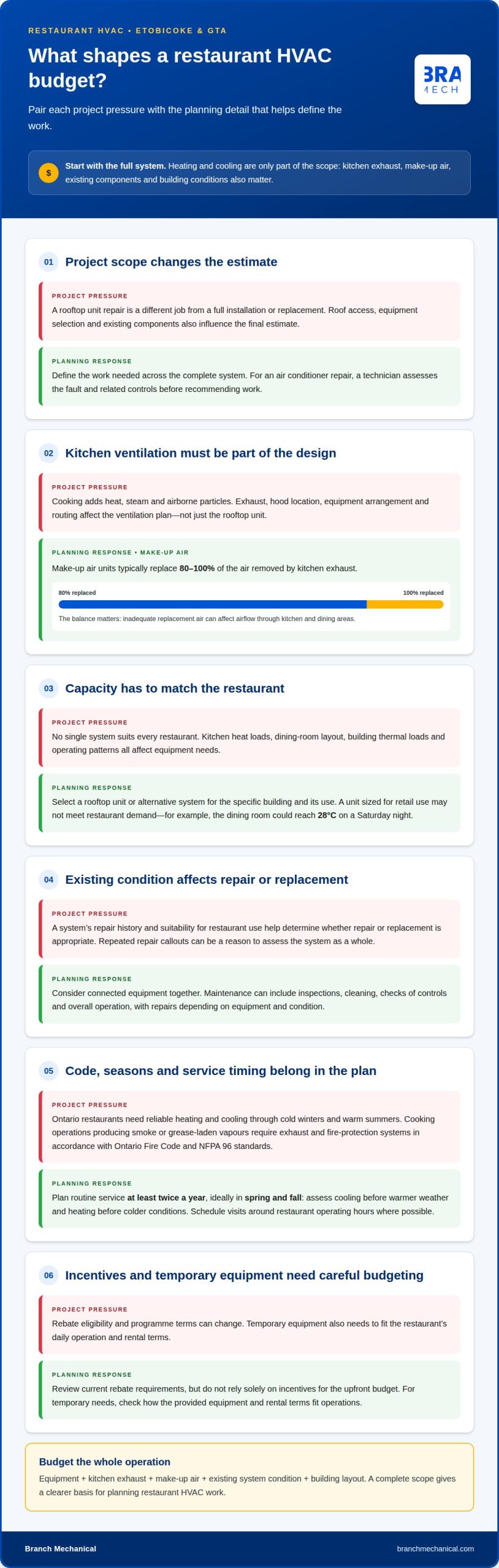
When planning commercial HVAC for restaurants in Etobicoke and the surrounding Greater Toronto Area, costs depend on the work required, equipment capacity, ventilation demands, and the condition of your existing setup. A rooftop unit repair differs significantly from a full installation or replacement. Project scope, roof access, equipment selection, and existing components all influence the final estimate.
For an air conditioner repair, a Branch Mechanical technician assesses the fault and related controls before recommending work. Routine maintenance includes thorough inspections, cleaning, and checks of overall system operation. Replacement decisions depend on repair history and whether your current setup adequately suits restaurant use. For temporary requirements, consider how rental terms and provided equipment fit your daily operation.
Local climate conditions, featuring cold winters and warm summers, make both reliable heating and cooling essential for guest comfort. No single system suits every restaurant: capacity, dining-room layout, kitchen heat loads, and ventilation requirements all matter. A commercial rooftop unit or alternative system should be carefully selected to match the building’s specific thermal loads and operating patterns.
Ontario restaurants considering energy-efficient equipment should review current rebate eligibility and project requirements. Available programs and incentive terms can change, so rebates should not be solely relied upon when planning your upfront budget.
Kitchen exhaust systems and fire protection also impact the overall project scope. According to the Government of Ontario, the Ontario Fire Code mandates that commercial cooking operations producing smoke or grease-laden vapours must feature exhaust and fire-protection systems in strict accordance with NFPA 96 standards.
Commercial maintenance agreements with Branch Mechanical can coordinate scheduled visits across restaurant locations, with work thoughtfully planned around your operating hours. Twice-yearly service, ideally scheduled in spring and fall, helps organize essential inspections before peak seasonal demand. For urgent breakdowns, 24/7 emergency mechanical service addresses critical HVAC failures quickly. Furnace and boiler work may include targeted repair, preventative maintenance, or full installation, depending on system condition and heating requirements.
How often should commercial HVAC systems be serviced?
Commercial HVAC service for Etobicoke restaurants can cover heating, cooling, ventilation, and supporting equipment. Work may include checking controls, inspecting for damage, cleaning components, and addressing repairs. Considering connected equipment together can help identify issues before they disrupt kitchen or dining-room operations.
Plan routine service at least twice a year, ideally in spring and fall. Seasonal visits let technicians assess cooling before warmer weather and heating before colder conditions. Restaurant use also matters: kitchen heat, grease, and long operating hours put different demands on equipment than a standard office system.
A maintenance visit should consider the whole HVAC system, not just a rooftop unit. Technicians can inspect units, ductwork, and related equipment, check controls, and look for visible damage. Cleaning and repairs may be included in kitchen HVAC servicing, depending on the equipment and its condition.
Etobicoke properties range from independent food-service locations to retail plazas. A plaza with several tenants may have different operating schedules and equipment needs from a single restaurant. Warehouses, food facilities, offices, and industrial properties also rely on coordinated heating and cooling, but their equipment and ventilation demands differ. A service plan should reflect each building’s use.
For businesses with multiple sites across Etobicoke and the GTA, a maintenance agreement can organize visits across locations. A shared schedule gives technicians a clear view of each site’s service needs, including recurring repairs and potential replacement concerns. Retail plaza managers can coordinate access around tenant operations, while restaurants can plan visits to limit disruption during busy meal periods.
Between scheduled visits, unusual noises, rising energy bills, or inconsistent temperatures can point to HVAC problems. Repeated repair callouts are another reason to assess the system rather than treating each issue in isolation. For critical equipment failures, emergency mechanical service can address urgent HVAC needs and help support continued operation.
HVAC system design and installation for new buildings
Restaurant designs in Toronto must account for seasonal temperatures and kitchen operating demands. Effective installation coordinates comfort cooling with kitchen ventilation from the outset.
Commercial and Kitchen Installation
Commercial HVAC installation begins with the facility’s use, layout, and heating and cooling requirements. Restaurant kitchens add heat, steam, and airborne particles, so their systems need more than general space conditioning. Rooftop units, kitchen exhaust, and make-up air should be coordinated to address ventilation and dining-room comfort.
Make-up air units typically replace 80-100 percent of the air removed by kitchen exhaust. That balance matters: inadequate replacement air can affect airflow through the kitchen and dining areas. For example, a rooftop unit sized for retail use may leave a restaurant dining room at 28°C on a Saturday night. Upgrades should address the cause, not just add cooling capacity.
Commercial kitchen installation also takes into account hood location, equipment arrangement, and exhaust routing. Ontario Fire Code requirements for exhaust and fire protection apply to cooking operations that produce smoke or grease-laden vapours, as explained in the previous section. Coordinating these systems during design helps integrate ventilation with the building plan.
Installation Costs and Timelines
Restaurant HVAC installation costs in the GTA depend on equipment, building layout, ventilation requirements, and existing infrastructure. Project scope, access, equipment selection, and site conditions shape the estimate. A new facility requiring kitchen exhaust and make-up air has different needs from a rooftop-unit replacement.
Installation schedules depend on design coordination, equipment, site access, and construction sequencing. Work may need to align with electrical, gas, and kitchen-equipment installation so connected tasks can be completed in order. An upgrade in an operating restaurant also requires an access and work-area plan that fits the facility’s schedule.
For energy-conscious design, assess equipment capacity alongside ventilation and operating patterns. A coordinated system should address the needs of both kitchen and dining areas.
Restaurant HVAC coverage in Etobicoke and the GTA
Restaurant HVAC service in Etobicoke can involve heating, cooling, ventilation, and related mechanical systems. For GTA locations, the practical takeaway is to plan coverage around each site’s equipment and operating needs.
Local Restaurant HVAC Coverage
Etobicoke restaurants range from standalone dining rooms to food-service tenants in retail plazas. Each facility has its own mix of rooftop equipment, kitchen ventilation, and heating requirements. A useful service plan assesses these systems together, rather than treating cooling as the only concern.
Warehouse, office, and restaurant properties across the GTA also have different operating patterns. Assessing each site helps identify where maintenance or repair needs differ. For restaurant operators with several locations, a coordinated mechanical service plan can organize work across properties while accounting for each facility’s equipment and hours.
Permits and Inspections
For Etobicoke restaurant HVAC work, plan for permits and inspections according to the project scope and affected systems. Equipment replacement and changes to kitchen exhaust involve different considerations, so include approval steps in project planning.
According to the Government of Ontario, cooking operations that produce smoke or grease-laden vapours must have exhaust and fire-protection systems in accordance with NFPA 96. That requirement is relevant when restaurant work affects kitchen exhaust or fire protection; it does not by itself describe every permit or inspection step.
Before work begins, define the equipment and areas involved, such as a rooftop unit, ductwork, or kitchen exhaust. A clear scope helps organize mechanical work around restaurant operations and clarify what the installation or service includes. Consider heating, ventilation, and cooling together, since changes to one system can affect comfort and overall efficiency.
For restaurant HVAC coverage across Etobicoke and the GTA, discuss your commercial HVAC needs and the systems involved.
Branch Mechanical: Commercial HVAC Installation & Service
Branch Mechanical helps restaurant operators plan, install, and maintain commercial HVAC systems across the Greater Toronto Area. Its Commercial HVAC Installation & Service supports new equipment, upgrades, and repairs when a system no longer meets a restaurant’s heating or cooling needs.
For ongoing care, Preventative Maintenance Contracts organize scheduled system maintenance. Commercial Boilers & Heating Systems address restaurant heating equipment, while Commercial & Multi-Residential Mechanical Contracting supports broader mechanical projects. The next step depends on whether you’re planning a new build, addressing recurring issues, or maintaining existing equipment.
When you contact Branch Mechanical, share the restaurant’s location, equipment concerns, and project goals to discuss your HVAC needs.
Set a Clear Direction for Your Restaurant HVAC Project
Start with a practical project brief. Planning commercial HVAC for restaurants in Etobicoke means identifying the property, the work under consideration, and the needs of the people using the space. A new build, upgrade, and repair each require a different scope.
Gather details about the restaurant’s location, existing equipment, kitchen operations, and preferred work schedule. Note recurring comfort issues and planned changes to the facility. These details focus the discussion on the system and project priorities that matter, rather than treating every restaurant the same.
Branch Mechanical can discuss commercial HVAC installation and service in relation to your project goals. A defined scope gives the next conversation a useful starting point, whether you’re planning ahead or addressing an active concern. Contact Branch Mechanical to talk through your restaurant HVAC project.
A considered plan can help you move forward with greater clarity.
Frequently Asked Questions
Can I use ductless mini-splits in a restaurant dining room?
Ductless air conditioners can serve a restaurant dining room when separate areas need different temperature settings. Suitability depends on room layout, cooking-related heat, and integration with existing equipment. They condition dining spaces but don’t replace kitchen exhaust or make-up air. For commercial HVAC for restaurants in Etobicoke, plan dining comfort and kitchen ventilation together.
How often should a restaurant kitchen exhaust be cleaned?
Cleaning frequency depends on cooking volume. High-volume operations, such as 24-hour kitchens, charbroiling, or wok cooking, should have exhaust cleaning quarterly. Moderate-volume cooking, common in casual restaurants, calls for cleaning semi-annually. Low-volume kitchens, such as those using pizza ovens or doing light preparation, should schedule it annually. Matching the cleaning interval to cooking activity helps keep grease buildup from accumulating in the exhaust system.
What is a make-up air unit and why does my restaurant need one?
A make-up air unit brings outdoor air into a restaurant to replace air drawn out by kitchen exhaust. Restaurant units typically replace 80-100 percent of the exhausted air. Without a balanced supply, exhaust can affect indoor air movement, contributing to drafts or difficulty opening doors. For example, a powerful hood paired with inadequate replacement air can make kitchen and dining areas less comfortable.
What ventilation code applies to my restaurant?
For cooking that produces smoke or grease-laden vapours, the Ontario Fire Code requires exhaust and fire-protection systems in accordance with NFPA 96, according to the Government of Ontario. This applies to the cooking operation and its associated exhaust and fire protection. A restaurant’s project scope and equipment determine which system details need attention during installation or alterations.
Best HVAC systems for restaurants in Toronto climate
There is no single system that suits every Toronto restaurant. Match equipment type and capacity to the building’s heating and cooling loads, dining-room layout, kitchen heat, ventilation, and operating patterns. Coordinate rooftop units with kitchen exhaust and make-up air.
Common restaurant HVAC problems and repair costs in Etobicoke
Common warning signs include unusual noises, rising energy bills, inconsistent temperatures, and repeated repair callouts. Faults may involve controls or other equipment. Repair estimates depend on the required work, access, equipment, and condition of the existing system.