
For most Mississauga businesses, commercial HVAC filters should be replaced every 1 to 3 months. A commercial HVAC filter replacement service in Mississauga can help align the schedule with the building’s use, system workload and air-quality needs. Restaurants, gyms, salons, pet facilities and dusty or high-traffic spaces generally need monthly changes, while low-traffic offices can often follow a three-month interval.
It’s easy to treat filters as a minor maintenance item, but a loaded filter can restrict airflow and affect how well the HVAC system operates. Regular replacement also helps support indoor air quality by keeping airborne dust and other particles from accumulating in the filter.
This article explains how to set a practical replacement schedule, how Mississauga conditions can affect filter loading, and what professional replacement involves. Filter type matters: a more restrictive filter may limit airflow if it is not suited to the equipment. A schedule matched to the building and system makes filter maintenance a manageable part of facility care.
Key Takeaways
- Set filter changes around your building’s activity and air quality needs, then adjust the schedule when conditions change.
- Filter ratings matter, but a denser filter can restrict airflow if the HVAC equipment isn’t suited to it.
- Regular replacement helps maintain airflow and indoor air quality; signs such as odours or reduced system performance can prompt a closer look.
- Professional maintenance can help keep filter changes consistent and identify HVAC concerns that a filter swap alone won’t address.
How Often Should a Mississauga Business Change Its Commercial HVAC Filters?
Most commercial HVAC filters need replacement every 1 to 3 months, depending on facility type, system use and air-quality needs. Retail and multi-tenant properties often need changes every 1-2 months, while low-traffic offices can follow a three-month schedule. Check each HVAC unit monthly, even when its filter-change interval is longer.
Mississauga conditions can affect replacement frequency. Restaurants, gyms, salons, pet facilities and other dusty, high-traffic spaces may need monthly changes. Nearby construction and settled industrial dust around older manufacturing buildings near Dixie can also load filters faster. During May and June pollen season, inspect filters and replace them sooner if they are loaded.
A commercial HVAC filter replacement service in Mississauga can replace filters and document visits across a facility. Compare service plans by filter type and dimensions, visit frequency, included inspections, and maintenance records. Pricing depends on those details, equipment access and the number of units; the price is provided after a quote request.
In Ontario, manage filter maintenance according to applicable building and equipment requirements, and record the work in the facility’s maintenance plan. Commercial lease terms determine whether the landlord or tenant handles filter changes. Many net or triple-net leases assign HVAC maintenance, including filters, to the tenant, so review the lease to clarify responsibility.
To schedule service in Mississauga, provide the property address, unit count, known filter dimensions and preferred access times. A provider can use those details to plan a visit and identify the equipment involved. Service areas vary by company, so confirm that the building’s Mississauga location falls within the provider’s coverage.
Preventative maintenance programs can coordinate filter changes with routine HVAC inspections. Keep boiler work on the same maintenance calendar, but treat it as a separate system task: boiler repair, installation and inspection differ from filter replacement. A written schedule helps property managers track both HVAC filters and boiler maintenance, along with landlord or tenant responsibilities.
Indoor air quality solutions
Commercial HVAC filters support indoor air quality by capturing airborne particles as air circulates. Many commercial HVAC systems use filters rated MERV 8 to 13. The right rating depends on the equipment and building needs, not simply on choosing the highest available rating. A denser filter can increase static pressure and reduce airflow, particularly if the system isn’t designed for it.
Some facilities may need HEPA filtration for specific operational needs. HEPA filters remove 99.97% or more of certain airborne particles measuring 0.3 microns, including dust, pollen, mould and bacteria. However, installing HEPA filtration can require system modifications and may restrict airflow. Incorrect sizing or installation can strain equipment, so a technician should assess system compatibility before an upgrade.
A filter change won’t resolve every indoor air concern. Persistent odours, dust or occupant discomfort can point to issues beyond the filter, including ventilation or moisture conditions. Air quality testing can help identify what needs investigation. A qualified professional can assess the building, inspect HVAC components and use test results to guide next steps rather than relying on symptoms alone.
For a useful assessment, document where concerns occur, when they appear and whether they change during heating or cooling. Odours concentrated in one area, for example, may call for a different investigation than dust noticed throughout the building. Pairing observations with air quality testing gives technicians clearer context. Before recommending a higher-rated filter, a technician should also check static pressure to ensure airflow remains suitable for the equipment.
If indoor air concerns coincide with heating performance, an inspection of the building’s commercial heating systems can help identify equipment-related factors. Filter selection, ventilation and system operation each affect indoor conditions, so the assessment should consider how these elements work together.
Proper ventilation involves moving and exchanging air to regulate indoor air quality, including managing odours, moisture, allergens, contaminants and gases. Filtration is therefore only one part of maintaining healthy indoor conditions.
Some commercial businesses, such as medical facilities, may require HEPA filters as part of a professional commercial HVAC filter replacement service Mississauga. Incorrect installation or sizing can strain and damage HVAC equipment or restrict airflow. A professional assessment can help businesses weigh these equipment and airflow considerations when evaluating filtration needs.
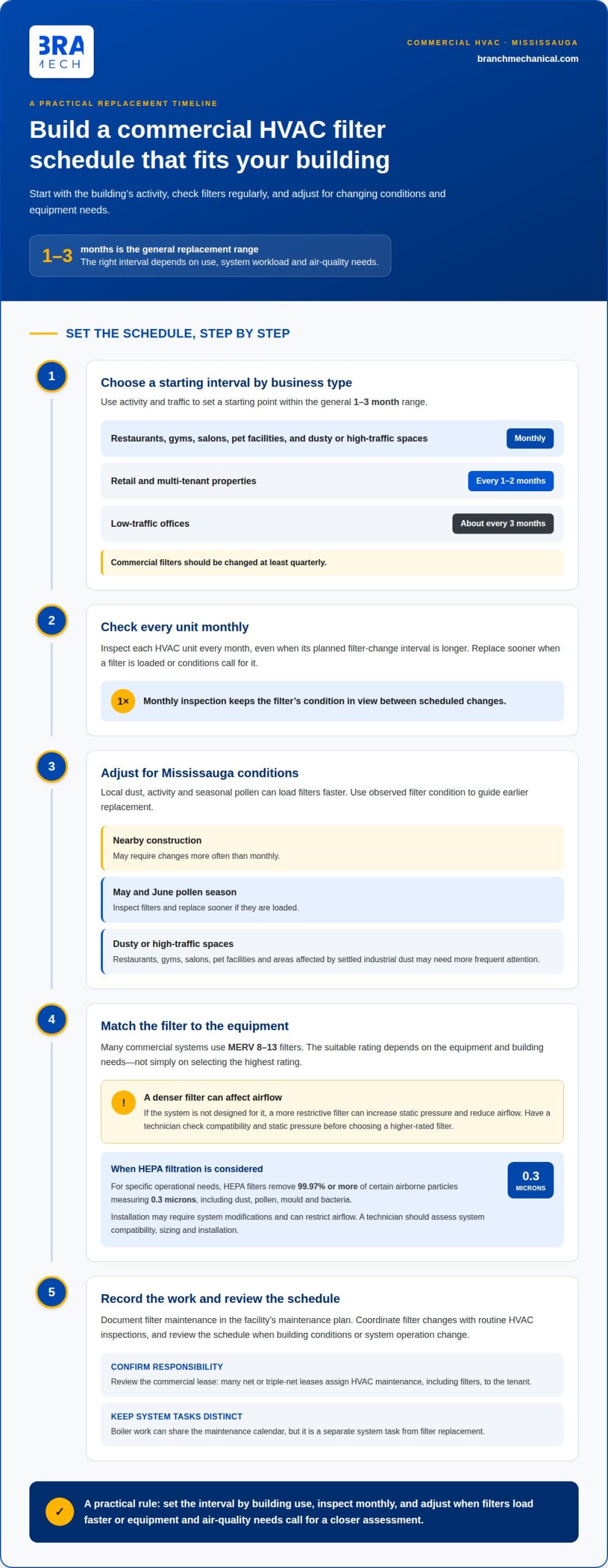
Recommended filter replacement frequency
Use the building’s activity to set a starting schedule, then adjust it based on filter condition and system operation. Commercial filters generally need replacement every 1 to 3 months. That range covers varied operating demands, but it isn’t a single interval for every property. A filter change that comes too late can restrict airflow; one scheduled without considering actual use may not suit the equipment.
Business type helps narrow the interval. Restaurants, gyms, salons, pet facilities, and dusty or high-traffic spaces generally need monthly changes. Retail and multi-tenant properties are commonly advised to replace filters every 1-2 months. A low-traffic office can often use an approximately 3-month interval, while commercial filters should be changed at least quarterly. Active construction nearby can require changes more often than monthly.
Filter design also matters. In Mississauga, a 4-inch or 5-inch furnace media filter can last 6 to 12 months. That longer interval doesn’t apply to every filter or building. Technicians should consider the filter’s dimensions and rating alongside the HVAC system’s airflow capacity. A higher rating can increase resistance, so the most restrictive option isn’t automatically best for comfort.
Operating conditions can change the planned frequency. More occupants, longer equipment run times and airborne dust can load a filter sooner. A busy salon, for example, may need a shorter interval than a lightly used office, even with similar systems. Heating equipment also operates differently throughout the year, so review the schedule against actual building use.
Use a practical tracking cycle: record each replacement, inspect filters during scheduled maintenance and compare their condition at successive visits. If filters load before the planned date, shorten the next interval. If they remain clean, have a technician assess whether the schedule suits the equipment and building. This measured approach supports consistent airflow without assuming one timetable fits every commercial property.
Indoor operations, pollutants, and building code requirements can call for more frequent replacement; diesel particulate from truck corridors near Highways 401 and 407 can load filters faster in Meadowvale and Heartland distribution and logistics buildings.
Benefits of regular commercial HVAC filter replacement
A clean filter helps commercial heating and cooling equipment move air through a building. As dust builds up, airflow can drop, making circulation and temperature control less consistent. Scheduled replacement helps equipment operate efficiently and can limit avoidable strain during busy heating or cooling periods.
Energy use is another reason to stay on schedule. A dirty filter can raise a unit’s energy consumption by 5 to 15 percent. The effect depends on the equipment and operating conditions, but restricted airflow makes the system work harder to move air. Regular changes address one preventable source of added workload.
A commercial HVAC filter replacement service typically involves identifying the correct filter size and rating, removing the used filter and fitting its replacement securely. The technician can inspect the filter area and note visible debris or airflow concerns. The visit focuses on filtration and does not automatically diagnose every heating or cooling problem.
Choosing the wrong filter can undermine these benefits. A filter that is too restrictive may limit equipment airflow. Higher-rated filters can add static pressure, potentially reducing airflow, causing short cycling or straining a motor, particularly in older or smaller equipment. A technician should check static pressure before recommending an upgrade.
Delaying replacement allows debris to collect, which can reduce system efficiency and contribute to poor indoor air conditions. Persistent odours, increased allergy complaints or debris around equipment are reasons to investigate, not proof that the filter is the only cause. Replacing a filter alone may not resolve air-quality or respiratory concerns.
Keep a record of replacement dates and recurring issues. For example, notes showing that a unit’s airflow declines between visits can help trained technicians assess the schedule and equipment together. If a filter concern is affecting system operation, arrange a professional HVAC assessment before it develops into an unexpected service disruption.
Branch Mechanical: Commercial HVAC Installation & Service
Branch Mechanical provides commercial HVAC installation and service for businesses needing professional filter replacement or support with system performance. If filter changes are repeatedly missed, or airflow concerns continue after replacement, a preventative maintenance contract can help organize ongoing HVAC care around the building’s needs.
During service, Branch Mechanical can address the filter and related HVAC concerns identified during the visit. Repeated filter loading, for example, may prompt a closer look at operating conditions and equipment. Commercial boilers and heating systems can be addressed through the relevant mechanical service.
For planned filter maintenance or commercial HVAC service, contact Branch Mechanical to discuss your building’s needs.
Make filter care part of your building’s maintenance plan
A clear maintenance plan helps property teams coordinate filter work with broader building needs. Assign responsibility, keep service records together and note operational changes that could affect equipment. This creates a useful handoff when facility staff or tenants change, and helps ensure maintenance decisions reflect how the building is used.
For commercial HVAC filter replacement service in Mississauga and Etobicoke, Branch Mechanical provides commercial HVAC service, commercial and multi-residential mechanical contracting, and preventative maintenance contracts. These services support businesses planning recurring HVAC care or addressing equipment concerns beyond a filter change.
Set the next step around your building’s priorities. Share the system concerns and maintenance needs you want addressed, then discuss a suitable service approach with Branch Mechanical. A consistent plan can make upkeep easier to manage across your facility. Contact Branch Mechanical today to discuss commercial HVAC service for your building.
Frequently Asked Questions
What commercial HVAC filter sizes and MERV ratings suit Mississauga businesses?
The correct filter size and MERV rating depend on the HVAC unit and its design. A technician can identify the required dimensions from the filter rack or equipment specifications, then assess whether the system can handle the selected rating. Two rooftop units in the same building, for example, may need different filters. Match each unit individually rather than ordering one size for the whole property.
Mississauga commercial HVAC filter replacement companies and service areas
Service areas vary by company, so confirm that your Mississauga property is within the provider’s coverage. To arrange a visit, provide the property address, unit count, known filter dimensions, and preferred access times.