
A leak at the bottom of a commercial hot water tank can indicate corrosion, which usually means the tank needs replacement rather than repair. For commercial hot water tank repair in Mississauga, first identify whether the leak is coming from the tank itself or from a component such as a fitting or pressure relief valve.
A leaking water heater can interrupt hot water service and raise concerns about property damage, repair costs, and downtime. The right solution depends on the leak source, heater type, and equipment condition. This guide covers common causes, repair considerations for tank, tankless, gas, and electric water heaters, and factors that shape the scope of work. It also explains how diagnosis and emergency service fit into the process, so you know what a professional assessment involves before work begins.
Key Takeaways
- No hot water or discoloured water can point to different component problems; the source of the fault helps determine whether a tank, tankless, gas or electric heater can be repaired.
- Repair or replacement depends on the tank’s condition, age and number of failing components, not just the visible symptom.
- A diagnostic visit identifies the problem and informs the repair decision; clarify how the diagnostic fee and approval of repair costs work before work begins.
- Emergency call-outs may involve an additional fee, so understand how after-hours charges are handled when planning for a service interruption.
Repairs for tank, tankless, gas, and electric water heaters
Repair options depend on the heater type, failed component, and leak location. A clear diagnosis helps determine whether repair, replacement, or installation is appropriate.
Tank and Tankless Heater Repairs
A tank may lose hot water after pilot light or gas valve failure, or a broken heating element. Rust, sediment, or a corroded anode rod can discolour water; loose fittings, tank corrosion, or a faulty pressure relief valve can cause leaks. Tankless units need diagnosis of the failed component, since tank-style repairs may not apply. A tank under 10 years old with one failed component is generally a stronger repair candidate.
Gas and Electric Heater Repairs
Gas heaters may stop heating after pilot-light or gas-valve failure; electric models can fail when a heating element breaks. A qualified technician identifies the fuel type, tests the affected component, then explains repair or replacement options. Choose an Ontario contractor whose licence and qualifications match the equipment and work scope. Ask for a written diagnosis and scope so repair approval is tied to identified work. Same-day residential repairs also depend on access and parts availability.
Commercial Repair Services in Mississauga
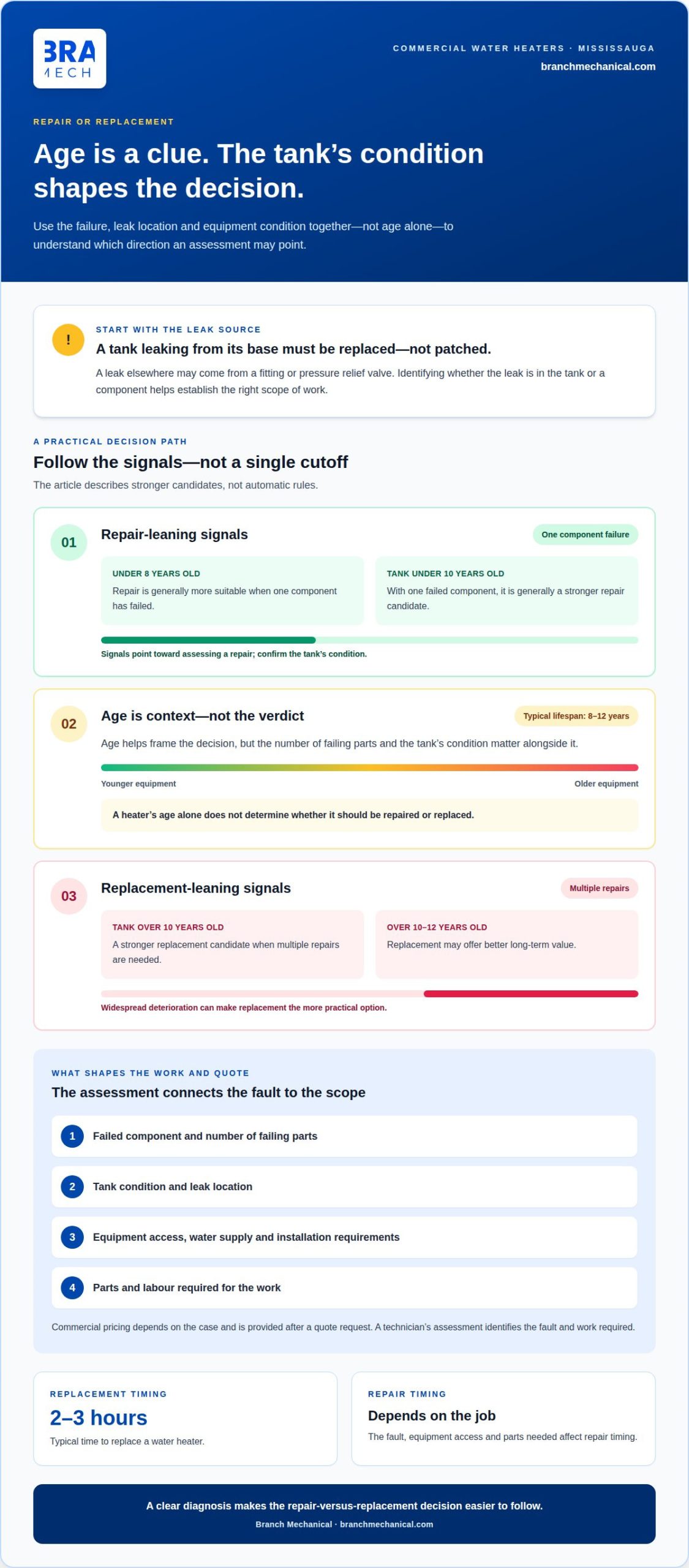
A commercial assessment should identify the leak source and whether repair or replacement suits the site. A tank leaking from its base must be replaced, not patched. Before work begins, clarify any Ontario code or permit requirements that apply to the planned scope. Ask for warranty and service terms in writing, including coverage and exclusions. For urgent issues, response timing and repair completion are separate: parts and site access affect how the work proceeds.
Typical repair and replacement costs in Mississauga
Repair or replacement depends on the failed component, tank condition, equipment access, and installation requirements. A repair may restore service when one part has failed, while widespread deterioration can make replacement the more practical option. Water heaters typically last between 8 and 12 years, so age helps frame the decision but doesn’t determine it alone.
For a commercial system, the price depends on the case and is provided after a quote request; factors include the fault, parts, labour, access, and whether replacement or installation is needed. A technician’s assessment connects the observed problem to the work required, rather than treating every electric or gas unit alike. Leaks, irregular performance, and multiple failing components can change the scope. The water supply and equipment setup also affect the work involved.
Age can help guide the repair-versus-replacement choice. Repair is generally more suitable for a water heater under 8 years old with one component failure. A tank over 10 years old that needs multiple repairs is a stronger replacement candidate. A unit over 10 to 12 years old may offer better long-term value when replaced. In each case, the number of failing parts and the tank’s condition matter alongside age.
Replacement of a water heater typically takes 2-3 hours. Repair timing depends on the fault, access to the equipment, and the parts needed. A technician’s response time in Mississauga depends on scheduling, urgency, travel, and the information available about the problem. Clear details about the heater type, symptoms, and effect on the building’s hot-water supply help establish the service requirements. A diagnosis then identifies the work needed to restore operation or replace the equipment.
Flat-rate diagnostic fee and repair-cost approval
A diagnostic assessment identifies why a commercial water heater has stopped heating and what work may restore it. Keeping assessment, approval of the proposed work, and repair as distinct steps makes the process clear.
Diagnostic Fees and Upfront Pricing
A flat-rate diagnostic fee covers the technician’s assessment, not an automatic repair. The repair cost depends on the fault, required component, equipment access, and work scope, then is provided after a quote request. Before approving work, confirm which findings the diagnostic covers and what the proposed repair includes. The technician should explain the diagnosis and obtain agreement on repair costs before work begins.
That separation matters for a Mississauga building with interrupted hot water. A diagnostic can identify a component failure, while the repair estimate accounts for the parts and labour needed. If the findings point to replacement instead, the scope changes. Homeowners may encounter similar fee structures, but commercial equipment and building access can affect assessment and repair requirements.
Diagnosing No Hot Water
For a no-hot-water call, technicians start by recording the equipment type, fuel source, symptoms, and operating history. They then assess the heating system and relevant controls to isolate the fault. For example, a unit that runs but produces no hot water needs a different diagnosis from equipment that will not start. Each observation helps define the repair scope.
A qualified technician should explain the failed component, proposed corrective work, and whether additional work may be needed. Review the written scope against the diagnosed problem before authorizing it. If testing reveals a separate fault, the technician should explain how it affects the work and seek approval before adding it. This staged process keeps diagnosis distinct from repair and makes the decision easier to follow.
Emergency and after-hours call-out fees
Emergency water heater call-out fees may be charged separately from repair work, depending on the service arrangement. The call-out and repair are separate parts of the bill. The price depends on the case and is provided after a quote request; factors include call timing, the fault, equipment access, required parts, and repair scope. A written breakdown helps show which charges relate to attendance and which relate to corrective work.
An emergency assessment starts with understanding the effect on the building. A restaurant without hot water, for example, may face disrupted operations. The technician records the heater type, reported symptoms, leak location, and whether the unit still supplies hot water. These details guide the inspection and help identify the assessment needed. The initial description helps prepare for the visit, while the diagnosed fault and required work shape the proposed scope.
After inspection, the technician explains the issue and proposed work before proceeding. A leaking connection, for example, requires a different scope from a corroded tank. If the tank itself leaks from the bottom, replacement is required rather than tank repair. For other faults, the plan depends on the affected component and equipment condition. Approval should match the described work, so any change in scope needs a clear explanation first.
Urgency and completion time are related, but they are not the same. Response timing depends on the service schedule and details provided; repair duration depends on diagnosis, access, parts, and the work required. A building with no hot water has different operational needs from one with an intermittent issue. Share the heater type, symptoms, and impact on the hot-water supply to help the technician prepare for an efficient inspection and determine the next step.
For an urgent commercial mechanical issue, request emergency mechanical support and describe the heater problem and its effect on operations.
Branch Mechanical
Branch Mechanical helps businesses address commercial hot water equipment problems and determine the next step. If a tank is leaking, hot water has stopped, or recurring faults are disrupting operations, its commercial and multi-residential mechanical services can support an assessment. The findings help clarify whether repair or replacement is the practical path for the building.
For systems connected to a wider heating setup, Branch Mechanical also services commercial boilers and heating systems. Preventative maintenance contracts help businesses plan mechanical upkeep and address equipment concerns before they interrupt operations.
When describing the issue, share the heater’s symptoms, equipment type, and impact on your building’s hot-water supply. Contact Branch Mechanical to discuss the problem and determine the appropriate next step.
Plan the next step for your building
For commercial hot water tank repair in Mississauga, treat the repair decision as part of the building’s wider mechanical plan. Recurring interruptions can affect daily operations, so documenting symptoms and equipment history makes the service discussion more focused. Consider how the water heater connects with other building systems and whether ongoing maintenance belongs in your operating plan.
Branch Mechanical provides Commercial & Multi-Residential Mechanical Contracting, Commercial HVAC Installation & Service, and Preventative Maintenance Contracts. These services support businesses managing interconnected equipment and planning mechanical upkeep. Share the issue affecting your building and the outcome you need, then contact the team to discuss a practical next step.
Contact Branch Mechanical for service to discuss your building’s needs. A clear conversation can help you move forward with an informed plan.
Frequently Asked Questions
Why is my hot water tank leaking from the bottom?
Water at the tank’s base does not identify the failed part by itself. For commercial hot water tank repair in Mississauga, note where the wetness first appears, whether it returns after hot-water use, and any changes in the surrounding area. This timeline helps a technician assess whether water may be travelling down from a higher connection or originating at the tank.
What types of commercial water heaters can be repaired in Mississauga?
Commercial water-heating systems can include storage-tank and tankless heaters, powered by gas or electricity. To make an assessment more specific, share the equipment’s make and model from its label, along with whether one heater or several serve the building. If hot water is unavailable in only certain areas, describe which ones. This helps clarify the system’s impact.
What are typical commercial hot water tank repair costs in Mississauga?
For commercial hot water tank repair in Mississauga, compare written proposals against the same intended outcome: restoring the existing heater or replacing it. Check that each proposal describes the included work and any exclusions. Comparing scope, rather than headline figures alone, makes it easier to understand what each proposal covers.
Is emergency commercial hot water tank repair available in Mississauga 24/7?
Branch Mechanical provides 24/7 emergency mechanical services for critical HVAC, refrigeration, and electrical failures. For a water heater issue, describe its effect on the building’s operations, such as whether a kitchen or tenant area has lost hot water. Clear context helps the team understand the broader mechanical concern and discuss an appropriate next step without assuming every water heater issue has the same urgency.
What are common commercial water heater problems, and what are professional repair steps?
Recurring performance problems can make scheduled maintenance useful alongside repairs. Annual flushing is recommended to remove sediment from tank water heaters, and flushing typically takes 30-45 minutes. A maintenance professional can assess the equipment and its operating history, then determine whether this maintenance step fits the unit. Recording recurring symptoms between visits can also help identify patterns over time.
Commercial hot water tank repair warranties and service guarantees in Mississauga
Ask for warranty and service terms in writing, including what is covered and any exclusions. Review these terms before work begins.