
A cooling tower maintenance plan should reflect how the system is used, not rely on a one-size-fits-all schedule. Commercial cooling tower maintenance in Etobicoke should account for operating intensity, environmental exposure, water quality, and system design. Keep clear records of inspection dates, findings, corrective actions, and water-quality results.
For commercial and industrial facilities, consistent upkeep supports reliable cooling and helps teams spot developing issues before they disrupt operations. It also brings mechanical checks, water-quality monitoring and cleaning into a more organized maintenance process.
This article explains what a maintenance scope and useful service records can include, why cleaning and disinfection matter for Legionella prevention, and how system conditions shape the work. It also covers inspection tasks and how preventative maintenance can fit into broader commercial HVAC care in Etobicoke.
Key Takeaways
- Use maintenance records to track inspection dates, findings, corrective actions, and water-quality test results.
- Plan regular inspections, cleaning, and disinfection to support safe, dependable cooling tower operation.
- Tailor maintenance to the tower’s workload, exposure, water quality, and design rather than relying on a one-size-fits-all schedule.
- Include mechanical components and water-treatment systems in inspections, and schedule major preventive work during cooler, off-peak periods where practical.
Qualified service providers and maintenance records
Effective cooling tower maintenance starts with a clear inspection scope and usable records. Service tasks should suit the tower, connected equipment, and building operations.
A qualified service team assesses the installed system before setting maintenance tasks. The review can identify tower components, operating conditions, access requirements, and connections to the facility’s HVAC equipment. This context helps distinguish routine inspections from corrective work and supports a practical maintenance plan. For example, findings from a warehouse’s cooling tower may need to be considered alongside the performance of its connected chiller.
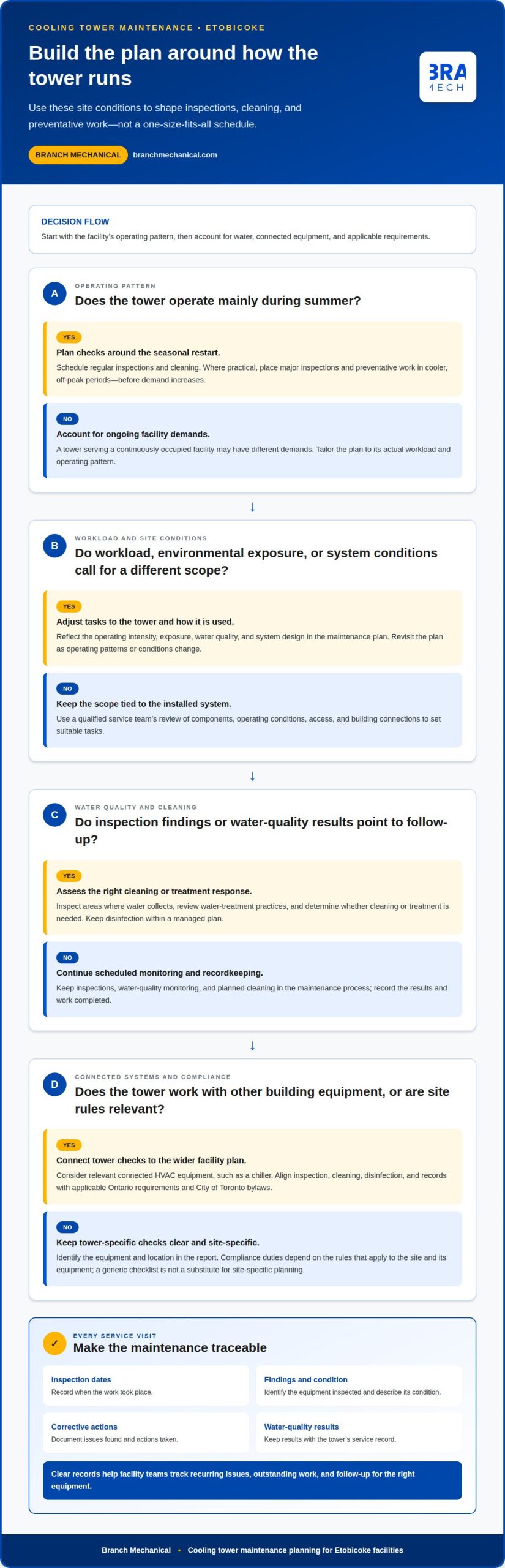
Detailed records make maintenance traceable. Each report should document inspection dates, findings, corrective actions, and water-quality test results. Identify the equipment inspected and describe its condition rather than relying on general notes such as “serviced.” If a technician finds a leak or unusual wear, record the issue and action taken. This information helps facility teams track recurring problems and plan follow-up work.
Etobicoke Cooling Tower Service Area
For Etobicoke properties, service planning should account for the site’s location, tower access, and the building systems connected to the equipment. Commercial and multi-residential buildings can have different operating demands, even when they use similar tower components. A service area description is most useful when it clearly identifies Etobicoke coverage and supports coordinated visits to the facility. Site-specific records also help keep follow-up work connected to the right equipment.
Commercial HVAC Service
Commercial HVAC service in Etobicoke can involve reviewing how a cooling tower supports the building’s wider cooling system. An inspection report should connect tower observations with relevant HVAC equipment, such as a chiller, when those systems work together. Clear reporting can include the finding, its operational relevance, and any corrective action completed. This gives facility managers a practical record for tracking equipment condition, maintenance needs, and efficiency over time.
Etobicoke commercial properties include warehouses, restaurants, offices, and multi-residential buildings. Reports are easier to use when they identify equipment and locations, record water-quality results, and list outstanding corrective actions. This structure helps operations teams coordinate facility maintenance while keeping tower-specific findings clear.
Bacterial disinfection and Legionella prevention
Ontario requirements and Toronto bylaws relevant to cooling towers should inform site-specific Legionella prevention, cleaning, and disinfection plans. Emergency cooling tower repair near Etobicoke addresses active equipment faults, while scheduled maintenance helps reduce reliance on reactive work.
Maintenance and Cleaning
Regularly scheduled cooling tower inspections and cleaning support safety and maintenance. A preventative maintenance program can set recurring inspection tasks, review water-treatment practices, and record completed cleaning. Disinfection should be part of a managed plan, not an isolated response to visible buildup. For example, technicians can inspect areas where water collects and assess whether cleaning or treatment is needed.
Preventative maintenance gives mechanical teams an opportunity to identify developing issues before they interrupt tower operation. Reactive work begins after a fault or performance problem appears. A blocked nozzle or unexpected leak may need immediate attention, while planned cleaning lets teams address system conditions in a controlled sequence. Both approaches require records of findings and corrective actions.
Regulations and Bylaws
For an Etobicoke facility, consider applicable Ontario requirements alongside City of Toronto bylaws concerning cooling tower maintenance and Legionella control. Duties depend on the rules that apply to the site and its equipment, so align inspection, cleaning, disinfection, and recordkeeping with those requirements. A generic checklist is not a substitute for site-specific compliance planning.
Keep disinfection procedures connected to the tower’s water-treatment plan and maintenance records. Document the work performed, findings, and follow-up actions so staff can trace how concerns were addressed. These records also help mechanical teams coordinate future inspections and planned cleaning.
For commercial facilities in Toronto, preventative maintenance works best when responsibilities and reporting procedures are clear. Scheduled visits can cover cleaning and inspection, while a documented escalation process helps staff respond to mechanical faults. Together, these practices support a planned approach to Legionella control and tower upkeep.
Tailoring maintenance to system use and conditions
A cooling tower maintenance plan should reflect workload, exposure, water quality, and design. A tower serving a continuously occupied facility may face different demands from one used mainly in summer. Account for those differences when planning tasks, and adjust them as operating patterns or system conditions change. This avoids relying on a generic schedule that overlooks how the equipment runs.
Seasonal use matters. For buildings that operate cooling towers only in summer, regular inspections and cleaning are important. Where possible, schedule major inspections and preventative work during cooler, off-peak periods. This gives teams time to address developing issues before demand increases. A facility preparing to restart seasonal cooling, for example, can plan tower checks around its operating schedule.
Connected equipment also shapes maintenance planning. A rooftop unit or make-up air system may serve the same building as a cooling tower, so consider how each system supports indoor conditions. Coordinating HVAC, electrical, and water-treatment work helps keep tasks aligned. In a hotel or restaurant, that coordination can account for occupied spaces and kitchen ventilation as well as cooling equipment.
Custom cooling systems need maintenance suited to their design and operating conditions. When a commercial chiller is paired with a cooling tower, consider both pieces of equipment and how they work together. Chiller work may include cleaning tubes to support heat transfer, analysing compressor oil, or treating condenser water to help prevent scale. Appropriate tasks depend on system condition and performance needs.
Use inspection findings to refine the maintenance plan. Changes in water quality, environmental exposure, operating intensity, or equipment behaviour may mean inspection and cleaning tasks need adjustment. Facility teams can coordinate follow-up across mechanical and water-treatment systems, then record the revised scope. This keeps maintenance tied to actual system demands rather than assumptions based on similar buildings.
Commercial and industrial cooling tower maintenance
Commercial and industrial towers need checks that cover water, mechanical components, and operating performance. A missed fault can interrupt cooling and contribute to business losses beyond replacement equipment and repair labour.
Begin with a site inspection. Check basin water levels, drift eliminators, unusual equipment noises, leaks, and overflow. Inspect the fan-drive belt for tension and alignment, confirm motor operation, and assess pump performance. Check strainers and screens, since blockages can affect water movement. Record each finding, its location, and any corrective action.
Inspect the tower’s fill media for scaling, fouling, or microbial growth. Check the basin, nozzles, structural components, fans, gearboxes, and support frames for their condition. A visible issue in one component can signal a maintenance need elsewhere. For example, fouled fill can affect heat-transfer performance.
Water checks should assess pH, conductivity, and chemical balance. Inspect and calibrate the water-treatment system as needed. Where appropriate, smart sensors can monitor water flow, temperature, conductivity, and chemical levels. Reviewing readings alongside physical inspection findings gives maintenance teams a fuller picture of operating conditions.
Deep cleaning should cover the basin, nozzles, and fill media. Follow cleaning with performance testing to assess efficiency and operational targets. Compare results with the system’s operating needs and document any issues requiring follow-up. For towers used only in summer, schedule regular inspections and cleaning around seasonal operation.
Plan major inspections and preventive work for cooler, off-peak periods where possible. This timing can reduce the risk of failure during increased demand. Coordinate the work with HVAC, electrical, and water-treatment teams so connected tasks align. To discuss a maintenance plan for your facility, arrange a cooling tower maintenance discussion.
Branch Mechanical: Preventative Maintenance Contracts
Branch Mechanical helps Etobicoke facilities plan cooling tower care through preventative maintenance contracts. A structured plan can align tower inspections and cleaning with the building’s operating schedule, equipment condition, and connected commercial HVAC systems. This is useful when maintenance needs recurring coordination or when reactive repairs are disrupting planned operations.
Cooling towers in commercial and multi-residential properties rarely operate in isolation. Branch Mechanical’s Commercial & Multi-Residential Mechanical Contracting and Commercial HVAC Installation & Service support a broader view of building systems. This coordination helps facility teams connect tower findings with related HVAC equipment and follow-up work, rather than treating each issue separately.
If your Etobicoke facility needs an organized approach to cooling tower maintenance, contact Branch Mechanical to discuss your requirements.
Plan the next maintenance cycle with confidence
Use the next maintenance cycle to connect tower care with your facility’s operating priorities. Changes in occupancy, seasonal demand, or equipment condition can affect when work should take place. For commercial cooling tower maintenance in Etobicoke, a clear plan helps your team coordinate site access, maintenance records, and follow-up with building operations. It gives facility managers a practical starting point for planning the next service period.
Branch Mechanical provides Preventative Maintenance Contracts, Commercial & Multi-Residential Mechanical Contracting, and Commercial HVAC Installation & Service. These services support facilities that need organized maintenance across connected building systems. Discussing your equipment and operating needs with Branch Mechanical is a practical next step.
Contact Branch Mechanical about tower maintenance to discuss your facility’s needs. A considered maintenance plan can help your team move forward with greater clarity.
Frequently Asked Questions
Which commercial cooling tower maintenance companies serve Etobicoke, Ontario?
Branch Mechanical provides commercial mechanical services in Etobicoke, including cooling tower maintenance. The service scope should reflect how the tower connects to the building’s cooling equipment and operating schedule. This helps coordinate tower work with other mechanical systems, while clear reporting helps property and operations teams track follow-up across the site.
What maintenance is required for commercial cooling towers in Ontario?
Commercial cooling tower maintenance in Ontario should address mechanical condition, water quality, cleaning needs, and operation. Tasks can include checking water-treatment equipment, examining components for fouling or wear, and assessing system performance. Facility teams should also account for applicable local requirements and keep records of completed work. The precise tasks depend on tower design, water conditions, and how the building uses the system.
How often should commercial cooling towers be inspected, cleaned, and disinfected?
Set inspection, cleaning, and disinfection frequency according to operating intensity, water quality, environmental exposure, and system design. A tower running through a heavy cooling season may need more frequent attention than equipment used seasonally. Regular inspections and cleaning support safety and maintenance. Adjust the schedule for operating changes and previous findings rather than applying one fixed interval to every facility.
What is included in a commercial cooling tower maintenance service contract?
A commercial cooling tower maintenance plan in Etobicoke should define the service scope, visit schedule, reporting, and process for recommended corrective work. Clarify whether cleaning, water-quality testing, performance checks, and written reports are included. Distinguish scheduled tasks from repairs that require separate approval. A clear scope helps facility teams coordinate access and understand the records they will receive.
What should a commercial building cooling tower maintenance checklist include?
A useful checklist guides technicians through each visit and makes changes easy to track. Identify the tower and record its operating status, inspection findings, water-treatment observations, and completed work. Note outstanding issues, their operational impact, and recommended follow-up. Comparing each visit with earlier records can help staff identify recurring concerns and communicate priorities to building operations teams.
What are the risks of poorly maintained cooling towers, including Legionella and equipment failure?
Poor maintenance can contribute to microbial growth, including Legionella concerns, and mechanical problems that interrupt cooling. Blockages, fouling, or ineffective water treatment can affect operation and require corrective work. Cooling tower downtime can also cause business losses beyond replacement equipment and repair labour. Regular maintenance helps teams identify conditions that need attention before they grow into larger operational problems.