
A rooftop unit can be out of sight without being out of mind. It’s a self-contained heating, cooling and ventilation system installed on a building’s roof, with its components together in one location. Commercial rooftop unit maintenance in Mississauga involves routine professional inspections and service to help keep equipment operating smoothly and identify developing issues before they cause further problems.
It’s reasonable to expect more than a quick glance at equipment that supports your building’s comfort. This guide explains what maintenance can cover, what service reports document, and how quality checks and refrigerant leak testing fit into the work. You’ll also learn which warning signs may indicate that a rooftop unit needs attention, and how planned maintenance can support reliable operation over time.
Key Takeaways
- Understand how a rooftop unit brings heating, cooling and ventilation components together, and what its efficiency rating tells you.
- Learn how clear service reports can help track equipment condition, completed work and maintenance needs.
- See how quality checks and refrigerant leak testing support dependable rooftop unit operation.
- Recognize warning signs that call for professional attention and how planned maintenance can help address issues early.
WHAT IS A COMMERICAL ROOFTOP UNIT?
A commercial rooftop unit is a self-contained heating, cooling and ventilation system installed on a building’s roof. Its components sit together outdoors, unlike traditional systems with separate indoor and outdoor equipment. This arrangement can preserve indoor space in commercial buildings and give HVAC professionals access to the equipment in one area.
Efficiency affects energy use, but the unit’s rating is only one part of operating costs. A SEER rating compares cooling output with energy consumed over the rating period. The Lennox Raider rooftop unit is rated at 13.0 SEER, with an IEER rating of up to 13.2. Controls also matter: better temperature and function settings can help limit wasted energy. Dirty components, worn parts, or poor control settings can make a unit work harder to maintain the set temperature.
An unusually high energy bill may signal that a worn component is straining to meet demand. Weak heating or cooling, or unusual compressor noise, can also indicate a need for repair. If performance continues to decline, arrange a professional assessment rather than waiting for a complete failure. Whether repair or replacement makes sense depends on the equipment’s condition and the work required.
Prepare for seasonal shifts with planned professional checks. Before summer, technicians can assess cooling operation and temperature controls. Before winter, they can check heating operation and controls. These steps can identify issues before seasonal demand increases.
Efficiency upgrades may include improved controls that better match system operation to building needs. Rebate programs can change, and eligibility depends on the program and proposed upgrade, so consider this when planning a project. For a Mississauga business, commercial rooftop unit maintenance can also identify performance issues before they contribute to avoidable energy use.
Because heating and air-conditioning equipment needs space, placing it overhead can preserve usable business areas. Grouped components also give HVAC professionals a single, accessible service area.
Service reports and maintenance documentation
A useful service record links observed conditions to completed work and follow-up needs. Information about access also helps technicians reach rooftop units and service filters safely and efficiently.
Service Reports and Equipment Access
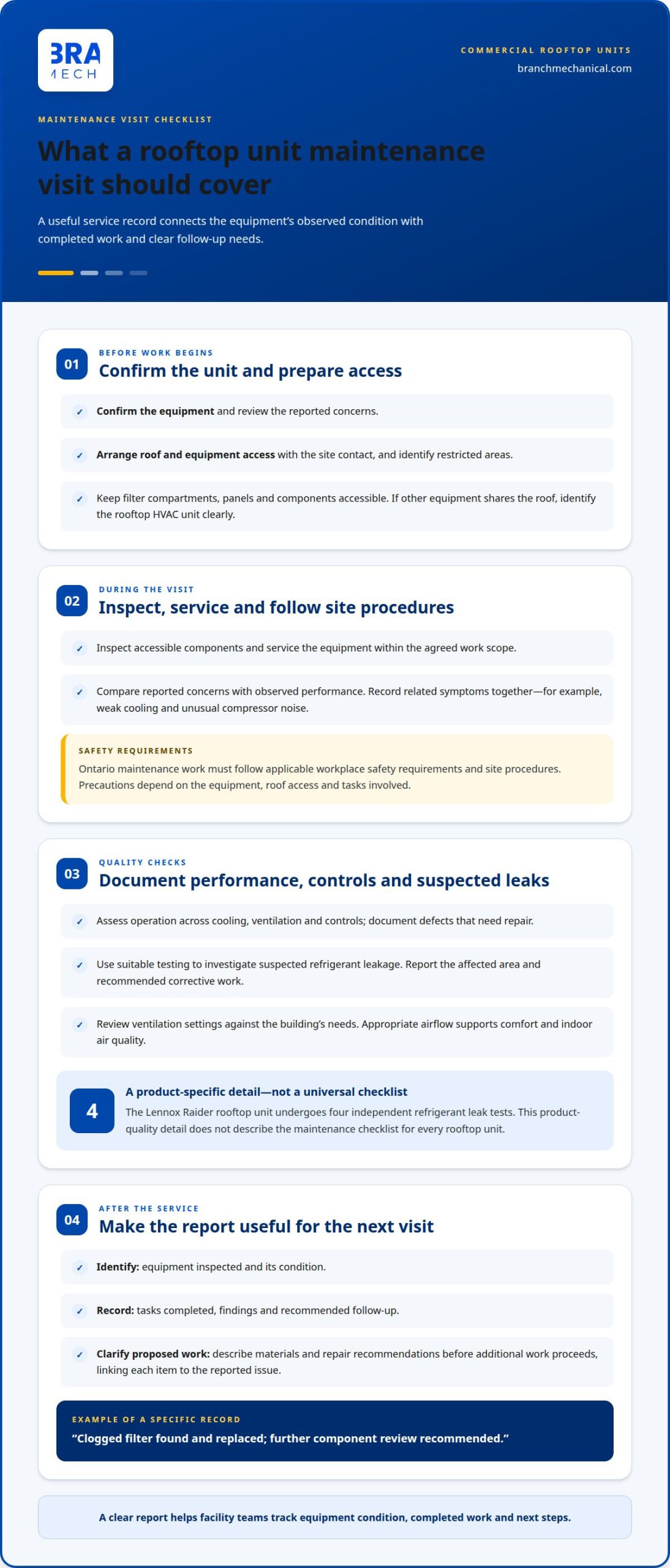
After servicing, a report should identify the equipment inspected, its condition, completed tasks, and recommended follow-up. For example, it can record a clogged filter, its replacement, and any further component review needed. These details create a practical maintenance history across visits. In Mississauga, commercial rooftop unit servicing is performed by commercial HVAC contractors with commercial HVAC experience.
Before work begins, the site contact can arrange roof and equipment access and identify restricted areas. Clear access to filter compartments, panels and components helps technicians complete an inspection efficiently. If other equipment shares the roof, the report should distinguish the rooftop HVAC unit from those systems.
Maintenance Visit Steps and Requirements
A visit generally starts with confirming the unit and reviewing reported concerns. The technician then inspects accessible components, services the equipment within the work scope, and records findings and outstanding needs. Ontario maintenance work must follow applicable workplace safety requirements and site procedures. The specific precautions depend on the equipment, roof access, and tasks involved.
Commercial HVAC contractors in Mississauga provide rooftop unit maintenance and servicing. Documentation should clarify the contractor’s role and identify the work performed, rather than leaving the facility with an unexplained checklist.
A service estimate should describe the proposed work, materials and repair recommendations before additional work proceeds. For example, it can distinguish a filter replacement from a separate component repair. Materials depend on the unit’s condition and the approved work scope, so estimates should link each item to the reported issue.
Review the report for specific findings, completed tasks and next steps. A consistent record helps facility teams track heating equipment, plan service and understand which components need attention at the next visit.
Quality checks and refrigerant leak testing
Quality checks assess whether a rooftop unit operates as intended across cooling, ventilation and controls. A technician can compare reported concerns with observed performance, inspect accessible components and document defects that need repair. For example, weak cooling and unusual compressor noise should both be recorded, rather than treated as unrelated symptoms.
Refrigerant leak testing helps identify leaks that can affect cooling performance and continued operation. The Lennox Raider rooftop unit undergoes four independent refrigerant leak tests. This product-quality detail is not a maintenance checklist for every rooftop unit. During service, technicians assess the equipment and use suitable testing to investigate suspected leakage. Findings should identify the affected area and recommended corrective work.
Ventilation controls also deserve attention. Commercial rooftop units can provide more ventilation control, helping manage humidity and maintain clean, fresh indoor air. Technicians can review whether settings support the building’s operating needs. For example, a space with changing occupancy may need different ventilation operation than a consistently occupied work area. Appropriate airflow supports comfort and indoor air quality.
Refrigerant checks and rooftop work call for technicians with relevant HVAC qualifications. Qualifications indicate training suited to the work, while contractor insurance addresses liability risks associated with service. These are separate considerations, and neither replaces a documented inspection. A clear report should identify the technician’s findings, tests performed, defects observed and recommended next steps.
Quality checks can also distinguish an immediate operating concern from an issue requiring planned follow-up. If an emergency breakdown occurs, recorded inspection findings can help technicians understand the unit’s condition and focus repair work. The maintenance record should link each test or observation to the equipment and explain its practical significance, such as a leak affecting cooling or a ventilation setting affecting humidity.
Commercial rooftop unit maintenance
Planned maintenance helps identify developing faults before they disrupt heating and cooling. A useful checklist links each inspection task to the unit’s condition and operating demands.
Included Maintenance Tasks
A commercial HVAC maintenance visit can include inspecting accessible components, checking filters, reviewing controls and assessing heating and cooling operation. The technician can also look for visible damage, unusual noise, blocked drainage or signs of wear. Each finding should lead to a clear next step, such as cleaning, adjustment, repair or further assessment.
Scope matters. A rooftop unit serving a busy commercial space may face different demands from equipment used intermittently. The service record should distinguish completed maintenance from recommended repairs and explain which observed issue prompted each recommendation. This gives facility teams a practical basis for scheduling follow-up and tracking recurring concerns.
Maintenance Frequency
A professional should examine commercial rooftop units regularly and address minor problems before they cause further damage. The appropriate schedule depends on equipment condition, operating hours, building use and the demands placed on heating and cooling. A maintenance plan can set visits around these factors rather than relying on one schedule for every building.
Review the unit’s service history when scheduling the next visit. Repeated filter concerns, declining performance, unusual sounds or rising energy use can indicate that attention is needed sooner. Addressing these signs early can help limit downtime and prevent a small issue from developing into a larger repair.
Keep a consistent record of inspection findings, completed tasks, and follow-up recommendations. For a unit with recurring faults, that history helps the contractor identify patterns and assess whether repair remains practical or replacement deserves consideration. Arrange commercial rooftop unit service to plan maintenance around your equipment’s condition and building operations.
Branch Mechanical: Preventative Maintenance Contracts
Branch Mechanical provides preventative maintenance contracts for commercial HVAC systems. These contracts support planned inspections, routine servicing and attention to developing issues before they disrupt building operations. They’re a practical option for facilities that want maintenance organized around equipment condition and operating needs.
For a rooftop unit with declining heating or cooling performance, recurring faults or outstanding service recommendations, planned maintenance can help establish clear follow-up. Branch Mechanical also provides commercial HVAC installation and service, commercial and multi-residential mechanical contracting, and commercial boilers and heating systems. The next step depends on whether the need is routine care, a repair or broader mechanical work.
For commercial rooftop unit maintenance in Mississauga, contact Branch Mechanical to discuss your building’s maintenance needs.
Make your next maintenance decision with confidence
Use your rooftop unit’s service history to prioritize upcoming work. Note recurring concerns, unresolved recommendations and changes in building use. This gives technicians useful context and helps your facility team plan service around operating needs rather than waiting for a disruption.
For commercial rooftop unit maintenance in Mississauga, discuss your equipment’s condition and the maintenance support your building needs. Branch Mechanical can help you consider an appropriate approach to ongoing rooftop HVAC care. A clear conversation can turn inspection findings into a practical plan for your facility.
Contact Branch Mechanical about rooftop unit service and take the next step towards a more organized maintenance plan.
Frequently Asked Questions
Searching for Rooftop Units Services?
Branch Mechanical provides commercial rooftop unit service through its Commercial HVAC Installation & Service offering. For a Mississauga building, the next step depends on whether you need planned upkeep, investigation of a performance issue or repair. Useful details include the unit’s make and model, any symptoms and how the issue affects building operations. This context helps focus attention on the equipment’s needs.
What is the typical cost of commercial RTU maintenance in Mississauga, Ontario?
The cost depends on the case and is provided after a quote request. Factors include the unit’s condition, roof and equipment access, inspection scope, labour and required materials. Routine maintenance and a visit that also involves diagnosing a fault are different scopes of work. An estimate should make clear which tasks and materials it covers before additional work proceeds.
What affects the cost of commercial rooftop unit maintenance?
Unit condition and required work are key cost factors. A technician may need to inspect one unit or assess several units with different service histories. Roof access, equipment layout, operating constraints and materials needed for identified repairs can also affect the scope. For example, further fault diagnosis involves different work from a standard inspection alone.
How do preventive maintenance plans compare with one-time RTU service calls?
A preventive maintenance plan organizes recurring service around equipment needs, while a one-time call addresses a particular concern or visit. A plan can help a facility build a consistent record over time, which is useful when symptoms return or operating needs change. A one-time call can address a specific problem, but it does not establish the same ongoing maintenance approach.
What risks can result from neglecting commercial rooftop unit maintenance?
Neglected maintenance can allow minor equipment problems to worsen, increasing the risk of heating or cooling interruptions. A worn component may strain as it tries to meet the building’s temperature needs, and an unresolved fault can become harder to diagnose as performance declines. For a business with occupied work areas, a breakdown can also disrupt normal operations and indoor comfort.