
For commercial gas work in Etobicoke, a certified commercial gas fitter should carry out leak testing and document the results. According to Statistics Canada, a provincial gas fitter licence is usually required. Completed gas work can be pressure-tested, with documentation provided for insurance and records.
Gas work affects building safety and equipment reliability, so it’s reasonable to want a clear process and records of what was tested. A certified commercial gas fitter in Etobicoke can assess the gas line, explain the testing, and document the work.
This article explains commercial gas leak testing and certification, key considerations for gas line installation, and why technician qualifications and insurance matter. You’ll also learn how local mechanical services can support businesses and multi-residential properties in Etobicoke, and when to plan commercial gas work.
Key Takeaways
- Learn what pressure testing can establish about completed gas work and why keeping clear test documentation matters.
- Understand how commercial gas service can support different properties and equipment across Etobicoke neighbourhoods.
- See which project details shape a gas line installation and how leak testing fits into the work.
- Know what technician licensing and business insurance contribute when planning commercial gas work.
Gas line leak testing and certification
In Ontario, commercial gas work generally requires a provincially licensed gas fitter. Permit and inspection requirements depend on the work and applicable project requirements, so factor them into planning before an installation or alteration begins.
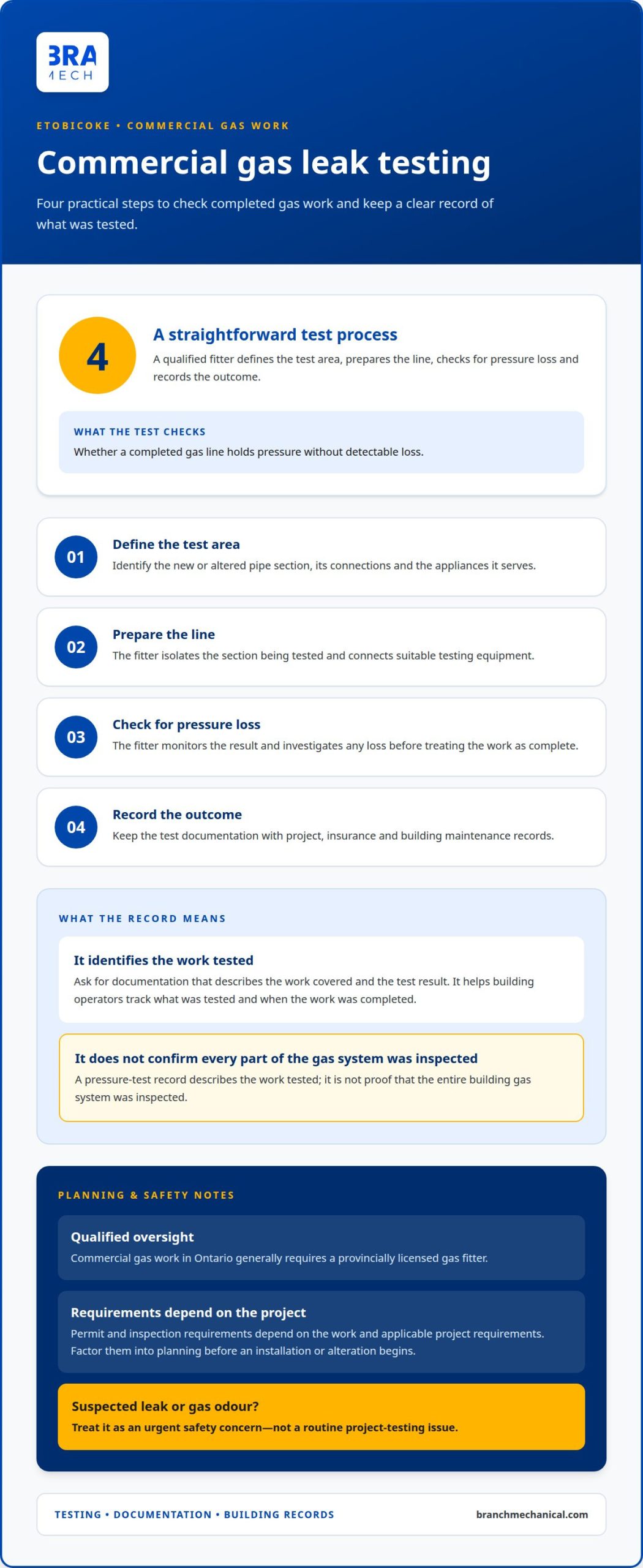
Leak testing checks whether a completed gas line holds pressure without detectable loss. A qualified fitter can pressure-test the work and document the result for insurance and maintenance records. That record helps a building operator track what was tested and when the work was completed.
A typical testing and documentation process includes these practical steps:
- Define the test area. Identify the new or altered pipe section, its connections, and the appliances it serves.
- Prepare the line. The fitter isolates the section being tested and connects suitable testing equipment.
- Check for pressure loss. The fitter monitors the test result and investigates any loss before treating the work as complete.
- Record the outcome. Keep the test documentation with project, insurance, and building maintenance records.
For example, a restaurant adding a gas line for kitchen equipment needs the new section assessed, not just a visual review of the appliance connection. If testing indicates a leak, the affected connection or pipework needs attention before the line is accepted as complete. A pressure-test record describes the work tested; it does not prove that every part of the building’s gas system was inspected.
“Certification” can refer to documentation showing that completed work was tested. Ask for records identifying the work covered and the test result. Property managers can keep these records to plan future maintenance or review work completed during a renovation.
For an Etobicoke business, a certified commercial gas fitter can connect testing, repair work, and clear documentation. Treat a gas odour or suspected leak as an urgent safety concern, not a routine project-testing issue. Keep test records accessible to the people responsible for the building and its equipment.
Commercial gas work generally requires a provincially licensed gas fitter. Permit and inspection requirements depend on the work and applicable project requirements, so include them in planning before an installation or alteration begins.
Gas services across Etobicoke neighbourhoods
Commercial gas services in Etobicoke can include new gas lines, repairs, leak response, and equipment connections. The property address, equipment, and urgency help define the work required.
Commercial Gas Fitting Services
A certified commercial gas fitter in Etobicoke can assess gas work for a restaurant, warehouse, or multi-residential property. Common needs include connecting a kitchen appliance, repairing a gas line, or investigating a suspected leak. Describe the affected equipment and issue clearly to help define the site-specific scope.
Commercial service can also include installing a gas line for equipment, followed by testing and records for the completed work. For example, when a restaurant adds a cooking appliance, the gas connection needs to be considered alongside the kitchen layout. Building operators can keep project details with maintenance records for future reference.
Commercial gas fitting in Etobicoke can involve gas line installation, repairs, and emergency gas repair. A certified commercial gas fitter in Etobicoke is relevant when work affects business equipment or building systems. Include the property address, equipment type, and whether the request is for planned work or an active problem.
Neighbourhood Coverage and Emergency Response
The property’s location and the work required shape service planning across Etobicoke. A restaurant kitchen and a warehouse heating system, for example, have different site conditions and equipment needs. Share the full address and a concise description of the issue to establish the location and nature of the work.
Emergency gas repair is available 24/7 in Etobicoke, with priority same-day response for Red Tag emergencies and gas leaks. Non-emergency work, such as a BBQ gas line, is typically booked within 24-48 hours. Explain whether the request involves a suspected leak, a Red Tag, or scheduled installation so its urgency is clear.
Before arranging a visit, note which appliance or area is affected and whether the issue is ongoing. For a planned installation, describe the equipment and its intended location. These details help distinguish an urgent repair from scheduled gas work at an Etobicoke business or multi-residential property.
Residential and commercial gas line installation
Installing a gas line involves planning its route from the supply to the equipment. In homes and commercial properties alike, the appliance location and building layout shape the work.
Start by identifying the equipment and its intended location. A restaurant adding a cooking appliance, for example, needs a line routed to the planned kitchen position. A residence may need a new connection for a gas appliance. In either case, the installer must account for site conditions and access to the work area.
Before scheduling installation, organize the project details:
- Name the equipment. Describe the appliance the line will serve and where it will be installed.
- Explain the property type. Note whether the work is at a residence, restaurant, or multi-residential building.
- Describe the site. Share relevant layout details and access considerations for the proposed route.
- Plan the closeout. Include leak testing and documentation as part of completing the installation.
Gas line installations for residential and commercial properties are leak-tested and certified to meet the latest Ontario Gas Codes. The test and certification provide a record of the completed work. Property managers can keep those records with building documents as a reference for future maintenance or equipment changes.
A certified commercial gas fitter in Etobicoke can assess the proposed route and equipment requirements for a business installation. Project details matter: a restaurant kitchen renovation may need coordination with appliance placement, while a multi-residential project may involve access to shared areas. This information helps plan the work around the property and its intended use.
Specify whether the work is for new equipment or to replace an existing connection. The appliance, location, building layout, and access conditions all inform the installation plan. Clear details help connect the work scope with testing and the records needed at project closeout.
Technician licensing and insurance
Compare quotes by matching the work scope, technician qualifications, insurance, testing, and records. In Ontario, commercial gas work generally requires a provincially licensed gas fitter.
Finding TSSA-Registered Fitters
In Etobicoke, look for commercial mechanical contractors that identify gas fitting among their services and state that their technicians hold valid TSSA licences. Statistics Canada says a provincial gas fitter licence or gas appliance technician certificate may be required for gas appliance service technicians. Match the technician’s credential to the planned work.
For a useful quote comparison, review the same details in each proposal: the gas line or appliance involved, included work, leak testing, documentation, and insurance coverage. A clearly defined scope makes proposals easier to compare. Ask for the technician’s licence information and confirm who will perform the work.
Risks of Hiring an Uncertified Fitter
Gas work completed without appropriate qualifications can leave a connection or appliance improperly installed or assessed. A faulty connection may allow gas to escape, while poor work on an appliance line can interfere with its operation. Qualifications matter for both new installations and repairs.
For example, a restaurant adding a gas appliance needs the line and connection handled by someone qualified for that work. Unclear qualifications can also make it harder to establish who performed the installation or what was completed. Keep the quote, licence details, insurance information, and final records together.
Before choosing a contractor, use a short review process:
- Compare each quote against the same equipment and installation scope.
- Review the technician’s applicable gas fitting credential.
- Check that the proposal explains testing and the records provided.
- Review the business’s insurance information for the planned work.
These steps help property managers assess proposals on more than price alone. For a commercial kitchen, warehouse, or multi-residential property, match the qualifications to the equipment and gas work involved. A clear scope and documented qualifications make the decision easier to explain and record.
Branch Mechanical: Commercial & Multi-Residential Mechanical Contracting
Branch Mechanical provides commercial and multi-residential mechanical contracting for buildings that need coordinated support across essential systems. For properties planning gas-related work alongside heating or HVAC projects, its commercial HVAC installation and service, commercial boilers and heating systems, and preventative maintenance contracts address related building needs.
This support is useful when a renovation affects several systems or building operators need ongoing maintenance planning. For example, a commercial boiler project may need coordination with the property’s broader mechanical requirements. Branch Mechanical helps businesses and multi-residential properties manage these connected needs through its mechanical contracting services.
For help planning commercial mechanical work, contact Branch Mechanical to discuss your property’s needs.
Plan the next step for your Etobicoke property
Make the next gas project easier to manage by bringing the practical details together. Note the equipment involved, the planned work, and how the space is used. For a restaurant, identify the kitchen appliance and where it will be installed. For a multi-residential building, describe the area or equipment needing attention. Clear information helps focus a conversation about the property’s mechanical needs.
Choosing a certified commercial gas fitter in Etobicoke is one part of responsible project planning. Building operators can also coordinate gas-related work with the facility’s ongoing requirements. Branch Mechanical provides commercial and multi-residential mechanical contracting, commercial HVAC installation and service, and preventative maintenance contracts to support that work.
For a practical discussion about your property’s needs, contact Branch Mechanical for gas service. A considered plan is a sound place to start.
Frequently Asked Questions
How to verify a commercial gas fitter’s certification in Ontario?
Ask for the technician’s current credential details and match them to the planned work. Gas line installation and gas appliance servicing, for example, may involve different qualification requirements. Confirm who will perform the work, and keep credential information with the proposal and job records. This gives property managers a clear reference when reviewing qualifications and completed work.
What Ontario certifications and licences are required for commercial gas fitters?
According to Statistics Canada, a provincial gas fitter licence is usually required. For gas appliance service technicians, a provincial gas fitter licence or gas appliance technician certificate may be required. The appropriate credential depends on the work, such as fitting a gas line or servicing an appliance. Identify the task in the quote so the technician’s qualifications can be considered in that context.
Which Etobicoke neighbourhoods and nearby areas do commercial gas fitters serve?
Branch Mechanical serves Etobicoke and surrounding regions, including Mississauga. When arranging commercial service, share the property’s full address and the type of work needed. This establishes the location and site context, such as whether the job is at a restaurant, office, or multi-residential building.