
A boiler failure can quickly become a building-wide problem. When tenants, staff, or daily operations depend on heat, a search for “emergency boiler repair Toronto” often starts with one urgent question: what should you do first? Avoid guesswork and repeated attempts to restart the system. Note what has changed, share clear information with a qualified mechanical service team, and keep occupants informed.
It’s understandable to focus on getting the heat back as soon as possible. But a safe, dependable repair starts with identifying the cause, not simply clearing a fault or restarting the boiler. Branch Mechanical provides commercial and multi-residential boiler and heating-system services, supported by 24/7 emergency mechanical services across the Greater Toronto Area, including Mississauga and Etobicoke.
This guide explains what to do while you wait for service, what a technician may assess when diagnosing a boiler problem, and how to weigh repair against replacement. You’ll have a clearer path from the first signs of trouble to an informed decision about restoring reliable heat.
Key Takeaways
- Recognize when lost heat or a possible safety concern needs immediate attention, and distinguish urgent risks from faults that need prompt assessment.
- Understand why similar heating symptoms can have different underlying causes during emergency boiler repair Toronto service.
- Compare repair and replacement based on the boiler’s condition, fault severity, reliability, and your building’s heating needs, not age alone.
- Prepare for service by documenting symptoms, arranging safe access, and sharing clear details with the mechanical team.
- See how coordinated boiler, heating, gas-fitting, and mechanical expertise can help address building-wide issues.
Emergency Boiler Repair in Toronto: When a Heating Failure Needs Immediate Attention
When a boiler stops heating a commercial or multi-residential building, the effects can spread quickly. Tenants may lose heat, staff and customers may be affected, and building operations can become harder to manage. Temperature-sensitive areas may also need attention. For building operators, the first priority is deciding whether people could be in immediate danger or whether the system needs prompt professional assessment.
Emergency boiler repair Toronto calls can involve different problems, and a symptom alone doesn’t confirm the cause. A boiler is part of a larger heating system, so understanding the equipment and its role in the building helps frame the issue. The overview of Boiler (power generation) introduces boiler functions and applications, but a qualified professional must assess a specific building system.
Which boiler symptoms call for urgent professional attention?
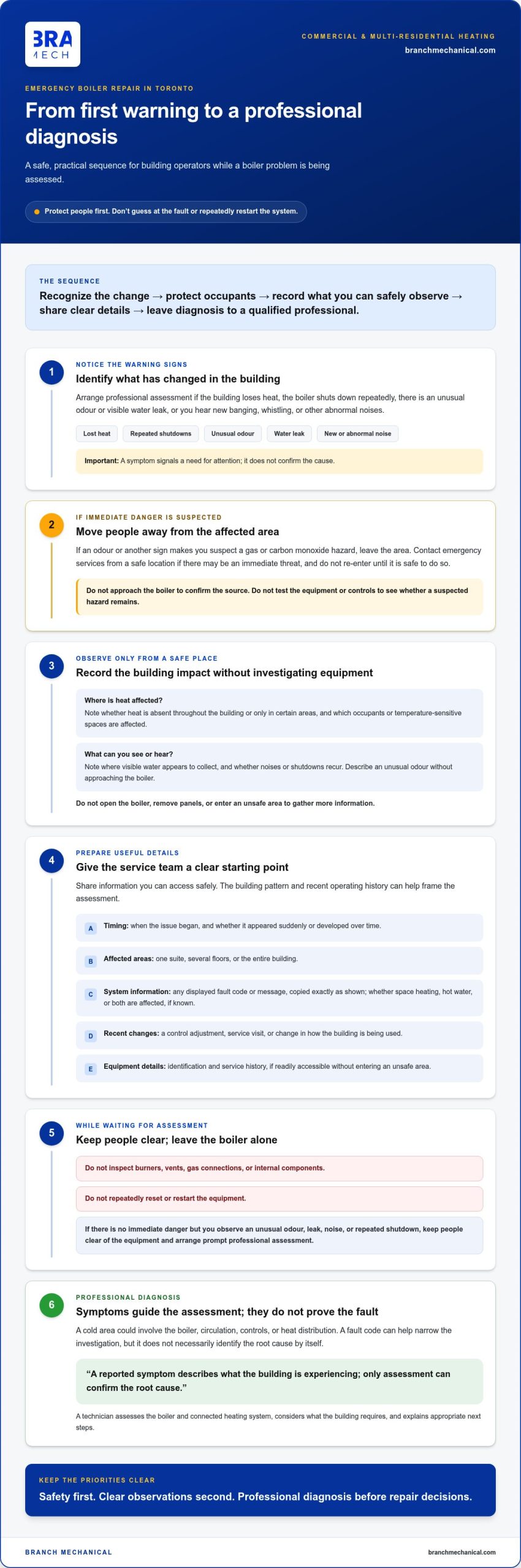
Arrange professional assessment if the building loses heat, the boiler shuts down repeatedly, you notice an unusual odour, see water leaking, or hear abnormal banging, whistling, or other new noises. These signs mean the system needs attention, but they don’t identify a confirmed fault. Report repeated shutdowns rather than repeatedly resetting the equipment.
- Note whether heat is absent throughout the building or only in certain areas.
- Record when the problem began and whether shutdowns or noises recur.
- From a safe location, observe visible water and note where it appears to be collecting.
- Describe any unusual odour without approaching the boiler to investigate.
- Note which spaces or occupants are affected, including temperature-sensitive areas.
Limit your checks to what you can see or hear without opening equipment or entering an unsafe area. These observations help the service team understand the building-wide impact and prepare for an assessment. They don’t replace a diagnosis.
What should you do if you suspect a gas or carbon monoxide hazard?
Protect people first. If an odour or another sign makes you suspect immediate danger, leave the affected area and follow emergency guidance. Contact emergency services from a safe location if there may be an immediate threat, and don’t re-enter until it’s safe to do so. Don’t approach the boiler to confirm the source.
Never inspect burners, vents, gas connections, or internal components. Don’t operate equipment or controls to test whether a suspected hazard is still present. If there’s no immediate danger but the boiler has an unusual odour, leak, noise, or repeated shutdown, keep people clear of the equipment and arrange prompt professional assessment. Note what you observed from a safe place and communicate it clearly.
Whether the issue is a safety concern or a heating failure without an obvious hazard, don’t try to diagnose or restart the boiler yourself. Protecting occupants comes before restoring heat. A professional can assess the boiler and connected heating system, determine what the symptoms indicate, and explain appropriate next steps for the building.
How Emergency Boiler Repair Works: From Building Symptoms to Diagnosis
Emergency boiler repair involves professional diagnosis and corrective work for an urgent fault affecting a boiler or the building’s heating. The goal isn’t simply to clear a warning or get the equipment running temporarily. A technician needs to understand what has stopped working, how the system is behaving, and what the building requires before recommending a repair.
Similar symptoms can have different causes. A cold area could point to a boiler problem, but it could also involve circulation, controls, or heat distribution. A fault code can help narrow the investigation, but it doesn’t necessarily identify the root cause on its own.
“A reported symptom describes what the building is experiencing; only assessment can confirm the root cause.”
What information helps a technician assess a boiler fault?
Clear observations give the technician a useful starting point. Before the service visit, gather details you can access safely. Don’t open the boiler or remove panels to look for more information.
- Record when the issue started and whether it appeared suddenly or developed over time.
- List the affected areas, such as one suite, several floors, or the entire building.
- Note any displayed fault code or message exactly as shown, without attempting to reset the equipment.
- Describe whether space heating, hot water, or both are affected, if you can tell through normal building operations.
- Share recent operating changes, such as a control adjustment, service visit, or change in how the building is being used.
- Provide equipment identification and service history if readily accessible without entering an unsafe area.
These details connect the reported issue to the building’s layout and recent operating history. They can also help distinguish an isolated concern from a pattern affecting several spaces.
How can one boiler issue affect a larger building?
In a commercial or multi-residential property, shared heating equipment may serve multiple zones or units. A single fault can therefore affect more than the room containing the boiler. However, uneven heat doesn’t automatically mean the boiler itself has failed. The cause may involve controls, circulation, or heat distribution through the building.
A technician can compare affected zones, review available system information, and assess the boiler alongside connected heating equipment. For example, if one wing is cold while other areas remain heated, that pattern gives the investigation a different starting point than a building-wide loss of heat. Recent control or operating changes can provide further context.
For emergency boiler repair Toronto building operators can support a more focused assessment by sharing this system-wide picture rather than treating one cold room as a diagnosis. Broader context also matters when planning mechanical work; the commercial HVAC installation guide discusses building systems beyond a single piece of equipment. Branch Mechanical’s commercial boiler and heating services support commercial and multi-residential building needs.
Boiler Repair or Replacement: How to Assess the Right Path
During an urgent heating failure, the immediate priority is to understand what’s needed to restore service safely. The longer-term decision is whether repairing the existing boiler remains practical or replacement planning deserves consideration. These decisions are connected, but they don’t have to be made all at once. First establish the fault and the building’s needs, then consider the equipment’s condition and reliability.
A repair-versus-replacement decision depends on the diagnosed fault, the condition of the full system, and what the building needs from its heating. Age can inform the discussion, but it doesn’t establish the right choice on its own. A well-maintained older boiler with a localized fault may call for a different response than equipment with recurring problems and wider system concerns.
| Decision factor | Repair may be practical when | Replacement planning may merit discussion when |
|---|---|---|
| Equipment condition | The broader system appears serviceable after assessment. | Assessment identifies wider condition concerns, not just one fault. |
| Fault severity | The issue is localized and corrective work addresses the diagnosed problem. | The fault is substantial or connected to other concerns affecting operation. |
| Reliability | The service history shows the problem is isolated. | Failures recur or interruptions are making dependable operation difficult. |
| Building needs | Repair can support the building’s current heating requirements. | Operational needs or planned changes call for a broader system review. |
When may a boiler repair be a practical option?
Repair may make sense when professional diagnosis points to a specific, localized fault and the rest of the boiler and heating system remain serviceable. The service history adds useful context: an isolated issue differs from repeated failures that have disrupted building operations. A technician must assess the equipment and explain the recommended corrective work. Symptoms alone can’t determine whether repair is the right choice.
When should a building operator consider replacement planning?
Recurring faults, growing reliability concerns, and changing building requirements can all support a longer-term replacement discussion. That doesn’t mean replacement must happen during an emergency. Separate the immediate work needed to address the current fault from capital planning for the building. This gives operators time to consider system condition, operational priorities, and coordination with other mechanical work without treating age as a verdict.
For emergency boiler repair Toronto building operators should focus first on a clear diagnosis and the next safe step, then use the findings to guide planning. If the decision involves connected building systems or broader mechanical coordination, Branch Mechanical’s mechanical contractors guide for the GTA offers related context. Building teams can also review Branch Mechanical’s commercial and multi-residential mechanical services as they plan the work.
Before Emergency Boiler Service: A Safe Checklist for Toronto Building Operators
A calm, organized handoff helps the service team understand what’s happening across the building. Use this checklist when arranging emergency boiler repair Toronto service. Heating continuity matters during Toronto winters, but don’t let pressure to restore heat lead to unsafe troubleshooting. Protect occupants first, then gather information from a safe location. This applies to building operators in Toronto, Mississauga, and Etobicoke.
Follow the steps in order where it’s safe to do so. If you suspect immediate danger, leave the affected area and follow emergency guidance rather than waiting for routine service.
- Put occupant safety first. Keep people away from areas where you notice an unusual odour, visible leak, or other possible hazard. If there may be immediate danger, leave the area and follow emergency instructions.
- Record when the issue began. Note when you first noticed the heating failure or other symptom. Include whether the problem started suddenly or whether you observed changes beforehand.
- Map the impact. List affected floors, units, or work areas. Record whether the issue appears building-wide or limited to particular spaces, and note whether heating, hot water, or both seem affected through normal operations.
- Write down visible information. From a safe position, note unusual sounds, visible water, or displayed fault codes. Record what the display says as shown; don’t open panels or approach equipment to get a closer look.
- Identify the equipment location. Tell the service team where the boiler is located and describe the safest access route. Clear ordinary access obstacles only if you can do so without entering an unsafe area or interfering with equipment.
- Gather useful records. If readily accessible, have the equipment identification and service history available. Note recent operating changes or service work that may help explain when the symptoms began.
- Assign a building contact. Keep someone available who can describe the impact, answer questions about building operations, and coordinate access. Share a reliable way to reach that person.
- Leave the equipment alone. Don’t remove covers, open sealed panels, bypass controls, or attempt gas, electrical, or internal boiler repairs. Don’t repeatedly reset equipment when you don’t know why it shut down.
These steps prepare a useful handoff; they aren’t a do-it-yourself diagnostic procedure. If occupants may be at risk, follow emergency guidance rather than waiting for a routine service visit. A clear account of symptoms and affected areas helps the service team assess the problem without putting building staff in the position of troubleshooting the boiler.
For commercial and multi-residential building needs, contact Branch Mechanical about emergency mechanical service.
Emergency Boiler Repair for Toronto-Area Buildings: What Branch Mechanical Can Do
A boiler problem in a commercial or multi-residential building can involve more than the equipment itself. Heating distribution, gas-related components, controls, and other mechanical systems may all be relevant to understanding the issue. Branch Mechanical serves commercial and multi-residential buildings in the Greater Toronto Area, including Mississauga and Etobicoke, with boiler and heating-system service alongside broader mechanical capabilities.
Branch Mechanical provides 24/7 emergency mechanical services, as well as commercial boiler and heating-system work, plumbing, and gas fitting. Building operators can discuss a reported boiler issue in the context of the property’s wider mechanical needs. Assessment focuses on the building and equipment involved, rather than assumptions based on one symptom.
How does coordinated mechanical expertise support boiler service?
A boiler fault may need assessment alongside connected heating equipment or other building systems. For example, a heating concern affecting multiple areas may call for looking beyond the boiler to understand how the wider system is operating. Branch Mechanical’s commercial and multi-residential mechanical services include boilers, heating systems, plumbing, and gas fitting. This coordinated scope supports a system-level assessment without presuming the cause or promising a particular outcome.
For emergency boiler repair Toronto property operators, a useful starting point is a clear account of what the building is experiencing. Report which areas are affected, what changed, and whether the issue involves heating, hot water, or both. The service team can then assess the reported problem and equipment condition, and explain appropriate next steps based on its findings.
What should property managers expect from the next step?
Share the observations gathered by building staff, including when the issue began, the affected areas, any visible symptoms or displayed fault codes, and recent operating changes. Provide the boiler’s location, safe access details, and equipment information or service history if readily available. A building contact who can describe normal operations and coordinate access helps keep communication organized.
Assessment comes before a repair recommendation. The service team evaluates the reported issue and relevant equipment rather than treating an observed symptom as a confirmed diagnosis. Once the condition is understood, the building operator can discuss recommended corrective work and consider any wider mechanical-system implications.
Branch Mechanical serves commercial and multi-residential buildings in the Greater Toronto Area, including Mississauga and Etobicoke, with emergency mechanical service available 24/7. If your building needs support with a boiler or related mechanical issue, contact Branch Mechanical for emergency mechanical service.
Turn the Next Heating Disruption Into a Clearer Plan
A boiler emergency can also reveal where building operations need better visibility. Once the immediate issue is addressed, record the disruption and any recommendations made. Over time, those records can help property teams identify recurring concerns, plan follow-up work, and make more informed decisions about system reliability.
If you’re responsible for a commercial or multi-residential property in Toronto, Mississauga, or Etobicoke, make the next step a clear conversation about the building’s needs. Share the observed impact and the information already gathered, then use the assessment to guide decisions about the current fault and any wider planning. For emergency boiler repair Toronto, Branch Mechanical provides commercial and multi-residential mechanical support.
Contact Branch Mechanical for emergency mechanical service to take a practical next step towards addressing your building’s heating concern.
Frequently Asked Questions
Is a boiler emergency if the heating stops working?
It can be, especially if the outage affects occupied areas during cold weather or disrupts essential building operations. The urgency depends on conditions in the building, who is affected, and whether there are signs of a safety hazard. For emergency boiler repair Toronto building operators should report the extent of the heat loss and arrange professional assessment. If you suspect immediate danger, prioritize occupant safety and follow emergency guidance.
Can I reset my boiler if it has stopped working?
Don’t keep resetting a boiler when you don’t know why it stopped. A reset may clear a display temporarily without addressing the underlying problem, and repeated shutdowns are useful information for a technician. Follow the equipment manufacturer’s instructions for ordinary user controls, and don’t remove covers or bypass controls. If the boiler shuts down again, leave it alone and report the displayed message or code as shown.
What happens if a boiler loses pressure?
Low pressure can interfere with how a hydronic heating system operates, but the reading alone doesn’t explain why it changed. A leak or another system issue may be involved, and professional assessment is needed to determine the cause. Note the displayed pressure if it’s visible during normal operation, along with any cold areas or visible water. Don’t open the system or add water unless the manufacturer’s instructions specifically direct you to do so.
How quickly can emergency boiler repair be completed in Toronto?
Repair timing depends on what the assessment finds, the work required, equipment access, and whether parts are needed. An initial visit doesn’t guarantee that a complex fault can be corrected immediately. Share access constraints or building operating hours when arranging service so they can be considered in planning. Branch Mechanical provides 24/7 emergency mechanical services across the Greater Toronto Area, including Mississauga and Etobicoke.
Should I repair or replace an older boiler?
Not solely because it’s older. The right direction depends on the diagnosed fault, the equipment’s overall condition, its repair history, and whether it can meet the building’s operating needs. An isolated fault in equipment that has otherwise operated reliably presents a different decision from repeated interruptions during the heating season. Ask for the findings and recommendations to be explained so you can separate immediate corrective work from longer-term capital planning.
Can a boiler problem affect multiple units in a Toronto building?
Yes. If several units share heating equipment, a boiler issue can interrupt heat across multiple areas. However, uneven temperatures between units don’t automatically mean the boiler has failed; distribution, circulation, or controls may also be relevant. A pattern such as one cold floor while others remain comfortable can help narrow the investigation. Record which units are affected and whether the pattern changes, then share those observations during the assessment.
What information should I have ready when requesting emergency boiler service?
Have a concise description of the disruption and its effect on building operations. Along with the equipment location and visible display information, note access restrictions, security or sign-in procedures, and the best on-site contact. If the building has a service log, relevant maintenance notes can provide context. Keep the information factual: describe what occupants report and what staff observe, rather than presenting a suspected cause as confirmed.
Is it safe to troubleshoot a boiler myself?
Limit your checks to observations from a safe location. Don’t open sealed panels, inspect gas connections, handle wiring, bypass controls, or attempt internal repairs. If you notice a gas odour or suspect another immediate hazard, leave the area and follow emergency instructions rather than approaching the equipment. For a fault without immediate danger, note what’s happening and arrange professional assessment. Safe observation can inform the service call without putting staff at risk.