

A useful HVAC preventative maintenance checklist starts by deciding who owns each task. Building staff can record routine observations, while technical inspections, testing, adjustments, and repairs belong with a qualified technician. This clear division helps teams spot changes early and raise concerns before they disrupt occupants or operations.
Keeping HVAC equipment reliable takes more than remembering to change a filter. You need a repeatable plan that fits the seasons, covers the equipment in your building, and records what staff observe. That can be challenging when responsibilities are spread across a busy facility team.
This checklist will help you organize seasonal care, identify safe routine observations for staff, and recognize when to bring in a technician. It also explains what to document before a service visit so follow-up is focused. Use it to build a consistent maintenance routine for your commercial or multi-residential property in Mississauga, Etobicoke, or elsewhere in the GTA.
Key Takeaways
- Use an HVAC preventative maintenance checklist to track recurring tasks, observations, and follow-up across your building’s equipment.
- Separate staff observations from technical cleaning, testing, adjustments, and repairs so every task has a clear owner.
- Use maintenance to monitor equipment condition and plan follow-up, not as a guarantee against breakdowns.
- Plan seasonal care by inventorying equipment, mapping needs, assigning tasks, recording results, and scheduling follow-up.
- Turn checklist findings into scheduled service and retained records, with recurring maintenance planned around your building’s needs.
What an HVAC Preventative Maintenance Checklist Should Cover
An HVAC preventative maintenance checklist is a written plan for recurring inspections, service tasks, observations, and follow-up for a building’s heating, ventilation, and air conditioning equipment. It should show what needs attention, who is responsible, when the task is due, and what action remains outstanding.
Preventative maintenance helps teams make informed decisions about system condition, but it can’t guarantee equipment will never fail. Treat the checklist as a practical working record, not a promise of uninterrupted operation. Don’t copy the same task list from one property to another: the right work depends on equipment type, manufacturer instructions, building use, and what staff can safely observe.
Why planned HVAC maintenance matters to building operators
Building teams balance occupant comfort with the demands of daily operations. In an office, a change in airflow or an unusual sound may affect a particular work area. In a multi-residential property, a concern in a common space may differ from one reported in a tenant’s unit. Record where and when each observation occurs, and whether it affects one area or several.
Consistent checks help staff notice changes instead of relying on memory. A filter that appears dirtier than usual, water near equipment, or a control setting that doesn’t match the expected schedule can be documented and escalated. These observations don’t diagnose the cause. They give the building operator a clear basis for follow-up and provide a qualified HVAC technician with a useful starting point.
What to include before building the checklist
Start with an equipment inventory. For each unit or system, record its type, location, available service history, and applicable manufacturer instructions. Use a consistent identifier, such as the equipment label or the building’s own unit name, so staff and technicians can refer to the same system without confusion.
Next, consider how the property operates. Note occupied hours, areas with different usage patterns, and seasonal priorities. An office that is busiest on weekdays may need a different service schedule from a residential building with shared spaces used throughout the week. These details help teams set workable task timing and avoid treating every system as if it serves the same purpose.
- Equipment record: Type, identifier, location, service history, and manufacturer guidance.
- Building context: Operating hours, occupancy patterns, and areas with distinct needs.
- Task ownership: Staff observations separated from technical inspection, testing, adjustment, cleaning, or repair.
- Follow-up record: Date, finding, person notified, next action, and service status.
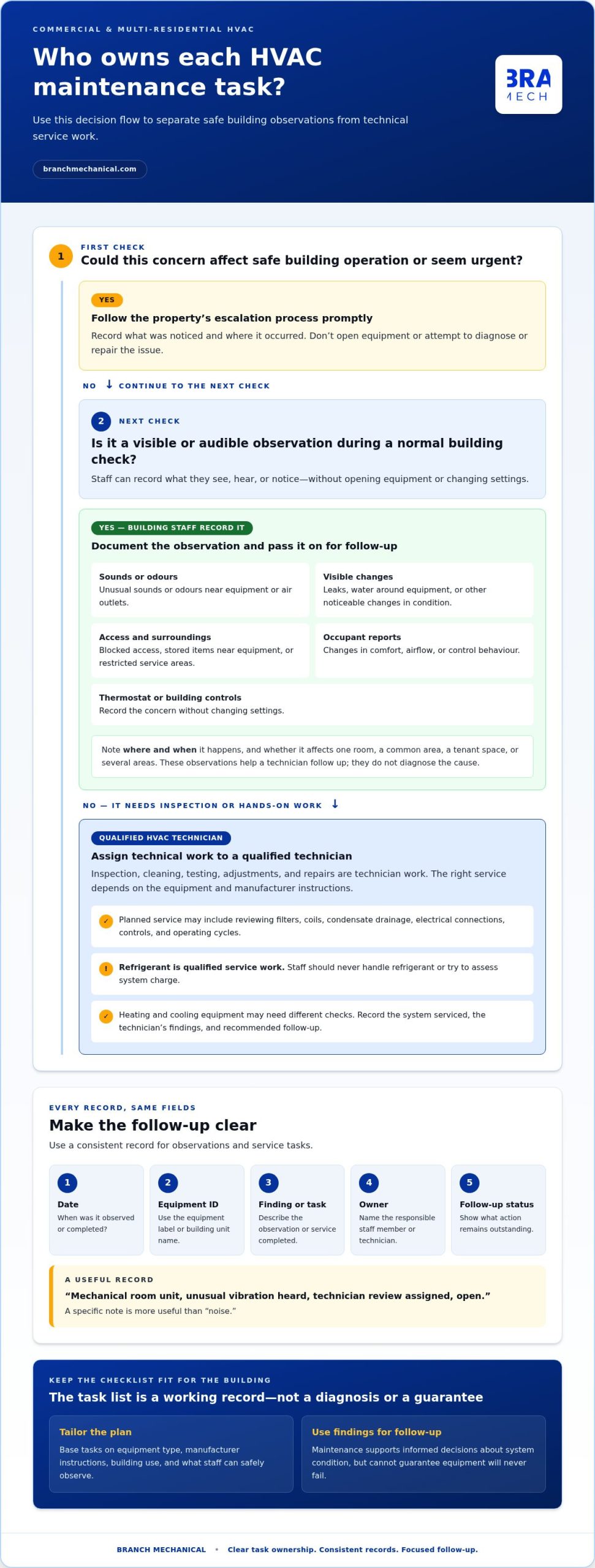
Keep routine visual observations separate from work that requires technical skill. Staff can report what they see, hear, or notice during normal building checks. Inspection of electrical components, refrigerant, combustion, or internal system conditions should be assigned to a qualified technician. The sections below organize checklist tasks by system area and clarify who should handle them.
HVAC Preventative Maintenance Checklist: Tasks to Track
A useful checklist groups tasks by system area and names the person responsible for each one. That distinction matters in offices and multi-residential buildings, where staff may notice a concern during a walk-through but shouldn’t be expected to diagnose or repair equipment. Use the checklist to capture observations and organize technician work, not to turn every building employee into a mechanic.
Give each record the same basic fields: date, equipment identifier, observation or task, assigned owner, and follow-up status. For example, “mechanical room unit, unusual vibration heard, technician review assigned, open” is more useful than a note that simply says “noise.” Consistent records make it easier to spot repeat concerns and see which actions are outstanding.
Routine observations building staff can record
Staff can note visible or audible changes during normal building checks. Record where and when an issue occurs, and whether it affects a particular room, common area, or tenant space. Don’t ask staff to open equipment or adjust settings to investigate. If a concern appears urgent or could affect safe building operation, follow the property’s escalation process promptly.
- Unusual sounds or odours near equipment or air outlets.
- Visible leaks, water around equipment, or other noticeable changes in condition.
- Blocked access, stored items near equipment, or restricted service areas.
- Changes in comfort, airflow, or control behaviour reported by occupants.
- Thermostat or building-control concerns, recorded without changing settings.
Technician checks to schedule and document
Assign inspection, cleaning, testing, adjustment, and repair work to a qualified HVAC technician. Depending on the equipment and manufacturer instructions, planned service may include reviewing filters, coils, condensate drainage, electrical connections, controls, and operating cycles. Heating and cooling equipment can require different checks, so record which system was serviced, what the technician found, and what follow-up was recommended.
Refrigerant inspection is qualified service work. Staff should never handle refrigerant or attempt to assess system charge themselves. For a broader professional reference, the Air Conditioning Contractors of America develops contractor standards and best practices. Its ACCA standards for HVAC maintenance can help inform conversations about service practices.
- Filters: Record condition and service performed. Don’t set one replacement interval for every system. Follow equipment guidance and account for site conditions such as operating hours and the environment.
- Coils and drainage: Document inspection, cleaning where appropriate, and any signs of obstruction or drainage concerns.
- Electrical, controls, and operation: Record technician findings from inspections and operational checks, including recommended adjustments or repairs.
- Heating or cooling components: Note the equipment-specific checks completed and any follow-up needed.
For commercial and multi-residential properties, scheduled HVAC maintenance from Branch Mechanical can coordinate recurring technician work with building needs and checklist findings.
What Preventative HVAC Maintenance Can, and Cannot, Prevent
Completing every item on an HVAC preventative maintenance checklist doesn’t guarantee uninterrupted heating or cooling. Equipment can still fail between inspections, and maintenance can’t control every operating condition or unexpected component issue. Its value is in supporting system care, tracking changes, and helping building teams decide when follow-up is needed.
Think of the checklist as a record of condition, not a pass-or-fail certificate. A technician may find that equipment is operating as expected during a visit, but that finding describes the system at the time of inspection. Clear records help teams plan service and respond to concerns without promising that a future interruption won’t happen.
How checklists support earlier issue identification
Individual observations can be easy to dismiss. A record makes it possible to compare what staff notice over time, such as recurring comfort complaints in the same room or a condensate concern appearing again near the same unit. Share that pattern with a technician. It’s useful information, but it doesn’t establish the cause, and staff shouldn’t be asked to diagnose it.
Record the location, date, what was observed, and whether it has happened before. Include relevant context, such as whether the concern affects one tenant space or several areas. This helps a technician understand the report and decide what to inspect. Avoid writing conclusions such as “the drain is blocked” unless a qualified professional has confirmed it. “Water observed near the unit” is a clearer, factual note.
Written observations also help operators prioritize follow-up. A recurring issue affecting occupied areas may need attention sooner than a minor observation with no apparent operational impact. Use the property’s procedures to assign an owner, track the response, and document what happens next.
Where a checklist stops and service begins
Staff observations are not a substitute for technical work. Electrical testing, refrigerant inspection or service, and equipment adjustments belong with qualified HVAC technicians. Building staff should follow site procedures, avoid opening or modifying equipment, and report concerns through the established channel.
Don’t leave a potentially urgent issue on the list for the next routine inspection. Escalate leaks, electrical concerns, unusual operation, or loss of heating or cooling promptly according to the building’s procedures. If the issue affects an occupied area, include that information in the report so the team can assess its operational impact.
- Record: What happened, where, and when. Note visible changes without guessing at the cause.
- Escalate: Share concerns through the site’s maintenance process and identify who is responsible for follow-up.
- Track: Keep the item open until the concern has been reviewed and the next action is documented.
A checklist is most useful when it prompts a timely, informed response. Scheduled maintenance supports planned care, while new or urgent concerns call for attention outside that routine. Keeping those paths clear helps staff know what to record and when to escalate.
How to Schedule HVAC Maintenance for GTA Seasons
A seasonal plan gives property teams time to prepare equipment before heating or cooling demand increases. In the Greater Toronto Area, conditions shift across the year, so timing matters. Spring cooling preparation and fall heating preparation are useful planning prompts, not fixed rules for every building. Set the schedule around your equipment, operating needs, and manufacturer guidance.
Use this sequence to turn the HVAC preventative maintenance checklist into a working calendar:
- Inventory equipment. List each system, its location, equipment type, service history, and applicable manufacturer instructions. Configuration affects what needs attention. Review the commercial HVAC installation guide when mapping different systems across a property.
- Map seasonal needs. Identify which equipment supports heating, cooling, or both. Use spring and fall as prompts to plan ahead of peak operating periods, then tailor timing to the system and its service requirements.
- Assign tasks. Name the staff member responsible for observations, record-keeping, and access coordination. Keep technical inspection and servicing assigned to a qualified HVAC technician.
- Record results. Log completed work, observations, and items that need attention. Identify the equipment and location in each entry, not just the building.
- Schedule follow-up. Add open items to the calendar with an owner and next action. Don’t let an unresolved concern disappear when the seasonal checklist is marked complete.
Build a seasonal maintenance calendar
Map cooling and heating checks to the building’s equipment and operating requirements. Schedule around occupancy, tenant access, and critical business periods so planned work fits the property’s routine. A multi-residential building may need access coordinated across shared mechanical areas and tenant spaces, while an office may need work planned around busy operating hours. Add reminders for open follow-up, not only recurring checks.
Adapt the plan to a Mississauga or Etobicoke property
Properties in Mississauga and Etobicoke may have several equipment areas, shared spaces, and different access needs under one maintenance plan. Prepare for seasonal heating and cooling demand without relying on a single temperature threshold or treating every system alike. If building controls and monitoring are part of the site plan, a building automation systems guide can help frame how those systems fit into facility planning.
For a complex property, scheduled service can organize recurring care around the building’s equipment and operating needs. Include commercial HVAC maintenance in your seasonal schedule.
Turn Your HVAC Checklist into a Reliable Maintenance Plan
A checklist becomes useful when its findings lead to clear action. After each review, organize notes by equipment, concern, and required follow-up. Assign an owner to each open item, schedule technician work where required, and retain service records with the equipment history. This gives property teams a practical record of what was observed, what was addressed, and what still needs attention.
Keep the process straightforward. A recurring task can be planned as part of scheduled service, while a new operational concern may need attention sooner. Don’t rely on a checklist marked “complete” if a finding remains unresolved. Carry open items forward until the next action and responsible person are recorded.
Coordinate checklist findings with planned service
Group findings by equipment and follow-up rather than relying on an invented scoring system. Share recurring observations with the technician alongside the unit’s service history, and coordinate routine tasks with planned visits. This makes it easier to discuss what needs inspection, what work has been completed, and which records should be retained for future planning.
For properties with broader mechanical needs, Branch Mechanical’s mechanical contractors in Mississauga and the GTA can support facility service coordination beyond HVAC. Keep records together by equipment and date, and note whether each item is complete, awaiting service, or needs further follow-up. That simple process helps the property team maintain continuity when staff responsibilities change.
- Recurring care: Match planned tasks to equipment and building requirements.
- Reported concerns: Share relevant observations with the technician without assuming a cause.
- Open follow-up: Identify the person responsible and record the next action.
- Service history: Retain completed work notes alongside the equipment record.
When to bring in Branch Mechanical
Branch Mechanical provides commercial and multi-residential HVAC service and preventative maintenance contracts for GTA properties, including those in Mississauga and Etobicoke. A maintenance contract helps organize recurring equipment care around a building’s systems and operating needs, while checklist findings give the team useful context for planning service. Branch Mechanical also provides 24/7 emergency mechanical services for urgent mechanical issues.
Use your HVAC preventative maintenance checklist as a working document, then bring its equipment records and outstanding findings into maintenance planning. For a facility in Mississauga, Etobicoke, or elsewhere in the GTA, plan preventative maintenance with Branch Mechanical.
Make Your Next Maintenance Cycle More Predictable
Set a date to review your equipment records and identify what needs to be scheduled before the next seasonal change. A checklist works best when it remains part of the property’s routine, with clear ownership for follow-up and space to record changes over time. That gives your team a useful starting point for planning as building needs or equipment conditions shift.
Your HVAC preventative maintenance checklist can guide that process, but it shouldn’t have to carry the whole plan. Branch Mechanical supports commercial and multi-residential properties with HVAC service and preventative maintenance contracts, alongside 24/7 emergency mechanical services. For GTA facilities, including those in Mississauga and Etobicoke, planned service can help coordinate ongoing equipment care with day-to-day building needs.
Build a maintenance plan with Branch Mechanical to give your team a clear path from recorded findings to scheduled care.
Frequently Asked Questions
Can HVAC preventative maintenance eliminate unexpected breakdowns?
No. An HVAC preventative maintenance checklist cannot eliminate unexpected breakdowns. It can help a property team plan routine service, but it can’t account for every component failure or operating change between visits. For a Mississauga or Etobicoke facility, pair planned work with a clear reporting route and a contingency process for critical spaces. Staff should know whom to notify if a system stops serving an occupied area.
Does HVAC preventative maintenance include refrigerant recharging?
Not necessarily. A maintenance visit may include checking refrigerant-related operation if the equipment and service scope call for it, but recharging isn’t an automatic checklist item. Staff should note symptoms, such as reduced cooling, and share them with the technician rather than handling refrigerant or drawing conclusions. Equipment details and prior service notes can help the technician assess the system and determine whether refrigerant work is appropriate.
Can HVAC maintenance improve indoor air quality?
Appropriate HVAC maintenance can support indoor air quality, but it can’t guarantee a specific result. Filter condition and system operation are only part of the picture. Ventilation, occupancy, cleaning practices, and sources of odours or particles also matter. If occupants report recurring irritation or persistent odours, note the affected areas and timing, then share the pattern with property management for assessment rather than assuming the HVAC system is the cause.
What should tenants report between scheduled HVAC maintenance visits?
Tenants should report changes in comfort, unusual equipment sounds or odours, visible water, or a system that stops working as expected through the property’s usual process. Include the unit or room, when the issue began, and whether it comes and goes. For example, noting that one bedroom loses heat overnight gives the property team more context than a general report of “heating problem.” Don’t open equipment or attempt repairs.
How should a property team prepare for an HVAC maintenance visit?
Before the visit, arrange access to equipment areas and identify site requirements, such as an escort, keys, or tenant access coordination. Gather recent service notes and outstanding reports, then share operating constraints or areas that need attention with the service team. Afterward, record recommendations, the person responsible for each follow-up, and the next steps. This helps the property team carry useful information into future service planning.
What is the difference between HVAC maintenance and HVAC repair?
Maintenance is planned service for equipment that may be operating normally, while repair addresses a reported fault or loss of function. For example, a scheduled visit may include inspecting equipment before a seasonal change; a system that stops heating needs a repair assessment. A checklist can help the team share useful details, but it doesn’t identify the cause. For urgent operational concerns, arrange service rather than waiting for the next planned visit.