
A newer business can benefit from plumbing maintenance before problems appear. A commercial plumbing maintenance plan commonly schedules inspections annually or semi-annually, with timing adjusted for building size, system age, water use and seasonal demands. New equipment may reduce immediate concerns, but it still needs monitoring for leaks, drain issues, valve problems and changes in water pressure.
It’s reasonable to question whether scheduled maintenance is worthwhile when a business is just getting established. A planned visit can identify developing issues and organize follow-up before they disrupt operations. This article explains what a plan can cover, what a preventative visit may involve and how regular maintenance can help reduce disruptions and repair costs.
You’ll also learn how inspection frequency can reflect a building’s demands, why drain and sewer care matters, and which records help managers track recurring concerns. The goal is to give you a clear picture of what to expect so you can make a practical maintenance decision for your property.
Key Takeaways
- Set inspection timing around your building’s age, occupancy, water use and system demands.
- Track pipework, fixtures, drainage equipment and recurring issues so maintenance findings lead to clear follow-up actions.
- Include drain and sewer care in the schedule to help limit blockages, backups and disruption.
- Use preventative visits to assess key components such as shutoff valves, backflow devices and pumps.
- Regular plumbing and HVAC maintenance can help spot developing problems early and support more reliable building operations.
1. What Should Be Included in Commercial Plumbing Maintenance?
A commercial plumbing maintenance plan should cover pipes, fixtures, water pressure, drains, valves, pumps, tanks and water heaters. Start with an asset record listing each component’s location, age, condition and manufacturer information. This inventory helps maintenance teams prioritize repairs and compare inspection findings over time.
During routine inspections, check exposed pipes for leaks, corrosion and condensation. Examine taps, toilets and other fixtures for wear or poor operation. Test water pressure and inspect valves, pumps and drainage equipment. Look for less obvious leaks, such as moisture near pipe joints or unexplained changes around equipment.
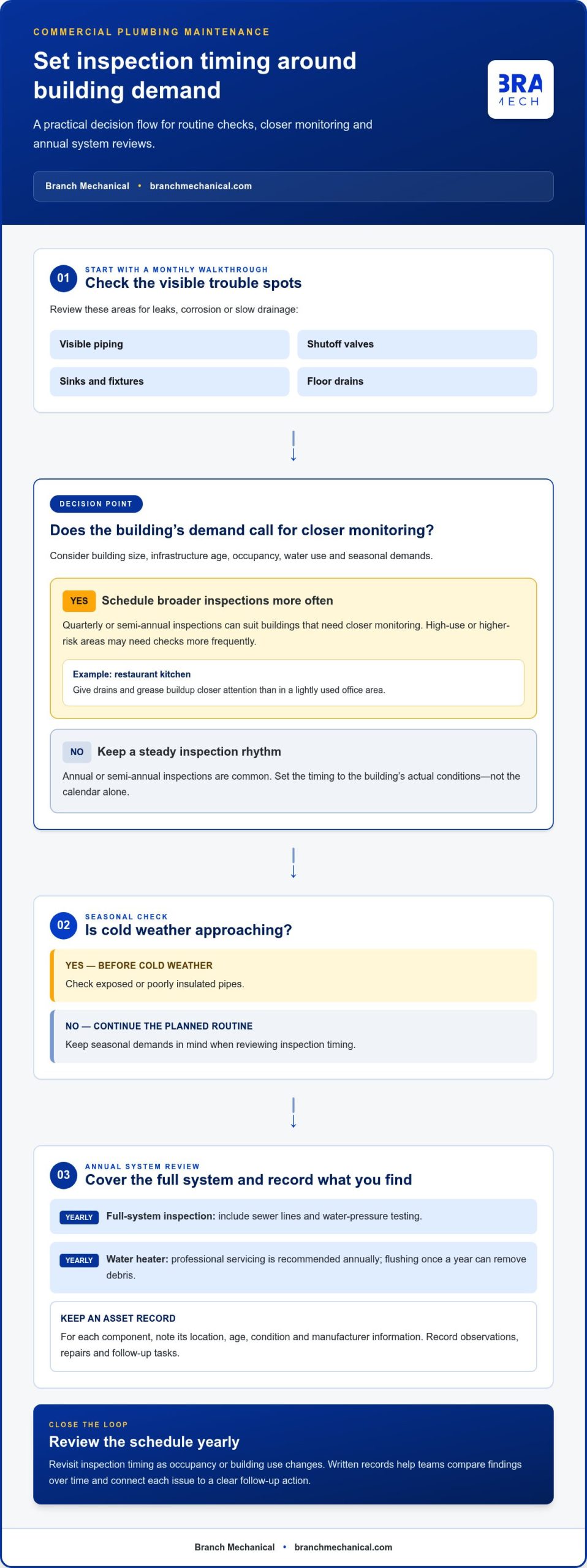
Set inspection frequency according to building conditions, not the calendar alone. Size, infrastructure age, occupancy, water use and seasonal demands all affect maintenance needs. A high-use restaurant kitchen, for example, may need closer attention to drains and grease buildup than a lightly used office area. Before cold weather, also check exposed or poorly insulated pipes.
- Monthly: Review visible piping, shutoff valves, sinks and floor drains for leaks, corrosion or slow drainage.
- Quarterly or semi-annually: Schedule broader inspections when building size, water use or system age calls for closer monitoring.
- Annually: Arrange a full-system inspection that includes sewer lines and water pressure testing.
Annual or semi-annual inspections are common, but high-use or higher-risk areas may need more frequent checks. Water heaters need attention too: professional servicing is recommended annually, and flushing once a year can remove debris. Keep written records of observations, repairs and follow-up tasks, then review the schedule yearly as occupancy or building use changes.
Which Canadian plumbing codes and regulations apply? Commercial plumbing maintenance must account for applicable local building codes, regulations and industry standards. Requirements vary by jurisdiction and by the work being done, so relevant provincial, territorial and local rules shape the maintenance approach.
What is the average cost in Canada? There is no single average for every commercial building. Pricing depends on the building and required scope of work, and is provided after a quote request.
What affects plan pricing? Building size, system age, water use, equipment count, inspection frequency and required work all affect the scope and price.
How can a business choose a qualified provider? Look for commercial plumbing experience, a documented inspection process and clear maintenance records. Each finding should connect to a recommended repair or follow-up action.
2. Drain and sewer line cleaning
Drain care focuses on removing buildup before it restricts flow. Grease traps, kitchen pipes and floor drains need regular cleaning in commercial buildings. Grease and food debris can accumulate gradually, even when water still drains. In restaurants, a slow kitchen sink can signal a developing line issue. Set cleaning schedules according to what enters the drains and how heavily each area is used.
Monthly checks help staff spot early changes. Look for corrosion or condensation on exposed pipes, then test sinks and floor drains for slow drainage. Record recurring odours, gurgling or backups by location. A pattern in one washroom stack or kitchen line can guide a closer inspection. Compare notes across visits so repeat problems don’t get lost in separate work orders.
Professional drain-line cleaning can remove buildup that restricts flow. Hydro jetting uses high-pressure water to clear deposits from drain lines. A scheduled CCTV drain survey can help locate concerns inside sewer pipes, while jet washing and gully clearing address other drainage points. These methods suit different conditions, so let inspection findings guide the choice and timing.
Water heaters need scheduled care of their own. Professional servicing is recommended annually, and flushing once a year can remove debris and support performance. Sediment can affect how efficiently a heater operates, so record service dates and changes in heating performance. Include supply lines, valves and visible leaks in the same maintenance records to help building managers spot connected issues.
Backflow devices also need planned attention. Quarterly inspections can help identify visible damage or operating concerns, while annual backflow and water-pressure testing can form part of the maintenance schedule. Record test results, repairs and follow-up dates together so staff can see whether a device or area needs continued monitoring.
Water-use checks add context to drain and leak observations. Compare current consumption with the previous month and the same month last year. A rise alongside damp flooring or a frequently blocked drain may point to a problem worth investigating. Review unusual readings alongside maintenance notes rather than treating the meter as a standalone signal.
For buildings with recurring drain concerns, connect findings to a clear service schedule. Preventative maintenance contracts can help organize recurring plumbing checks and follow-up work around building needs.
3. Avoiding emergency repair costs and operational downtime
Preventative maintenance helps facilities identify developing problems before they interrupt operations. It can’t eliminate every unexpected failure, but it gives managers a clearer basis for setting priorities. For example, a slow leak near a water heater can be logged and assessed before it affects nearby equipment or business activity.
Prepare an emergency plan for water-related incidents. Identify the main water supply shutoff and important zone valves, then label each location clearly. Keep a current valve register that notes its location, condition and last inspection. In a July 2026 example, one register recorded the main shutoff as operational, but a restaurant kitchen shutoff lacked a label. That missing label could delay action during a leak.
Make reporting straightforward for tenants and staff. Tell them which facilities contact to notify, what details to provide and how to report water near electrical equipment or stored goods. A useful report names the affected area, describes the visible issue and says when it began. “Water under the west-side sink” is more actionable than “there’s a leak.”
Keep maintenance logs that connect observations with decisions. Record the date, location, issue, action taken and follow-up status. Digital records make recurring problems easier to spot across shifts or properties. If a water heater prompts repeated complaints, its history can help managers decide whether to inspect it again or schedule corrective work.
- Contacts: Keep the mechanical contractor and internal facilities contacts in one accessible location.
- Access: Record how responders can enter locked rooms and reach shutoffs.
- Response expectations: Document response times and escalation steps in the emergency protocol or service-level agreement.
- Operations: Identify areas that need temporary closure or water isolation during repairs.
When practical, schedule maintenance visits during off-peak hours. Work affecting a restaurant kitchen, washroom or tenant water supply may be easier to coordinate outside its busiest period. Account for building access, staff availability and the systems that need to remain in operation.
After an incident or repair, update the valve register and maintenance log. Note which shutoffs worked, whether labels were clear and what follow-up remains. A commercial plumbing maintenance plan works best when every inspection finding leads to a decision and each completed repair has a documented closeout. This process can’t prevent every emergency, but it helps teams respond methodically and limit avoidable disruption.
4. What Services Are Provided During a Preventative Maintenance Visit?
A preventative visit uses a practical checklist to assess fixtures, valves and equipment. The technician may inspect visible leaks, operate accessible shutoff valves and note unusual sounds or vibration. A valve that sticks or fails to close, for example, needs documented follow-up. These checks help facilities identify problems before a costly water release disrupts operations.
Backwater valves and backflow preventers serve different purposes. A backwater valve helps limit sewage flowing back into a building through drainage piping. A backflow prevention device protects the potable water supply from contamination. During an inspection, the technician can review accessible condition and connections, check for signs of leakage, and document concerns for further work.
Backflow devices need regular inspection and testing. Quarterly inspections can help identify visible damage or operating concerns, and annual backflow and water-pressure testing can be included in the maintenance schedule. Keep results with the building’s service records, including the device location, test date, findings and required follow-up. This makes results easier to track across visits.
Pumps need a focused visual and operational review. Check the surrounding area for leaks, unusual noise, vibration or signs of overheating. Confirm that accessible connections appear secure and that the pump starts and stops as expected during its operating cycle. For a sump or sewage pump, note whether debris in the pit or basin could interfere with operation. Arrange cleaning or repair when the inspection findings indicate a problem.
- Monthly checks: Look for visible leaks, inspect fixtures and test accessible shutoff valves.
- Pressure review: Commercial water pressure should be maintained between 40 and 60 PSI.
- Valve readiness: Confirm key shutoffs are accessible, clearly labelled and operational.
- Recordkeeping: Log the equipment location, inspection findings and follow-up action.
Water-pressure testing helps identify conditions that may affect fixtures and equipment. If readings fall outside the 40 to 60 PSI range, record the result and investigate its cause. A pressure concern may relate to a valve, supply condition or other system issue, so testing provides a useful starting point rather than a diagnosis on its own.
Include emergency preparedness on the visit checklist. Confirm that staff can locate the main shutoff and relevant zone valves, including those serving industrial areas or washrooms. After any adjustment, cleaning or repair, document what changed and whether further work remains. This gives the next maintenance visit a clear starting point.
5. Benefits of annual HVAC and plumbing maintenance
Annual maintenance creates a planned opportunity to assess building systems before peak demand. Plumbing and HVAC equipment can affect the same facilities, even when their issues begin separately. A water leak near heating equipment, for example, can disrupt access to a mechanical room. Coordinated inspections help managers identify related concerns and plan repairs around building operations.
Scheduled work can also help control repair costs. Unplanned plumbing repairs can cost up to four times more than scheduled maintenance. The difference goes beyond the repair itself: an urgent failure may also interrupt access, staff routines or business activity. A documented maintenance schedule gives managers time to prioritize findings and organize follow-up work.
Early attention matters for pipe condition. Corrosion can weaken pipes and contribute to leaks, while rust may contaminate a water supply. During an annual review, compare inspection records and identify areas with recurring corrosion, dampness or repairs. This history can help distinguish an isolated issue from a pattern that needs broader investigation.
Leak prevention can protect both the building and its operating budget. An undetected leak in a large office building can contribute to structural damage, mould growth or water bills costing thousands of dollars. Even a small leak can waste thousands of gallons of water annually. Routine reviews are particularly useful in concealed areas, such as behind walls or near seldom-used fixtures.
Annual service also supports reliable HVAC operation. Most HVAC manufacturers require annual maintenance to keep a system’s warranty valid. Check the equipment’s service history and maintenance requirements, then record completed work alongside plumbing findings. This gives facilities managers one organized reference for system condition, outstanding repairs and the next scheduled visit.
- Compare: Review completed maintenance against recurring repair reports.
- Prioritize: Address leaks, corrosion, drainage problems and equipment concerns by operational impact.
- Coordinate: Plan access to shared mechanical spaces before HVAC and plumbing work.
- Document: Record findings, decisions, completed repairs and follow-up actions.
A commercial plumbing maintenance plan works best when observations lead to practical decisions, not just inspection notes. Use annual reviews to adjust priorities as building use and equipment condition change. Maintenance can’t prevent every failure, but it gives teams a method for addressing developing concerns before they disrupt operations.
For buildings that need coordinated plumbing and mechanical upkeep, schedule preventative maintenance as part of an organized service approach.
Branch Mechanical: Commercial & Multi-Residential Mechanical Contracting
Branch Mechanical provides commercial and multi-residential mechanical contracting, including commercial plumbing and gas fitting. Turn to the team for planned plumbing upkeep, recurring inspections or follow-up on maintenance findings. Preventative maintenance contracts can help organize work around your property’s systems and operating needs.
For facilities with connected mechanical needs, Branch Mechanical also provides commercial HVAC installation and service, along with commercial boilers and heating systems. Coordinating this work can help building managers plan maintenance across essential equipment and keep service records organized. The right scope depends on the building, system condition and operational demands.
For a practical next step, contact Branch Mechanical to discuss commercial plumbing maintenance for your property.
Build a maintenance routine that fits your building
Turn maintenance observations into a working routine. A commercial plumbing maintenance plan should reflect how your building operates, who reports concerns and how follow-up work gets assigned. Clear ownership helps keep maintenance decisions moving instead of leaving them in inspection notes.
Branch Mechanical offers preventative maintenance contracts and commercial and multi-residential mechanical contracting. Its commercial HVAC installation and service can also support buildings planning work across connected systems. These services give property teams a practical starting point for organizing maintenance around their facility’s needs.
Bring your priorities forward, whether you’re planning recurring upkeep or addressing maintenance findings. Contact Branch Mechanical to discuss a practical next step for your property. A well-organized approach can help your team plan with greater clarity and confidence.
Frequently Asked Questions
Does a newer business need a maintenance plan?
Yes, a newer business can benefit from planned maintenance from the start. An early baseline gives managers a reference for equipment condition, shutoff locations and service history as the property gets busier. For a new restaurant in Mississauga or Etobicoke, recording kitchen drainage concerns early can help staff spot changes later. Set the schedule according to actual occupancy and water use, then adapt it as the business grows.
How Often Should You Perform Plumbing Maintenance in a Facility?
Set a schedule according to system demand rather than applying one interval to every area. A commercial plumbing maintenance plan can assign different check intervals to spaces with different levels of use. A restaurant washroom and a low-occupancy office area don’t face the same demand. Review maintenance records and recurring reports to adjust timing as use patterns change.
Is an annual inspection enough for the whole building?
An annual full-system inspection is a useful baseline, but it may not meet every area’s needs throughout the year. High-use kitchens, washrooms and older infrastructure can warrant closer attention between full inspections. Pair the annual review with routine staff observations, such as changes in drainage or newly damp patches. This helps emerging concerns get recorded promptly rather than waiting for the next scheduled visit.
What Services Are Provided During a Preventative Maintenance Visit?
A visit typically combines inspection, testing and documentation, with follow-up based on the findings. For example, a technician may review service history before inspecting a pump, then record vibration or an operating concern for further attention. A useful report identifies the affected equipment, explains the observation plainly and notes the recommended next step. This gives facilities staff a clear record to act on.
What Should Be Included in Commercial Plumbing Maintenance?
Include the plumbing assets and records needed to understand the system as a whole. Identify components by location, condition and age, then note repairs, recurring complaints and outstanding work. A report about a recurring washroom issue, for example, is more useful when it names the affected area and links it to earlier visits. Clear records help managers set priorities and plan maintenance around building operations.
What does a planned commercial plumbing maintenance programme include?
A planned programme usually sets out scheduled inspections, tasks, service records and follow-up responsibilities. It can identify which building areas need more frequent attention, who reports concerns and how completed work is documented. The programme should also help managers review recurring issues and update priorities as occupancy or system demands change. A clear scope helps staff understand what each planned visit is meant to address.
How often should commercial plumbing systems be inspected and serviced?
Set inspection and servicing intervals according to building size, system age, occupancy and water use. A commercial plumbing maintenance plan can combine routine observations with broader inspections tailored to the property’s needs. High-use or higher-risk areas may need closer monitoring between annual reviews. Professional annual water heater servicing is recommended; record its service history alongside other building maintenance.
How do commercial plumbing maintenance plans compare with paying for repairs as needed?
Scheduled maintenance organizes inspections and follow-up before a known concern becomes an urgent work order. Paying only for repairs as needed may suit a business with limited system demands, but it means managers respond after problems affect operations. A planned approach also creates a record of recurring issues and completed work. When weighing the options, consider how much disruption an unexpected plumbing problem could cause.