
Heating every area of a large building to the same temperature can waste energy. Commercial heating solutions in Etobicoke can use zone-based controls to reduce heating in unoccupied areas while keeping occupied spaces comfortable. The right controls align heating with how each part of a facility is used.
Operating costs deserve attention, especially in buildings with different occupancy patterns and heating demands. But controls work best as part of a well-maintained system that suits the building.
This article explains how multi-zone controls manage heat, what preventative maintenance can identify before winter, and what to consider when planning commercial HVAC for a large facility. It also covers how professional installation, service and building automation can support consistent operation.
Key Takeaways
- Use zone-based controls to reduce heating in unoccupied areas while maintaining comfortable temperatures where people are working.
- Plan a fall pre-season inspection to identify developing heating issues before winter operation.
- Match commercial HVAC service and installation planning to the needs of Etobicoke buildings and their operations.
- For a large facility, consider how occupancy, equipment and building layout affect heating capacity and system performance.
How do modern control systems reduce heating costs for multi-zone facilities?
Zone controls let a facility manage temperatures by area. They can reduce heating in unoccupied zones while maintaining comfortable temperatures in occupied spaces. For example, a warehouse office and storage area can follow different schedules. This avoids heating every space alike when occupancy and operating needs differ.
Heating costs for gas systems, electric heating, heat pumps and boilers have no universal ranking. Equipment choice, building layout, fuel or electricity use, operating hours and installation requirements all affect total costs. A commercial HVAC assessment compares these factors alongside air conditioning needs, rather than choosing equipment by fuel type alone.
Commercial heating installation in Etobicoke must account for project scope and applicable local approvals and building requirements. Before work begins, the design and installation process should identify which requirements apply to the equipment and project.
Ontario efficiency and emissions requirements depend on the equipment and project. Before a replacement or installation, a heating-system assessment should consider the applicable rules for the proposed system, its fuel and the building’s operating needs.
Commercial heating systems in Etobicoke include boilers, furnaces, electric heating and heat pumps. The appropriate option depends on the building’s existing distribution system, space use and operating requirements. Boilers can serve hydronic heating, while furnaces distribute heated air through ductwork.
To determine capacity, a commercial heating contractor assesses building characteristics, occupancy patterns, climate zone and operational needs. Oversized equipment can use unnecessary fuel, while undersized equipment can struggle during peak demand. These factors guide commercial HVAC system design, equipment selection and installation.
Uneven temperatures, repeated breakdowns, unusual operating noise or heating that can’t maintain the set temperature can signal a need for repairs. A technician can inspect boilers or furnaces, identify the cause and assess whether maintenance, repair or replacement best addresses it. Commercial heating equipment typically operates efficiently for 15 to 20 years, so age and repair condition also inform replacement decisions.
Commercial HVAC installation can take one to several days, depending on system size and complexity. A coordinated project starts by assessing existing equipment and zone controls, then selecting and installing a system suited to the building. Regular maintenance helps keep boilers, furnaces and controls operating as intended.
What maintenance schedule prevents heating emergencies during winter operation?
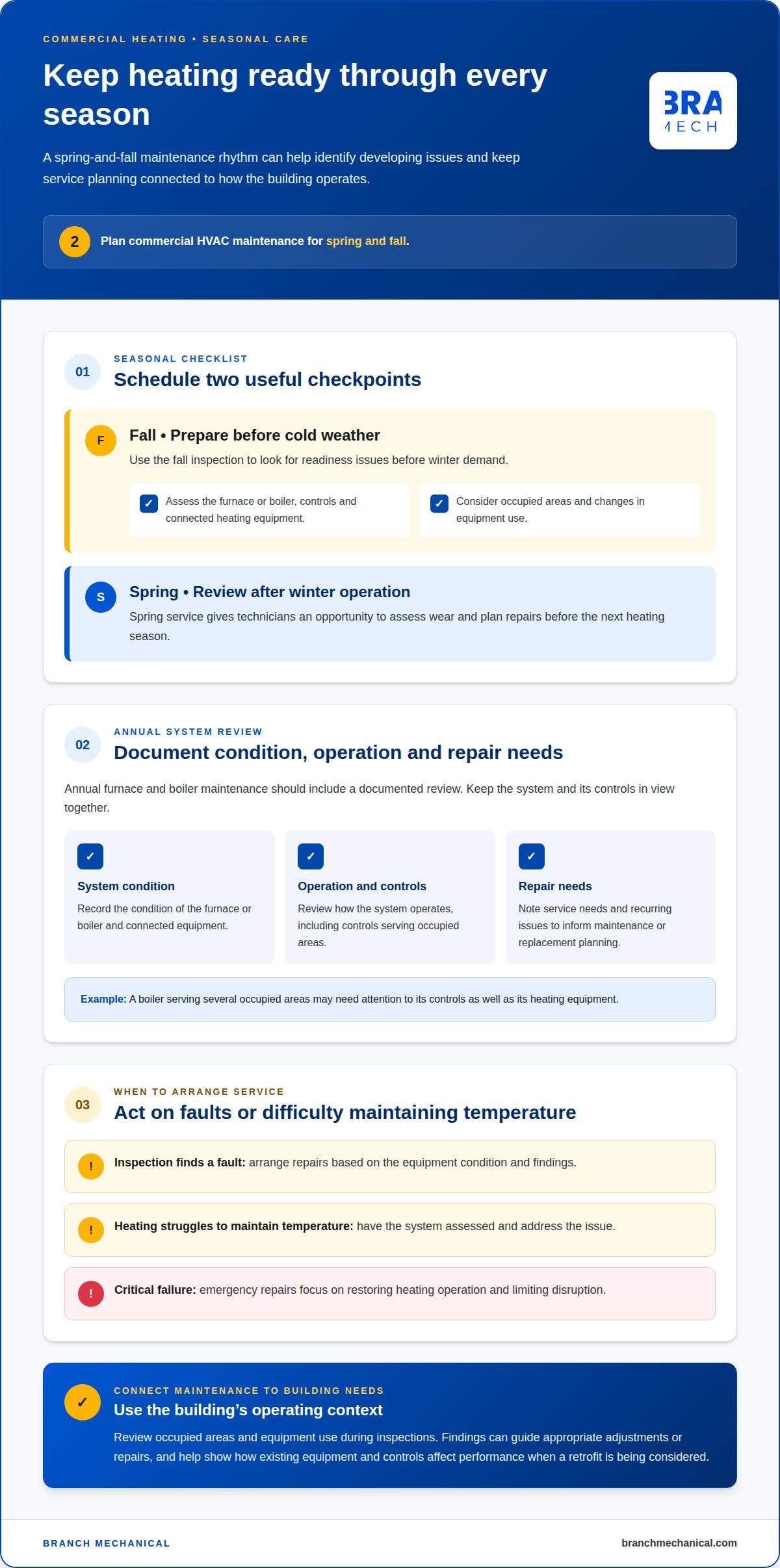
Plan commercial HVAC maintenance for spring and fall. A fall inspection helps identify readiness issues before cold weather; spring service lets technicians assess wear after winter operation and plan repairs before the next heating season. For a facility in Etobicoke or Mississauga, these visits provide regular opportunities to review the heating system.
During a fall inspection, technicians assess the furnace or boiler, controls and connected heating equipment. They can look for developing issues before they cause a technical failure during winter demand. The inspection should also consider how the building operates, including occupied areas and changes in equipment use. This context helps focus maintenance on the systems the facility relies on.
Annual furnace and boiler maintenance should include a documented review of system condition, operation and repair needs. For example, a boiler serving several occupied areas may need attention to its controls as well as its heating equipment. A maintenance record helps track recurring issues and gives building teams useful information when planning service or replacement.
Preventative maintenance also supports system optimization. Technicians can identify operating problems and recommend appropriate adjustments or repairs based on equipment condition. If a retrofit is being considered, inspection findings help show how existing equipment and controls affect performance. This ties maintenance decisions to the facility’s actual heating needs instead of treating each component in isolation.
Arrange repairs when an inspection finds a fault or the heating system struggles to maintain temperature. Addressing a developing issue before winter can reduce the chance that it becomes an urgent interruption during cold weather. If a critical failure occurs, emergency repairs focus on restoring heating operation and limiting disruption. A preventative maintenance plan gives technicians a record of prior findings, helping them assess the system more efficiently.
Commercial HVAC service areas including Etobicoke
Commercial HVAC coverage matters when a facility needs planned service, installation or urgent repair. Branch Mechanical provides commercial HVAC contractors in Etobicoke to support buildings’ heating, cooling and ventilation needs.
Etobicoke and Mississauga Service Coverage
Commercial HVAC service in Etobicoke and Mississauga can support offices, restaurants, warehouses and multi-residential properties. Work may include equipment repairs, maintenance, installation and upgrades. Match the service scope to the equipment on site: a restaurant’s ventilation and cooling needs differ from an office’s heating requirements.
Technician hours depend on the type of work. Scheduled maintenance and installation are arranged around the project, while 24/7 emergency mechanical services address critical failures. Sharing the equipment type, symptoms and building access details helps technicians prepare for the visit and focus on the affected system.
Local Heating Service Coverage
Commercial heating service for facilities in Etobicoke and Mississauga can address local building requirements and operating needs. Facilities in these service areas may have different equipment, occupancy patterns and access conditions. Confirming the site location and service scope helps plan maintenance, repairs or an upgrade within the local service area.
Rebates or incentives for commercial heating upgrades in Ontario depend on current programs, eligible equipment and project requirements. For an Etobicoke or Mississauga facility, identify the proposed equipment and project scope, then assess applicable program criteria before including an incentive in the budget. Eligibility and terms determine whether an incentive applies.
Consider how scheduled HVAC service and urgent repairs fit the facility’s operations. A planned upgrade may involve installation and ongoing maintenance, while a heating failure may call for 24/7 emergency service. Matching the work to the building’s equipment and location helps keep the service plan relevant to local operations.
Commercial HVAC for large buildings
Commercial HVAC in a large building often combines multiple units, intricate ductwork and other equipment. Commercial heating solutions in Etobicoke need to account for how these components work together, alongside cooling and energy use. A plan focused on only one area may overlook differences in building use and operating demands.
Capacity planning starts with the facility. A commercial heating assessment considers building characteristics, occupancy patterns, climate zone and operational needs. For example, a warehouse with offices and work areas has different use patterns from a facility occupied consistently throughout the day. These details guide equipment selection and system design.
System size matters. Oversized heating equipment can increase unnecessary fuel use, while undersized equipment may struggle during peak demand. Commercial heating solutions in Etobicoke should match system capacity to the building’s needs, rather than simply replace existing equipment with a similarly sized unit. The design can also consider how heating works alongside cooling and other building systems.
Equipment condition is another factor in planning HVAC solutions. Modern high-efficiency heating equipment consumes 20% to 40% less fuel than equipment over 20 years old. That comparison can help inform replacement discussions, while building requirements still shape the decision. A review should account for existing distribution, equipment condition and expected operations, not age alone.
Installation planning must account for building layout and equipment connections. Multiple units or complex ductwork can affect project staging and integration with existing components. A coordinated design addresses heating and cooling across different areas while keeping facility operations in view.
For large-building HVAC planning, start with an assessment of the facility, occupancy and current equipment. This gives building teams a practical basis for evaluating capacity, energy use and replacement options. Discuss commercial HVAC planning for a large facility.
Branch Mechanical: Commercial Boilers & Heating Systems
Branch Mechanical provides commercial boiler and heating system services for facilities planning installation, repairs or replacement. Its commercial HVAC installation and service support buildings with changing heating needs, while preventative maintenance contracts help organize ongoing system care.
For a facility with several zones or complex equipment, commercial and multi-residential mechanical contracting can address heating as part of broader building requirements. Consider this support when planning an upgrade, responding to heating problems or arranging maintenance for commercial equipment.
If your building needs commercial heating support in Etobicoke, contact Branch Mechanical to discuss the work.
Make your next heating decision with a clear plan
A useful next step is to connect building operations with heating-system planning. Note which areas have changing occupancy, where comfort issues recur, and how heating needs shift during the workday. These details help focus a service discussion on the building’s actual use rather than a one-size-fits-all approach.
For commercial heating solutions in Etobicoke, think beyond the immediate repair or upgrade. A coordinated plan can help facility teams consider how system decisions affect daily operations, future maintenance and comfort across different spaces. Bring equipment records and a summary of operational priorities to make the next steps more focused.
When you’re ready to discuss your facility’s needs, contact Branch Mechanical. A considered plan can help you move forward with confidence and keep building priorities in view.
Frequently Asked Questions
How does equipment age affect heating efficiency and operational costs?
Age can affect efficiency, but operating costs also depend on system condition, controls and building demand. A well-maintained older boiler may operate differently from one with recurring faults or poorly matched controls. Uneven heat across occupied areas, for example, can point to an issue worth assessing. A technician can evaluate equipment condition and service history to inform repair or replacement planning.
What does commercial furnace or boiler installation cost in Etobicoke?
The price depends on the project and is provided in a quote. Cost factors include equipment type and capacity, existing ductwork or hydronic distribution, control requirements, removal needs, site access and installation complexity. Replacing equipment in an existing mechanical room may involve different work from a new installation that requires changes to the building’s heating distribution. The project scope determines the estimate.
What are typical commercial heating maintenance costs and schedules in Etobicoke?
Maintenance costs depend on equipment type, system size, condition and included work; pricing is provided in a quote. Schedule commercial HVAC inspections in spring and fall. The fall visit focuses on readiness before cold weather, while spring service can identify wear after the heating season. A preventative maintenance contract can organize recurring visits and document findings for future planning.
How long does commercial heating installation or replacement take?
Commercial heating installation can take one to several days, depending on system size and complexity. A project involving multiple pieces of equipment or changes to existing distribution may require more coordination than a straightforward replacement. Building access, equipment connections and staging work around facility operations also shape the schedule. The installation plan should account for these site-specific tasks.
Are there emergency commercial heating repair services in Etobicoke?
Yes. Branch Mechanical provides 24/7 emergency mechanical services for critical HVAC failures. A heating breakdown affecting occupied areas or essential facility operations is a reason to seek emergency repair support. The service addresses critical failures, while planned maintenance and commercial HVAC service can handle routine system needs. Sharing the affected equipment and symptoms helps clarify the issue during service coordination.